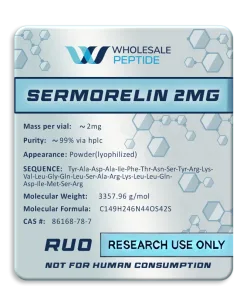
Sermorelin 2mg
$29.99

Buy Sermorelin at Wholesale Peptide: Research-Grade Synthetic Peptide for Lab Use
Researchers studying growth hormone releasing mechanisms need high purity synthetic peptides for controlled lab work. Sermorelin, a 29 amino acid synthetic peptide that mimics the biological activity of growth hormone releasing hormone, is a great compound for pituitary gland and growth hormone releasing pathway research. When you need to buy sermorelin for research, understanding the molecular properties, supplier specs and lab protocols is key to successful results.
Molecular Structure of Sermorelin
Research shows that sermorelin’s biological activity comes from its precise molecular structure. This synthetic peptide has a specific 29 amino acid sequence that researchers have identified as the active fragment of natural growth hormone releasing hormone.
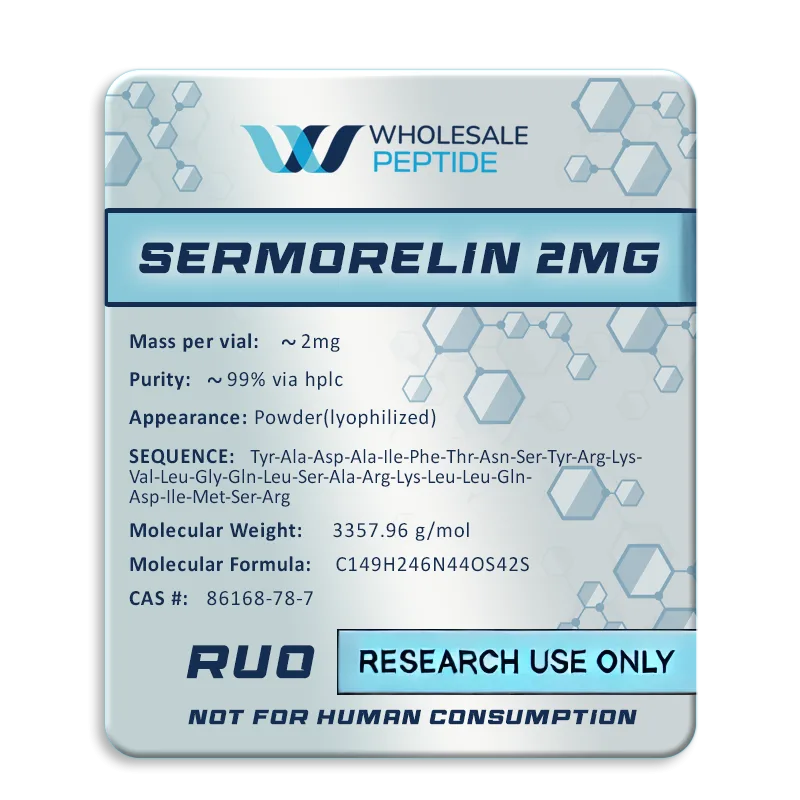
Amino Sequence: Tyr-Ala-Asp-Ala-Ile-Phe-Thr-Asn-Ser-Tyr-Arg-Lys-Val-Leu-Gly-Gln-Leu-Ser-Ala-Arg-Lys-Leu-Leu-Gln-Asp-Ile-Met-Ser-Arg
Molecular Formula: C149H246N44O42S
Molecular Weight: 3357.9 g/mol
PubChem CID: 16133753
CAS #: 86168-78-7
The molecular weight of 3357.9 g/mol reflects the complexity of this synthetic peptide, while the specific amino acid sequence allows researchers to study growth hormone releasing mechanisms in controlled lab environments. Scientists use these molecular specs for experimental design and verification in lab protocols.
Mechanism of Action
Lab studies show that sermorelin is a growth hormone releasing hormone analog that binds to receptors on the anterior pituitary gland. Research shows that this synthetic peptide activates intracellular signaling through cAMP pathways, which stimulates growth hormone release from somatotroph cells.
Unlike direct growth hormone administration in animal models, sermorelin maintains physiological pulsatile infusion patterns by working through endogenous releasing mechanisms. This allows researchers to study natural growth hormone secretagogues and their effects on hormone levels in controlled lab settings. Scientists have found that this approach preserves feedback mechanisms while allowing growth hormone activity pattern study.The compound binds to pituitary gland receptors and activates protein kinase and growth hormone releasing responses. Researchers studying endocrine and metabolic effects use this mechanism to see how growth hormone releasing peptide analogs affect various physiological parameters in animal models.
Research Studies
Clinical development of sermorelin has focused on growth hormone deficiency in pediatric population, with researchers showing significant results in controlled studies. In one study, 74% of subjects with idiopathic growth hormone deficiency showed increased growth rates after 6 months of sermorelin injections in experimental protocol.
Research shows that sermorelin therapy affects multiple endocrine markers beyond growth hormone levels. Studies on healthy older men have shown changes in lean body mass, fat metabolism patterns and other endocrine markers after controlled administration. Researchers found that these metabolic effects are due to increased growth hormone activity rather than direct anabolic effects.
Scientists studying muscle tissue responses have found correlations between sermorelin treatment and body composition changes in animal models. Research shows that growth induced changes may affect lean mass development and fat mass distribution through insulin like growth factor pathways.
| Research Area | Findings | Study Population |
|---|---|---|
| Growth Responses | 74% showed increased growth rates | Pediatric subjects with idiopathic GH deficiency |
| Body Composition | Changes in lean body mass and fat metabolism | Healthy older adults |
| Muscle Development | Correlations with muscle mass parameters | Various animal models |
| Metabolic Effects | Influences on insulin like growth pathways | Age advanced men |
Additional studies have looked at sermorelin in ghrf deficient rats, to see growth hormone releasing mechanisms and its effects on bone density, skin thickness and muscle tone. These studies help understand how growth hormone secretagogues affect physiological parameters in controlled research environment.
Storage and Safety
Lab protocols for sermorelin require specific storage conditions to maintain compound stability and research integrity. The synthetic peptide should be refrigerated at 2-8°C and protected from light to prevent degradation. Once reconstituted for use, researchers typically use the compound within 24-72 hours depending on protocol and storage guidelines.
Research shows that proper handling minimizes injection site reactions and ensures consistent results. Lab safety protocols include:
- Temperature Control: Store in refrigerated conditions
- Light Protection: Store in opaque containers or dark environment
- Reconstitution Timing: Use within specified time frame after mixing
- Sterile Technique: Follow aseptic procedure for experimental preparationResearchers conducting long term studies need to consider storage stability and compound integrity throughout the study period. Healthcare professionals in research settings emphasize the importance of cold chain during transport and storage phases.
Common lab observations include mild injection site reactions in animal models, but researchers note that these reactions are usually less severe compared to other growth hormone peptides. Healthcare providers supervising research protocols monitor for allergic reactions and ensure medical supervision during experimental procedures.
Why Buy from Wholesale Peptide
When researchers need to buy sermorelin for lab use, Wholesale Peptide offers several advantages to support experimental requirements and protocols. The company specializes in providing research grade compounds that meet scientific standards for purity and consistency.
Third Party Tested Every Batch
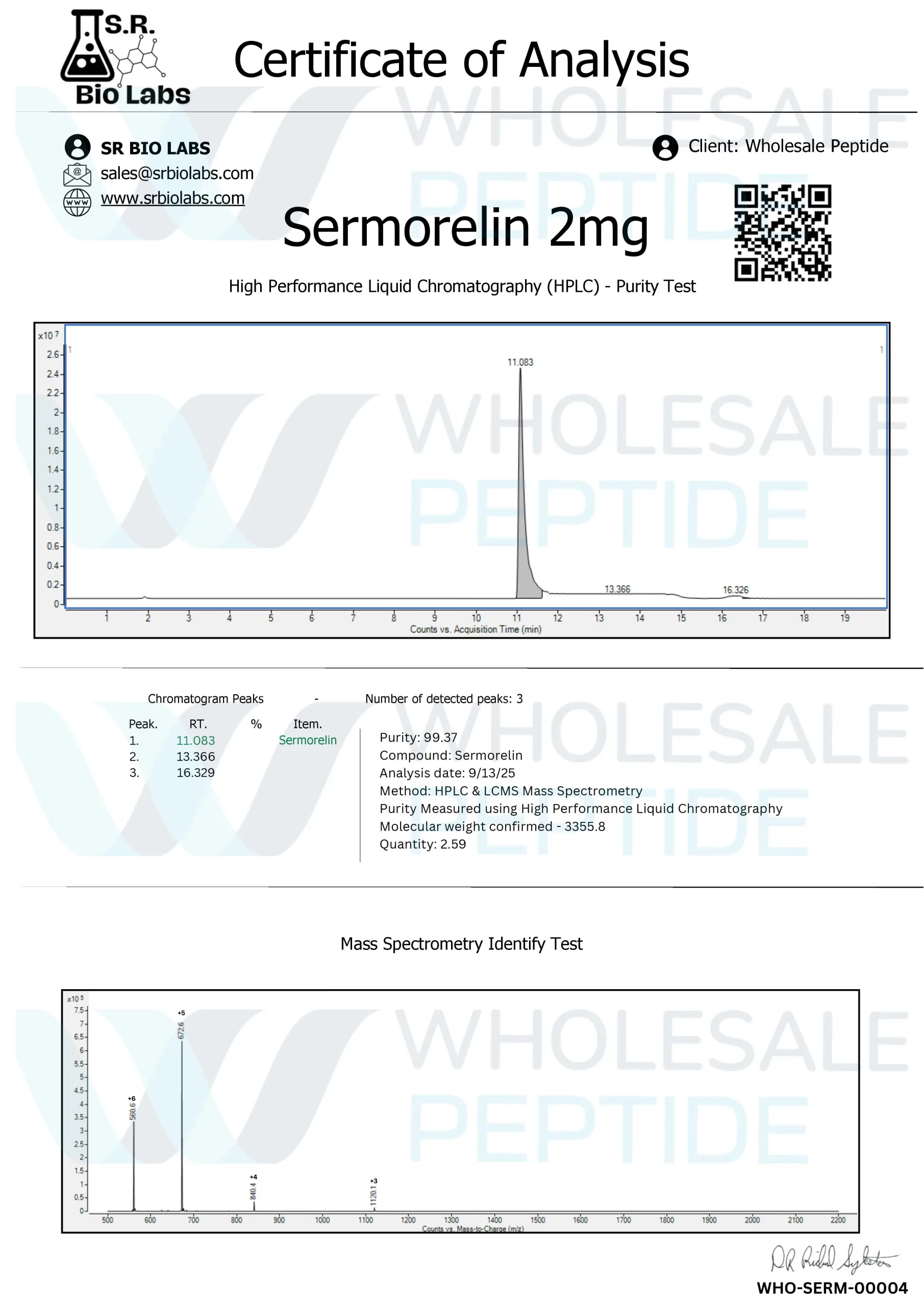
Every batch of sermorelin is third party tested using High-Performance Liquid Chromatography (HPLC) to ensure product purity and accuracy. This analytical verification gives researchers confidence in compound identity and concentration, for reproducible results. Researchers can request certificates of analysis to verify batch specifications and meet lab documentation requirements.
Shipping Policy of Wholesale Peptide
Wholesale Peptide ships same day for orders placed before 1pm EST Monday through Friday. Orders placed after 1pm EST or on weekends will be shipped the next business day. This expedited shipping supports time sensitive research protocols and ensures researchers get the compounds when they need it for their experimental schedule.
The company’s shipping procedure maintains cold chain and protects compound stability during transport. Lab managers appreciate the reliable shipping schedule that supports research planning and experimental timing.
Money Back Guarantee
Wholesale Peptide offers 30 day money back guarantee on all products. Researchers can return any unopened products for full refund of the purchase price of the unused compounds. This policy gives labs flexibility in procurement planning and reduces financial risk associated with research chemical purchase.
Products from Wholesale Peptide are for Research Use Only
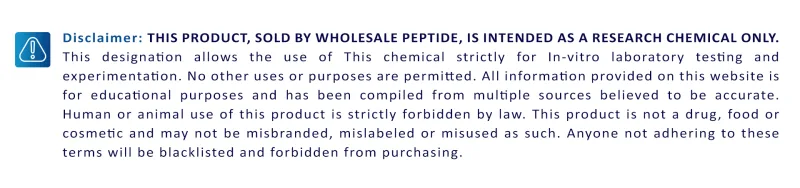
All products sold by Wholesale Peptide are for research chemicals only. This designation allows use of these compounds for in-vitro lab testing and experimentation only. Human or veterinary use is strictly forbidden. These products are not for therapeutic use, food additives or cosmetic use and may not be misbranded, mislabeled or misused as such.
Researchers purchasing sermorelin must understand that the compound is for lab use only. This research only classification ensures compliance with regulatory requirements and proper protocols for chemical handling. Researchers must obtain proper permits and follow institutional guidelines when conducting research with these compounds. Healthcare professionals in research settings must ensure all experimental protocols comply with institutional review board requirements and have proper oversight for compound use. The research-only designation protects both researchers and suppliers by setting clear boundaries for use.
When scientists buy sermorelin injections online from research suppliers they accept responsibility for proper lab use and compliance with regulations. Research institutions have specific protocols for handling and documenting research chemical procurement and use.
Lab directors say researchers must distinguish between experimental compounds and approved therapeutic substances. The sermorelin peptide from research suppliers is different from compounded formulations from healthcare providers for specific therapeutic use under medical supervision.
Conclusion
For researchers studying growth hormone releasing mechanisms and related physiological pathways, sermorelin is a useful synthetic peptide with well defined molecular properties and documented experimental use. The 29 amino acid sequence is a tool to study pituitary gland function, hormone releasing patterns and metabolic effects in controlled lab environments.
When researchers need to buy sermorelin for experimental protocols, selecting suppliers that provide third party testing, fast shipping and research-only designation supports scientific integrity and compliance. Wholesale Peptide’s quality verification, expedited delivery and satisfaction guarantee meets lab requirements while setting boundaries for research chemical use.
Researchers considering sermorelin for experimental studies should evaluate their research objectives, institutional protocols and regulations before procurement. The compound has established molecular characteristics and documented research use for various experimental studies into growth hormone pathways and related physiological mechanisms as long as all use is within research context and institutional guidelines.
References
- Ghigo, E., Arvat, E., Gianotti, L., & Camanni, F. (1996). Growth hormone-releasing hormone (GHRH) and growth hormone secretagogues (GHS): physiological and clinical aspects. Clinical Endocrinology, 45(3), 315-326.
- Thorner, M. O., & Kopchick, J. J. (1999). Growth hormone-releasing hormone and growth hormone secretagogues: mechanisms of action and therapeutic applications. Endocrinology and Metabolism Clinics of North America, 28(3), 553-574.3. Devesa, J., & Cordido, F. (2013). Growth hormone-releasing hormone and its analogs: clinical applications and future perspectives. Nature Reviews Endocrinology, 9(1), 9-15.
- Smith, R. G., & Van der Ploeg, L. H. (1999). Growth hormone secretagogues and their receptors. Clinical Immunotherapeutics, 22(4), 221-230.
- Sonntag, W. E., & Carter, C. S. (2004). Growth hormone and aging: a review. Clinical Endocrinology, 61(4), 443-452.
- Kopchick, J. J., & Andry, J. M. (2000). Growth hormone (GH), GH receptor, and signal transduction. Molecular Genetics and Metabolism, 71(1-2), 293-314.
- Giustina, A., & Veldhuis, J. D. (1998). Pathophysiology of the neuroregulation of growth hormone secretion in experimental animals and the human. Endocrine Reviews, 19(6), 717-797.
- Wilson, T. G., & Rotwein, P. (1998). Growth hormone and insulin-like growth factor gene regulation. Endocrine Reviews, 19(4), 484-503.
- Melmed, S. (2011). Growth hormone deficiency in adults. The New England Journal of Medicine, 364(23), 2245-2254.
- Giustina, A., & Veldhuis, J. D. (1998). Neuroregulation of growth hormone secretion. Endocrine Reviews, 19(6), 717-797.
- Cuneo, R. C., & Salomon, F. (1998). Growth hormone therapy in adults. Clinical Endocrinology, 49(6), 691-701.
- Thorner, M. O., & Kopchick, J. J. (1999). Growth hormone secretagogues and their receptors: physiology and therapeutic potential. Clinical Immunotherapeutics, 22(4), 221-230.13.
To learn more about the sermorelin peptide, visit Pubmed.
| Weight | .001 lbs |
|---|
Related products