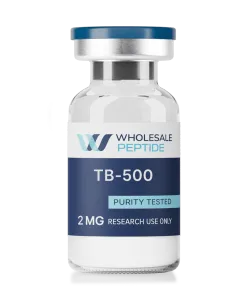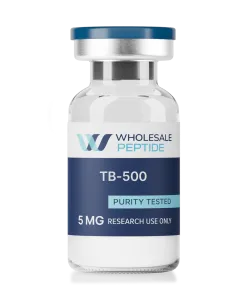
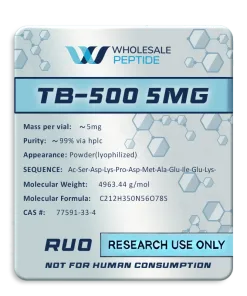
TB-500 5mg
$43.99

Buy TB 500 5mg at Wholesale Peptide
TB-500 is a synthetic version of the active region of thymosin beta 4, a peptide found throughout mammalian tissues. This synthetic peptide has become a valuable research tool for scientists studying wound healing, cell migration and tissue repair. Research shows that TB-500’s unique molecular structure makes it ideal for laboratory studies of cellular response to injury and the healing process.
As a research chemical, TB-500 allows scientists to study the underlying mechanisms of wound healing and cell proliferation in a controlled laboratory environment. The peptide’s actin binding property gives insight into how cells coordinate migration and tissue repair during embryonic development and injury recovery.
Molecular Structure of TB 500 5mg
TB-500 has a defined molecular structure that differs from its parent thymosin β4. The synthetic peptide has a specific amino acid sequence that preserves the actin binding domain and is more stable for research use.
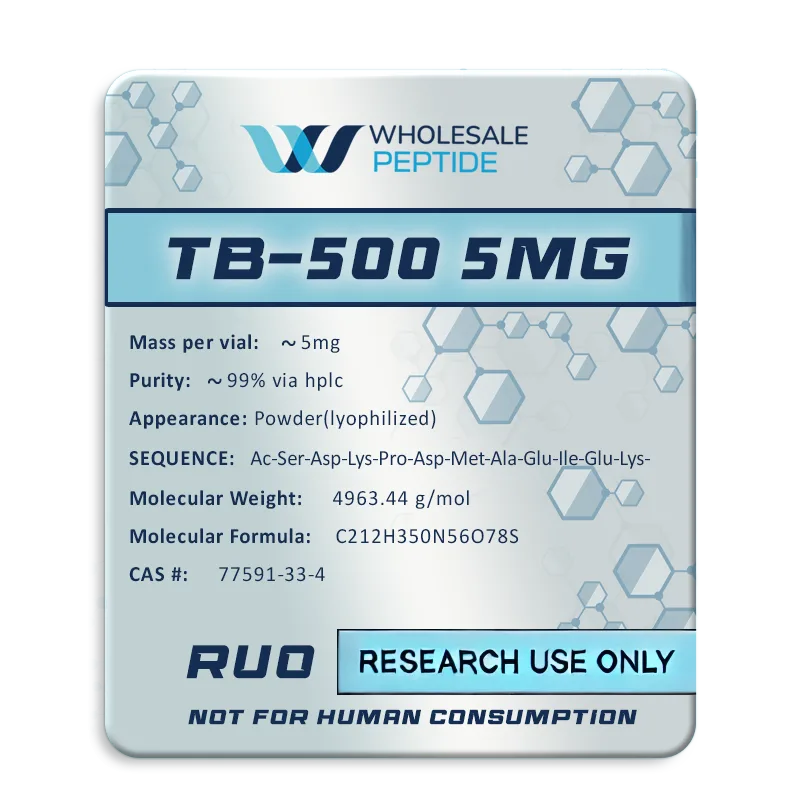
Amino Sequence: Ac-Ser-Asp-Lys-Pro-Asp-Met-Ala-Glu-Ile-Glu-Lys-Phe-Asp-Lys-Ser-Lys-Leu-Lys-Lys-Thr-Glu-Thr-Gln-Glu-Lys-Asn-Pro-Leu-Pro-Ser-Lys-Glu-Thr-Ile-Glu-Gln-Glu-Lys-Gln-Ala-Gly-Glu-Ser
Molecular Formula: C212H350N56O78S
Molecular Weight: 4963 g/mol
PubChem CID: 16132266
CAS #: 77591-33-4
The N-terminal acetylation (indicated by the “Ac-“ prefix) is a critical modification that enhances peptide stability by protecting against proteolytic degradation. This synthetic enhancement makes TB-500 ideal for long term research studies where peptide integrity must be maintained throughout the experiment.
The 43 amino acid sequence classifies TB-500 as an oligopeptide, each amino acid contributing to the peptide’s ability to interact with cellular actin networks. Research shows that this specific sequence maintains the active sites for actin binding and is more stable than thymosin beta 4.
Mechanism of Action
TB-500’s mechanism of action is centered around its actin binding property, which affects cellular cytoskeletal organization and dynamics. The active region of the peptide has high affinity for actin monomers, sequesters them and prevents degradation while keeping them available for polymerization into microfilaments when cellular processes require structural reorganization.
Research shows that this actin binding property allows TB-500 to influence several cellular functions. Cell migration studies show that the peptide promotes the movement of endothelial cells and other cell types by modulating cytoskeletal organization. This is particularly relevant in wound healing where coordinated cell migration is required for tissue repair and blood vessel formation.
The peptide’s effect on angiogenesis is another area of research interest. Laboratory studies show that TB-500 may promote the formation of new blood vessels by modulating endothelial cell behavior and migration patterns. This angiogenic activity could lead to improved nutrient delivery and waste removal in damaged tissues.
TB-500 may also influence cell proliferation and differentiation. The peptide’s actin filament assembly property affects how pluripotent stem cells respond to differentiation signals, potentially affecting neuronal and bone development pathways. These effects on embryonic processes suggest that TB-500 may reactivate embryonic processes that naturally decline in adult tissues.
Animal studies have also looked into TB-500’s anti-inflammatory effects. Research shows that the peptide may reduce inflammation at the injury site while promoting faster healing through enhanced cell migration and proliferation. These dual effects on inflammation and repair make TB-500 a compound of interest for researchers studying tissue regeneration.
Research Studies
Extensive animal studies have provided valuable information on TB-500’s effects on various biological processes. Medical research has focused on the peptide’s wound healing activity with many studies showing accelerated tissue repair in laboratory animal models.
Earlier research showed that thymosin beta 4 and its synthetic derivatives like TB-500 could significantly enhance wound healing in multiple tissue types. Studies on cardiac tissue repair showed that research subjects treated with the peptide had better recovery after myocardial injury. Similar benefits were seen in corneal repair studies where the compound accelerated healing of eye injuries.Musculoskeletal research has shown interesting effects on muscle recovery and tissue repair. Animal studies suggest that TB-500 treatment may reduce the time for damaged tissues to recover after injury. This correlates with the peptide’s ability to promote cell migration and reduce inflammation at the injury site.
Research on the extracellular matrix has shown that TB-500 may affect how cells interact with their environment during repair processes. Studies suggest that the peptide can affect the deposition and organization of matrix proteins, leading to better tissue regeneration and less scar formation.
Organ regeneration research has provided interesting data on TB-500’s potential in regenerative medicine. Animal studies show that the peptide may support regeneration of various organ systems though the mechanisms need to be further investigated in clinical trials.
The national library of medicine has many references to research on TB-500 in chronic pain models. While these are animal studies, they suggest that the peptide’s anti-inflammatory property may contribute to pain reduction through tissue healing rather than direct analgesic effect.
However, please note that human clinical trials are limited. Most data comes from preclinical studies and animal research, the national institutes of health emphasizes the need for more clinical trials before any conclusion can be drawn on human application.
Storage and Safety
Proper storage is crucial to maintain TB-500’s stability and research integrity. The peptide is supplied as a lyophilized powder and requires specific temperature condition to preserve its molecular integrity during storage periods.
Long term storage should be at -20°C to prevent peptide degradation and maintain research grade quality. For shorter storage periods, 2-8°C is generally safe though researcher should minimize temperature fluctuations to preserve peptide stability. Once reconstituted with sterile water or appropriate buffer solution, the peptide should be used promptly or stored at 4°C for very short period.
Laboratory personnel handling TB-500 should follow proper safety protocol for research chemicals. The compound should be handled by qualified personnel in controlled laboratory environment with proper ventilation and personal protective equipment. Research facilities should have detailed safety data sheet and ensure all personnel understand the proper handling procedure.
TB-500 is research-use-only, it cannot be used in or on human or animal outside of controlled laboratory setting. It is not approved by regulatory agency for medical or veterinary use and researcher must comply with all applicable laws governing research chemical use.Detection methods for TB-500 have been developed for various application including doping control analysis. World anti doping agency has established the detection limit for the compound and liquid chromatography mass spectrometry can detect the relevant metabolite in biological sample. Research has shown that metabolite ac lkkte and other metabolite can be detected in equine urine and other biological matrix using specialized chromatography technique.
Healthcare provider and researcher should be aware that TB-500 may show up in drug test analysis especially in athletic context where the anti doping agency has strict policy. High concentration of the peptide or its metabolite may be detectable for extended period after exposure.
Why Buy from Wholesale Peptide
Wholesale Peptide offers several benefits for researcher who want to buy TB 500 5mg for laboratory use. The company’s commitment to quality and customer service makes it a reliable source for research grade peptide and other compound used in scientific research.
Third Party Testing of Every Batch
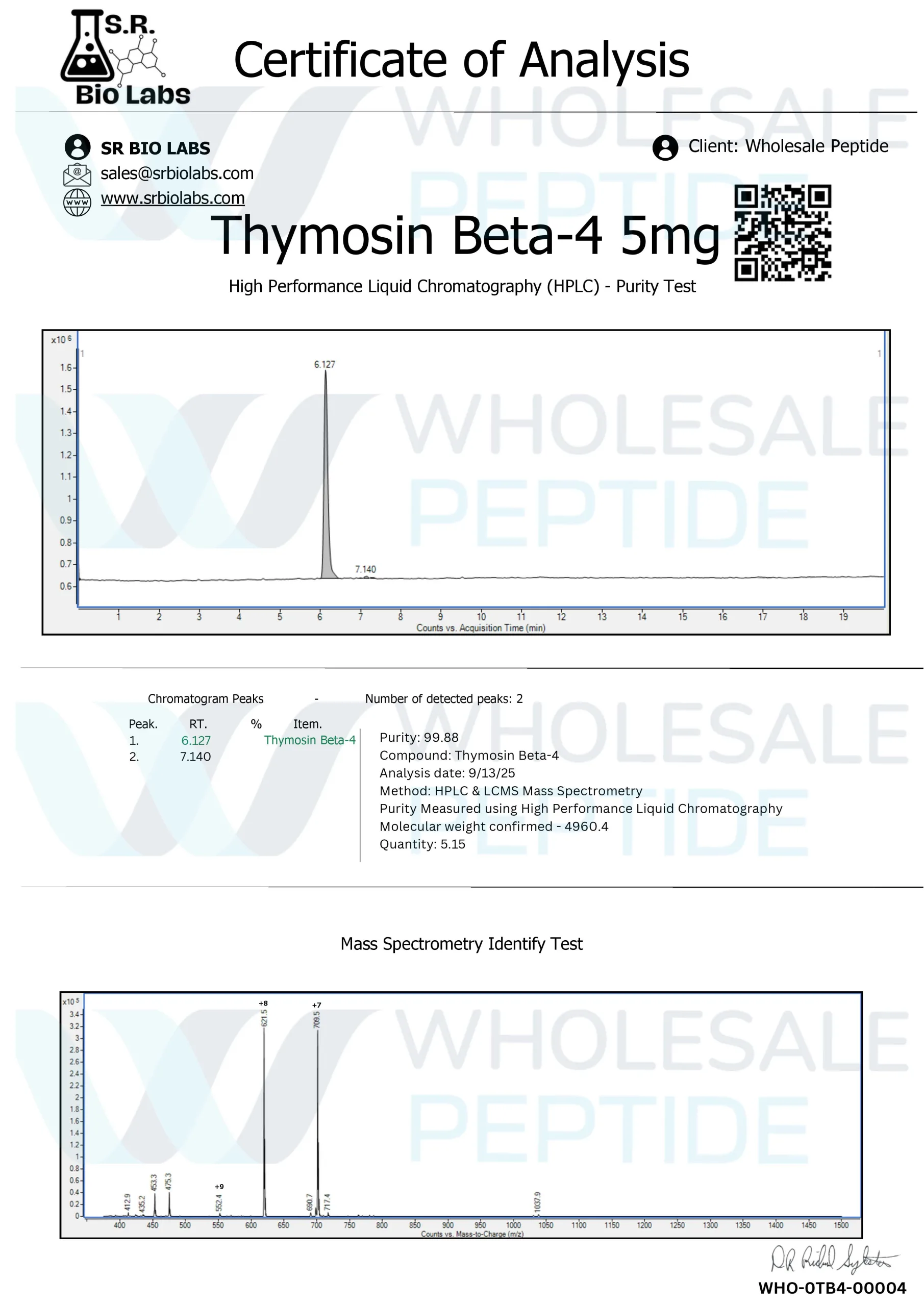
Every batch of TB-500 undergo third party testing using high-performance liquid chromatography (HPLC) to ensure product purity and accuracy. This testing protocol give researcher the confidence that they are receiving consistent high quality compound for their research. The external laboratory testing verify both the purity and composition of each batch so researcher can rely on consistent result across different order.
Shipping Policy of Wholesale Peptide
Wholesale Peptide offers same day shipping for order placed before 1pm EST Monday to Friday. Order placed after 1pm EST or weekend will be shipped the next business day. This fast shipping policy ensure researcher can maintain continuity in their research without extended delay waiting for essential compound.
The company’s shipping protocol include proper packaging for research chemical so peptide maintain its stability during transport. Temperature controlled shipping option is available when necessary to preserve peptide integrity during delivery.
Satisfaction Guarantee
Wholesale Peptide offer 30-day satisfaction guarantee on all product purchased from them. Researcher can return any unopened product for full refund of the purchase price of the unused product. This policy reduce the financial risk associated with ordering research compound and show the company’s confidence in their product.
The satisfaction guarantee is particularly beneficial for researcher with limited budget or those conducting preliminary research where compound requirement may change based on initial result. This flexibility allow researcher to adjust their order based on evolving experimental need.
Products from Wholesale Peptide are for Research Use Only
All product sold by Wholesale Peptide are research chemical only. This means the use of these compound is strictly for in-vitro laboratory testing and experimentation. Human or veterinary use is strictly forbidden. These product are not classified as substance for medical treatment, food or cosmetic use and must not be misbranded, mislabeled or misused as such.
Researcher must understand that TB-500 and other peptide available through Wholesale Peptide are for laboratory use only. The compound are not for human use under any circumstances and researcher must ensure that their research comply with all applicable law governing research chemical use.
The research-use-only designation reflect the current regulatory status of TB-500 which has not been approved by health authority for medical use. While animal study have provided valuable information on the peptide’s biological effect, the lack of comprehensive clinical trial mean that safety and efficacy in human is unknown.
Research institution purchasing TB-500 should maintain detailed record of compound use and ensure that all personnel understand the restriction associated with research chemical. Proper documentation will help ensure compliance with institutional policy and regulatory requirement governing laboratory research.
Various factor influence the regulatory status of research peptide like TB-500 including the need for extensive safety testing and the complexity of peptide therapy development. The national institute continue to emphasize the importance of rigorous research protocol and appropriate oversight for research involving synthetic peptide.
Researcher interested in peptide therapy mechanism, growth factor or wound healing process can use TB-500 as research compound while strictly adhere to laboratory-use-only protocol. The peptide’s well-characterized molecular structure and mechanism of action make it an excellent choice for investigation into cellular repair process and tissue regeneration mechanism.
TB-500 continue to provide valuable information into the cellular mechanism underlying tissue repair and regeneration. As research into wound healing and cell migration advance, synthetic peptide like TB-500 offer researcher powerful tool to understand the complex process that govern tissue repair and organ regeneration. The compound’s unique property as actin binding protein make it particularly useful for investigation into how cell coordinate migration and proliferation during healing process.
For researcher looking for high quality peptide for laboratory use, Wholesale Peptide’s rigorous testing standard and customer-focused policy provide the reliability and support needed for successful research outcome. When you buy TB 500 5mg from Wholesale Peptide, you’re investing in a research compound that has been thoroughly tested and verified to meet the demanding standard required for scientific research.
References
- Goldstein, A. L., Hannappel, E., Sosne, G., & Kleinman, H. K. (2012). Thymosin β4: A multi-functional regenerative peptide. Expert Opinion on Biological Therapy, 12(1), 37–51.
- Ho, E. N., Kwok, W., Lau, M., Wong, A. S., Wan, T. S., Lam, K. K., Schiff, P. J., & Stewart, B. D. (2012). Doping control analysis of TB-500, a synthetic version of an active region of thymosin β4, in equine urine and plasma by liquid chromatography–mass spectrometry. Journal of Chromatography A, 1265, 57–69.
- Maar, K., Hetényi, R., Maar, S., Faskerti, G., Hanna, D., Lippai, B., Takatsy, A., & Bock-Marquette, I. (2021). Utilizing developmentally essential secreted peptides such as thymosin beta-4 to remind adult organs of their embryonic state—New directions in anti-aging regenerative therapies. Cells, 10(6), 1343.
- Rahaman, K. A., Muresan, A. R., Min, H., Son, J., Han, H., Kang, M., & Kwon, O. (2024). Simultaneous quantification of TB-500 and its metabolites in in-vitro experiments and rats by UHPLC-Q-Exactive Orbitrap MS/MS and their screening by wound healing activities in vitro. Journal of Chromatography B, 1235, 124033.
- Sosne, G., Rimmer, D., Kleinman, H., & Ousler, G. (2016). Thymosin Beta 4: A potential novel therapy for neurotrophic keratopathy, dry eye, and ocular surface diseases. Vitamins and Hormones, 102, 277–306.
- Zvereva, M., et al. (2024). Metabolism and detection of TB-500 peptide and its metabolites in biological samples: Implications for doping control. Journal of Analytical Toxicology.
- National Institutes of Health. PubChem Compound Summary for CID 16132266, Thymosin Beta-4. Available at: https://pubchem.ncbi.nlm.nih.gov/compound/Thymosin-beta-4
- World Anti-Doping Agency. (2024). 2025 World Anti-Doping Code International Standard Prohibited List. Available at: https://www.wada-ama.org/
- Kleinman, H., & Sosne, G. (2016). Thymosin β4 promotes dermal healing. Vitamins and Hormones, 102, 251–275.
- Lamers, C. (2022). Peptide-based therapies. Future Drug Discovery, 4(2), FDD75.
For more information on Thymosin Beta-4 (TB-500), visit Wikipedia.
| Weight | .03125 lbs |
|---|
Related products