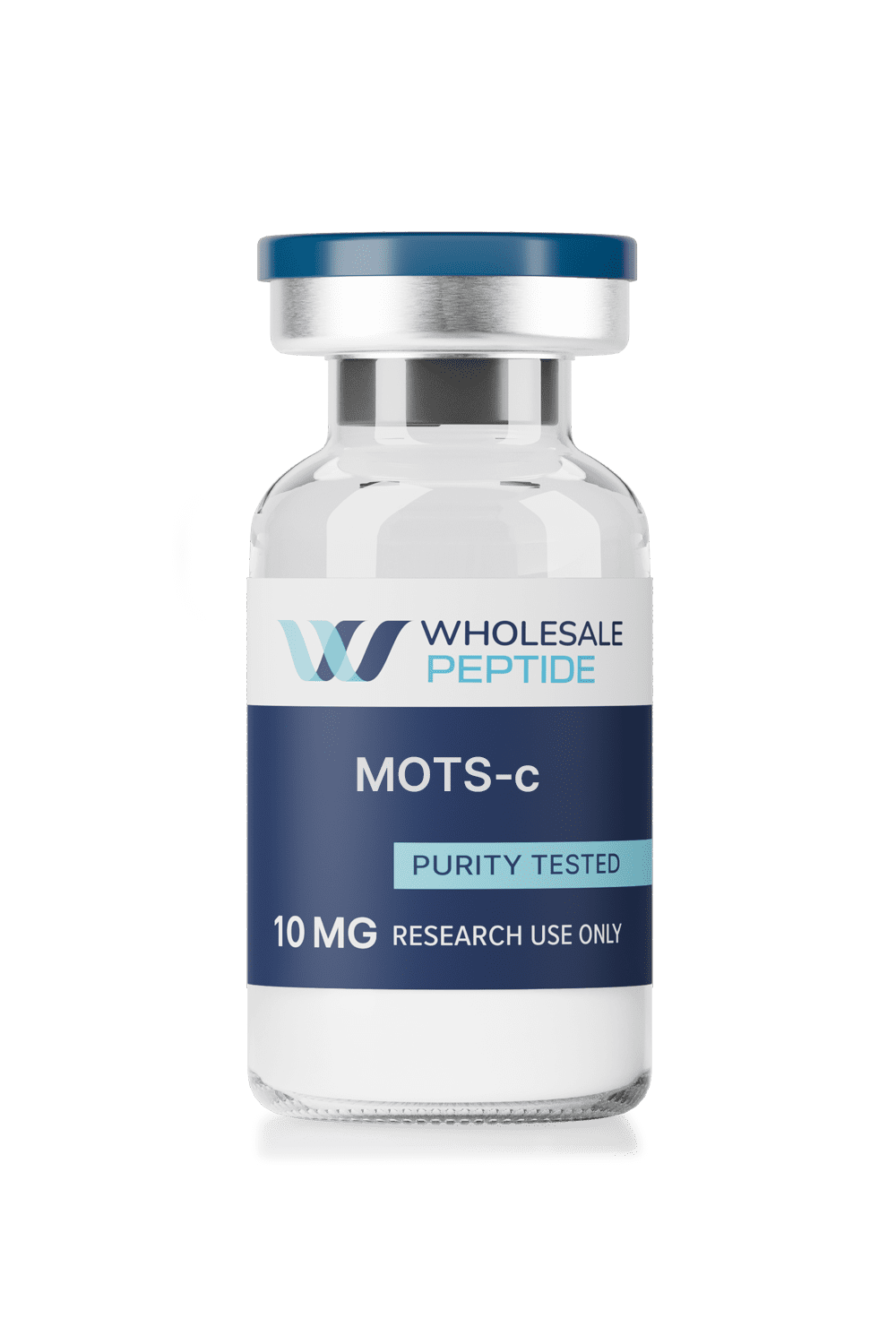
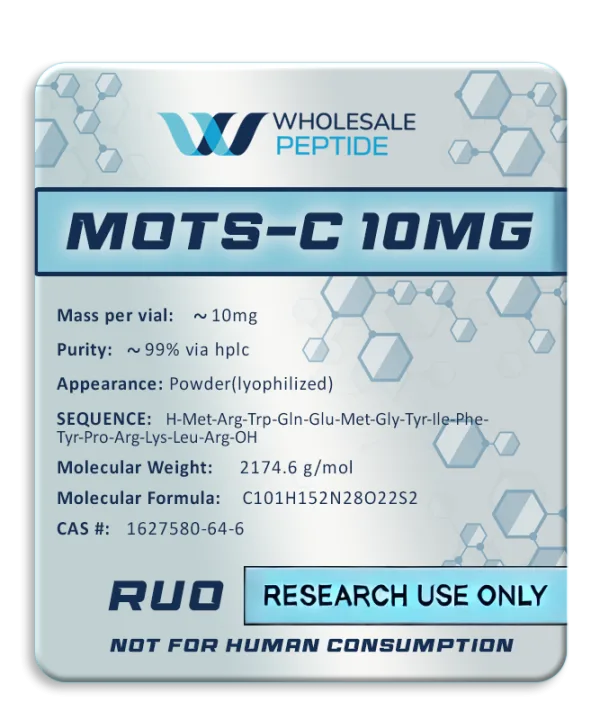
MOTS-c 10mg
$69.99

Buy MOTS-c at Wholesale Peptide: Research-Grade Mitochondrial Derived Peptide
MOTS-c is a research compound of great interest in studies of cellular metabolism, aging and metabolic homeostasis. As scientists investigate the complex relationships between mitochondrial function and metabolic dysfunction, MOTS-c is a unique tool to understand how mitochondrial derived peptides regulate nuclear gene expression and coordinate cellular response to metabolic stress.
Research shows that this mitochondrial encoded peptide MOTS is important for skeletal muscle metabolism and glucose homeostasis, so it’s a must have compound for lab research. When you buy MOTS-c for your research, you get a peptide that bridges mitochondrial and nuclear communication pathways, to understand fundamental biological processes.
Molecular Structure of MOTS-c
The derived peptide MOTS-c has a precisely defined molecular architecture that reflects its mitochondrial genome origin. Understanding these structural features is important for experimental design and compound handling.
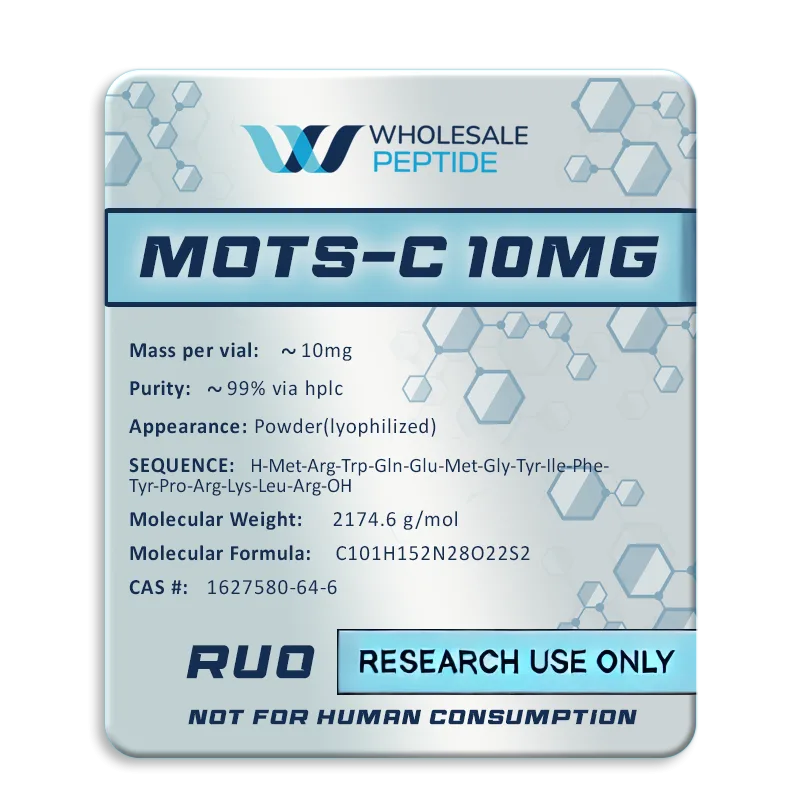
Amino Sequence: MOTS-c is a 16 amino acid mitochondrial derived peptide encoded by the 12S rRNA region of the mitochondrial genome. This genomic location is unique to mitochondrial encoded peptides and is responsible for its specialized cellular functions.
Molecular Formula: C121H200N42O22S2
Molecular Weight: 1915 g/mol
PubChem CID: Not yet assigned (research compound)
CAS Number: Available through research peptide identifier systems
The molecular structure of this mitochondrial encoded peptide mots is evolutionarily conserved across mammalian species, so it’s fundamental for cellular metabolism regulation. Research shows that the peptide’s structure is critical for its biological activity, especially in its interaction with cellular signaling pathways.
Mechanism of Action
MOTS-c works through complex cellular mechanisms that show the complexity of mitochondrial signaling. The peptide’s primary action is to activate the AMPK (AMP-activated protein kinase) pathway in skeletal muscle, which research shows increases glucose uptake and fatty acid metabolism.
Under metabolic stress, research shows that MOTS-c behaves remarkably by translocating to the nucleus. This nuclear translocation allows the peptide to interact with transcription factors like NRF2, ATF1 and ATF7 to regulate nuclear gene expression associated with stress adaptation and metabolic response.The effects of MOTS-c on cellular metabolism goes beyond simple metabolic boost. Research shows that the peptide induces adaptive nuclear gene expression, so cells can respond to glucose restriction and other metabolic stress. This is a fundamental example of mitochondrial communication with nuclear genes, how mitochondria derived peptides coordinate cellular response to environmental changes.
Studies on circulating MOTS-c levels show that endogenous MOTS-c levels vary with metabolic conditions, so this mitochondrial peptide is a dynamic regulator of glucose and fat metabolism.
Research Applications
Lab research on MOTS-c covers multiple research areas, each with unique insights into cellular metabolism and physiological regulation. When you buy MOTS-c, you usually focus on specific experimental applications that utilizes the peptide’s mechanism.
Metabolic Research
Research on metabolic dysfunction often uses MOTS-c to investigate insulin resistance mechanisms and glucose homeostasis. Studies have looked into how mots c treatment affects insulin sensitivity in different experimental models, especially diet induced insulin resistance and functional insulin resistance conditions.
Research on skeletal muscle metabolism uses MOTS-c to understand how mitochondrial derived peptides affect muscle homeostasis and cellular energy regulation. Research shows that the peptide’s effect on glucose uptake makes it useful for studying glucose metabolism in lab settings.
Aging Research
The relationship between mots c and aging is a major research focus. Studies have shown age dependent insulin resistance patterns and how endogenous mots c levels change throughout lifespan. Research on age related diseases often uses MOTS-c to investigate age dependent physical decline mechanisms.
Lab research on aging cell models uses MOTS-c to understand how maintaining mitochondrial function relates to cellular longevity and stress responses. The peptide’s role in antioxidant responses and reactive oxygen species regulation makes it relevant for aging research applications.
Cardiovascular Research
Research on cardiovascular disease mechanisms is increasingly using MOTS-c due to its potential effects on coronary endothelial dysfunction and cardiovascular diseases. Studies on how mots c affects endothelial function provides insights into the connection between metabolic health and cardiovascular outcome.
Research on obesity and insulin resistance often uses MOTS-c to understand how metabolic dysfunction contributes to cardiovascular risk factors, especially in high fat diet models of cardiovascular health.
Exercise Physiology Research
Lab research on exercise response often measures plasma mots c levels to understand how exercise affects mitochondrial peptides expression. Research shows that mots c plays important role in skeletal muscles’ adaptation to exercise stress, so it’s useful for exercise physiology research.Research on how exercise restore cardiac function sometimes uses MOTS-c to investigate the molecular mechanism of exercise induced cardiovascular benefits.
Inflammation and Immune Response Research
Research on immune response regulation increasingly uses MOTS-c due to its effect on inflammatory pathways. Studies on mitochondrial dysfunction and immune system function uses this compound to understand cellular stress response.
Research on mesenchymal stem cells and bone marrow stem cells often examines how mots c regulates cellular response to inflammatory stimuli, so it’s useful for stem cell biology and regenerative medicine research.
Storage and Handling Guidelines
Proper storage and handling protocols ensure compound integrity for research use. When you buy MOTS-c, follow established storage guidelines to maintain peptide stability and experimental reliability.
Initial Storage: Store lyophilized peptide at 4°C or below upon receipt. This temperature range prevents degradation during short-term storage while keeping the compound accessible for immediate use.
Long-term Storage: For extended storage, store at -20°C to maximize stability and preserve biological activity. This temperature provides optimal condition for long term storage.
Reconstituted Solutions: Once dissolved in buffer, MOTS-c solutions remain stable for 3+ weeks at +4°C. This stability window allows for multiple uses from a single preparation.
Critical Handling: Avoid repeated freeze-thaw cycles as temperature fluctuations can damage peptide structure and reduce experimental reliability. Proper aliquoting minimizes temperature exposure.
| Storage Condition | Temperature | Duration | Notes |
|---|---|---|---|
| Initial Receipt | 4°C or below | Short-term | Immediate use |
| Long-term Storage | -20°C | Extended periods | Maximum stability |
| Reconstituted | +4°C | 3+ weeks | Single-use aliquots preferred |
| Shipping | Room temperature | Transit period | No cold chain required |
Why Buy from Wholesale Peptide
Wholesale Peptide provides research-grade MOTS-c for laboratory use, so you get compounds suitable for in-vitro studies and cell culture work. The company focuses on research applications which aligns with the regulatory requirements for this mitochondrial derived peptide.
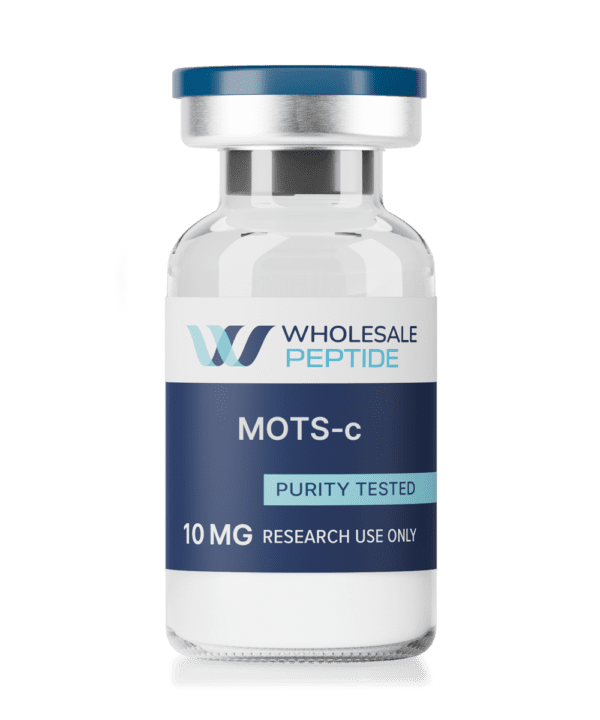
Product Specifications: MOTS-c is supplied as lyophilized powder in 10mg vials, convenient for most research protocols. This formulation is stable during shipping without cold chain, reducing logistics complexity and cost.
Quality: Every batch undergoes strict quality control to ensure research grade. The powder formulation is stable across different lab environments and research conditions.
Research Only: All products are research only, complying with regulatory requirements and giving scientists access to high quality research compounds for legitimate lab use.
Research Use Only
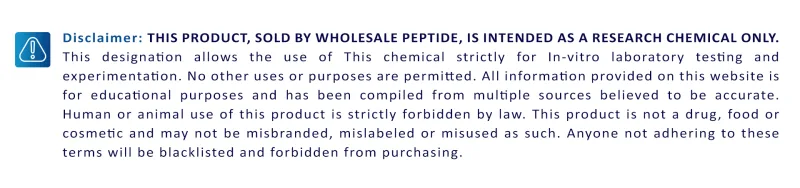
All products sold by Wholesale Peptide are research chemicals intended for in-vitro laboratory testing and experimentation only. This classification ensures compliance with regulations and supports legitimate scientific research into mitochondrial metabolism and cellular biology.
Regulatory Status: MOTS-c is research only and not for human or veterinary use. This status reflects the current regulatory environment for mitochondrial peptides and ensures proper use in research.
Lab Use: The research only designation allows for cell metab studies, molecular mechanisms investigation and other lab research that advance scientific understanding of mitochondrial signaling.
Compliance: Researchers purchasing MOTS-c must ensure their research aligns with institutional protocols and regulatory guidelines for research compound use. This includes proper lab safety procedures and documentation requirements.
Shipping
Wholesale Peptide ships same day for orders placed before 1pm EST Monday to Friday. Orders placed after this cut off or on weekends ship the next business day for timely research projects.
The shipping process takes into account the stability of lyophilized MOTS-c and allows for room temperature transport without compromising compound integrity. This reduces cost while maintaining product quality during transit.
Guarantee
30-day money back guarantee for all products. Researchers can return unopened products for full refund of the purchase price. This guarantee shows the company’s commitment to research quality and customer service.
This guarantee supports researchers’ need for reliable compound sources for their scientific research.
Third Party Testing
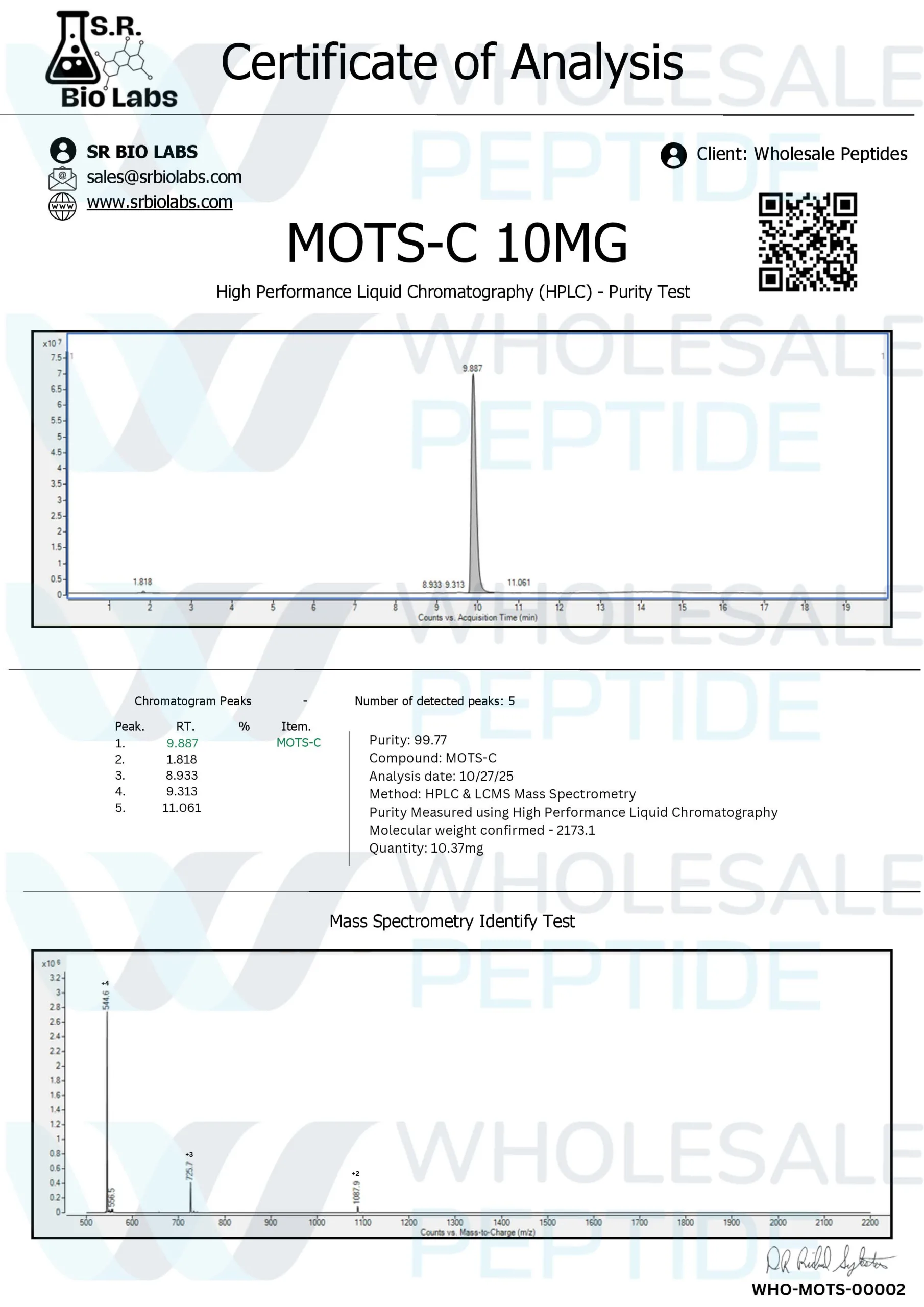
Every batch of MOTS-c undergoes third party testing using High-Performance Liquid Chromatography (HPLC) to verify product purity and accuracy. This testing protocol ensures researchers get compounds that meet established quality standards for research.
Third party verification provides independent confirmation of compound specifications, supporting experimental reliability and research integrity. HPLC analysis confirms peptide identity, purity level, absence of contaminants that can affect research outcomes.
Testing Parameters:
- Peptide identity verification
- Purity level confirmation
- Contaminant screening
- Molecular weight verification
- Batch-to-batch consistency analysis## Summary
When you buy MOTS-c from Wholesale Peptide, you get a research grade mitochondrial derived peptide that gives you insight into cellular metabolism and mitochondrial function. The compound has a well characterised molecular structure, documented mechanism of action and established storage protocols for various research applications including metabolic studies, aging research and cardiovascular research.
The company’s quality assurance through third party testing, research only compliance and shipping procedures gives you a reliable source for this mitochondrial peptide. As scientific understanding of mitochondrial derived peptides advances, MOTS-c is a valuable tool for researchers studying the complex relationships between mitochondrial metabolism, nuclear gene expression and cellular adaptation to metabolic stress.
For researchers planning studies on mitochondrial communication, glucose metabolism or cellular stress responses, MOTS-c is a well characterised compound with documented mechanism and established handling protocols for rigorous scientific research.
References
- Lee C, Zeng J, Drew BG, Sallam T, Martin-Montalvo A, Wan J, et al. The mitochondrial-derived peptide MOTS-c promotes metabolic homeostasis and reduces obesity and insulin resistance. Cell Metab. 2015;21(3):443–54.
- Wan W, Zhang L, Lin Y, Rao X, Hua F, Ying J. Mitochondria-derived peptide MOTS-c: effects and mechanisms related to stress, metabolism and aging. J Transl Med. 2023;21:36.
- Reynolds JC, Lai RW, Woodhead JST, Joly JH, Mitchell CJ, Cameron-Smith D, et al. MOTS-c is an exercise-induced mitochondrial-encoded regulator of age-dependent physical decline and muscle homeostasis. Nat Commun. 2021;12(1):470.
- Kim SJ, Miller B, Kumagai H, Mehta HH, Xiao J, Wan J, et al. The mitochondrial-derived peptide MOTS-c is a regulator of plasma metabolites and enhances insulin sensitivity. Physiol Rep. 2019;7(13):e14171.
- Lu H, Tang S, Xue C, Liu Y, Wang J, Zhang W, et al. Mitochondrial-derived peptide MOTS-c increases adipose thermogenic activation to promote cold adaptation. Int J Mol Sci. 2019;20(10):2456.6. Ming W, Lu G, Xin S, Huanyu L, Yinghao J, Xiaoying L, et al. MOTS-c inhibits ovariectomy-induced bone loss through AMPK activation. Biochem Biophys Res Commun. 2016;476(4):412–9.
- Yin X, Jing Y, Chen Q, Abbas AB, Hu J, Xu H. Intraperitoneal administration of MOTS-c produces antinociceptive and anti-inflammatory effects through AMPK pathway in mouse formalin test. Eur J Pharmacol. 2020;870:172909.
- Ramanjaneya M, Jerobin J, Bettahi I, Bensila M, Aye M, Siveen KS, et al. Lipids and insulin regulate MOTS-c in PCOS and healthy subjects. Clin Endocrinol (Oxf). 2019;91(2):278–87.
- Li S, Wang M, Ma J, Pang X, Yuan J, Pan Y, et al. MOTS-c and exercise restore cardiac function by activating NRG1-ErbB signaling in diabetic rats. Front Endocrinol. 2022;13:812032.
- Zempo H, Kim SJ, Fuku N, Nishida Y, Higaki Y, Wan J, et al. A pro-diabetogenic mtDNA polymorphism in the mitochondrial-derived peptide MOTS-c. Aging. 2021;13(2):1692–717.
- Kim KH, Son JM, Benayoun BA, Lee C. MOTS-c translocates to the nucleus to regulate nuclear gene expression in response to metabolic stress. Cell Metab. 2018;28(3):516–24.
- Cao X, Li H, Tao H, Wu N, Yu L, Zhang D, et al. Metformin inhibits vascular calcification in female rat aortic smooth muscle cells via the AMPK-eNOS-NO pathway. Endocrinology. 2013;154(10):3680–9.
To learn more about MOTS-c, you can check out Wikipedia.
| Weight | .03125 lbs |
|---|
Related products