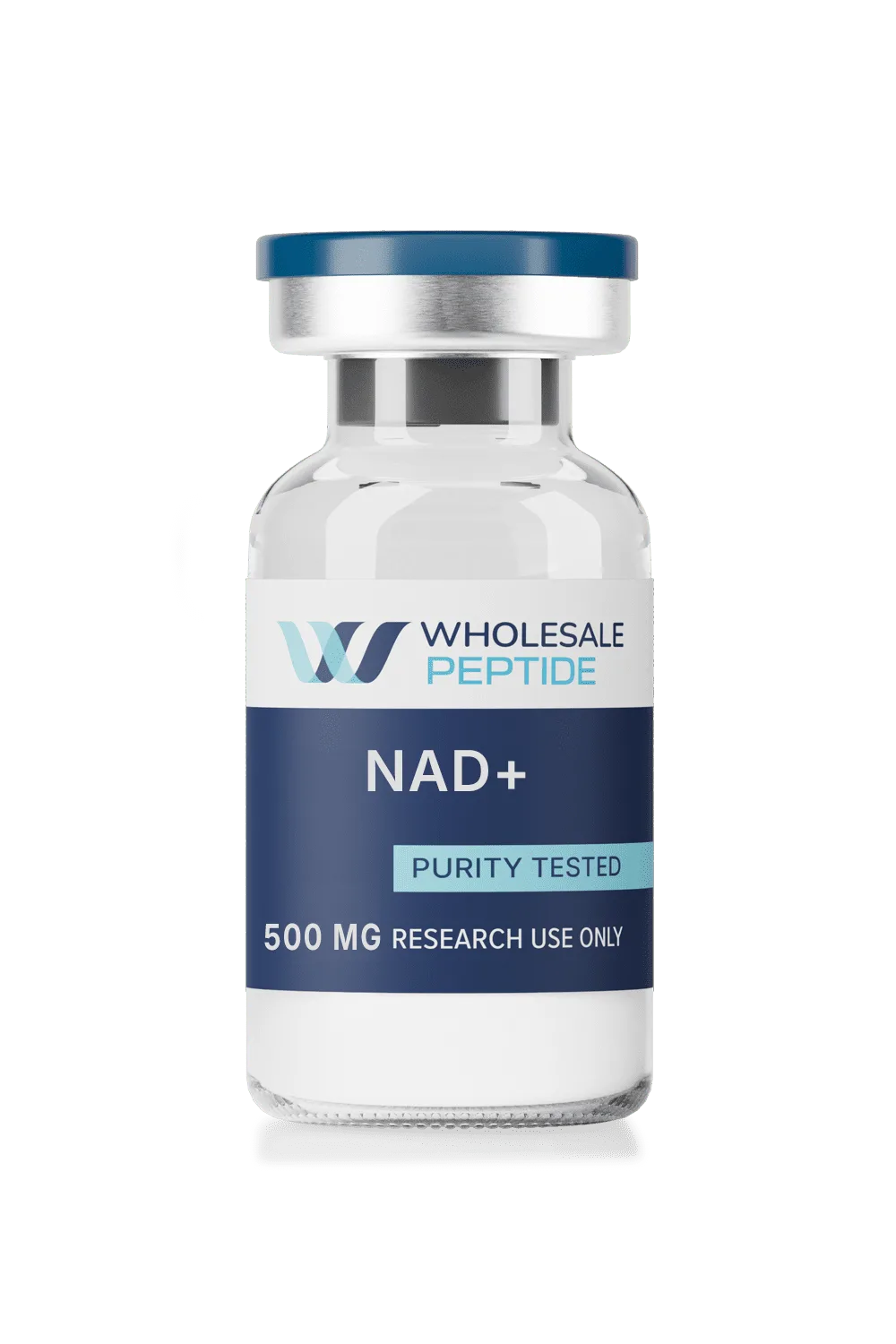
NAD+ 500mg
$119.99

Buy NAD+ at Wholesale Peptide: Research-Grade Nicotinamide Adenine Dinucleotide
Research into nicotinamide adenine dinucleotide is heating up as scientists uncover its key role in cellular processes and energy metabolism. For labs looking to buy NAD+ for research purposes, understanding the molecular properties and sourcing options is crucial for research success.
This molecule is a cellular coenzyme in many metabolic pathways, making it a hot topic for studies on cellular health, energy production and age related decline. Research shows NAD+ plays a fundamental role in many cellular processes from dna repair to mitochondrial function.
Molecular Structure of NAD+
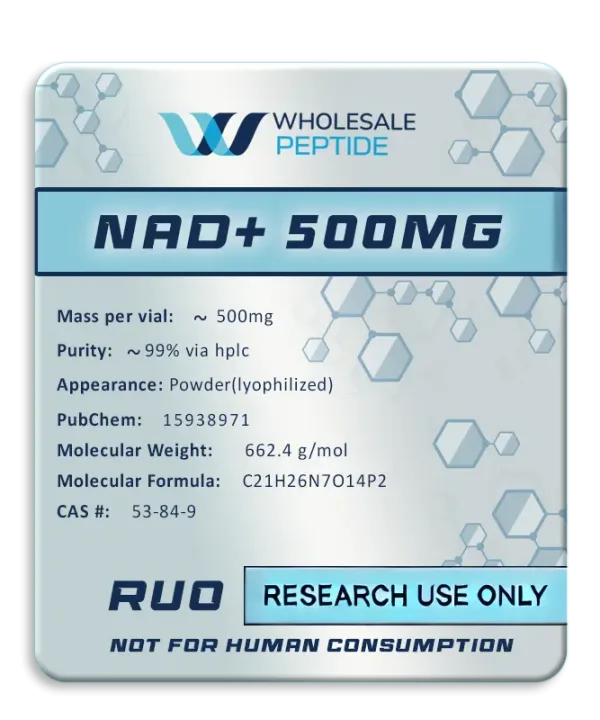
Chemical Name: Nicotinamide adenine dinucleotide
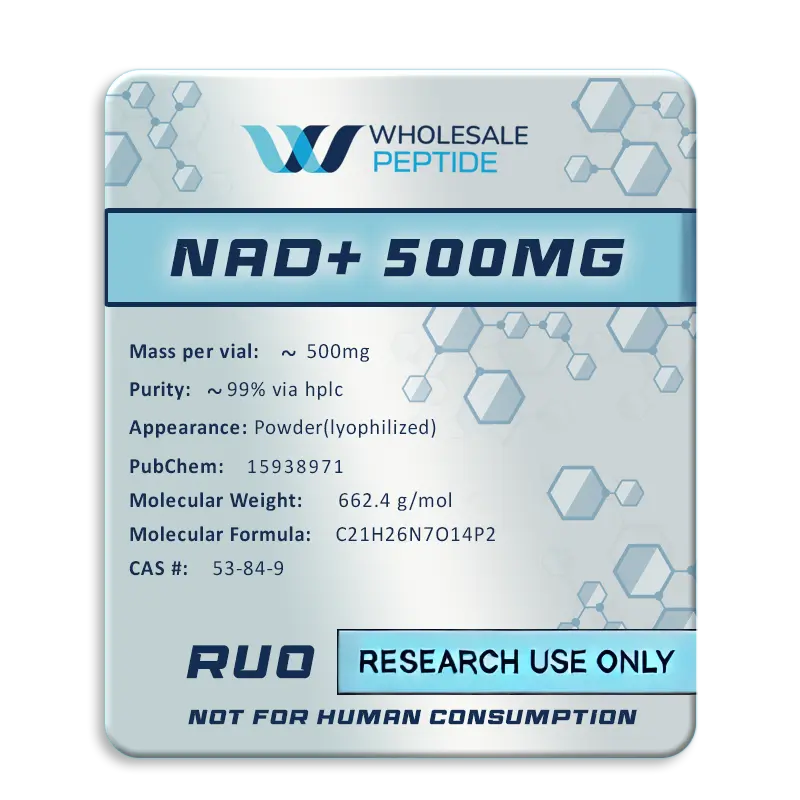
Molecular Formula: C21H27N7O14P2
Molecular Weight: 663.4 g/mol
PubChem CID: 5892
CAS #: 53-84-9
The molecular structure of nicotinamide adenine dinucleotide is two nucleotides joined through their phosphate groups. One nucleotide has an adenine base and the other has nicotinamide. This compound exists in both oxidized (NAD+) and reduced (NADH) forms so it can function in redox reactions throughout cellular metabolism.
Scientists studying this signaling molecule often refer to it as nicotinic acid adenine dinucleotide but the standard nomenclature is nicotinamide adenine dinucleotide nad. The exact molecular configuration allows it to participate in electron transport chain reactions and oxidative phosphorylation processes that researchers investigate in the lab.
Mechanism of Action
NAD+ is the central player in cellular energy production, it’s an electron carrier in redox reactions in the experimental system. Research shows it accepts electrons from other molecules, gets reduced to NADH by adding a hydride ion. The resulting mitochondrial NADH can then transfer electrons to the electron transport chain and support energy metabolism pathways.
Lab research shows NAD+ is a cofactor for enzymes involved in many cellular processes. Research shows these include sirtuins (longevity protein complexes), poly (ADP-ribose) polymerases (PARPs) and CD38, all involved in dna repair, gene expression regulation and cellular signaling mechanisms that researchers investigate in the lab.Research into cellular nad levels shows that increased availability may enhance mitochondrial function and activate mitophagy processes. Research shows these pathways involve the recycling of dysfunctional mitochondria and stimulation of cellular repair mechanisms that researchers investigate to understand cellular maintenance mechanisms.
The compound also generates cyclic adp ribose and facilitates posttranslational modifications that research shows may influence circadian rhythm regulation and cellular response to environmental factors.
Research
Preclinical studies in mouse models have provided a wealth of data on NAD+ levels and cellular function. Research shows nad levels decrease by about 2 fold by mid age in these experimental systems and correlate with many age related changes that researchers see in the lab.
Research into NAD+ restoration to youthful levels in preclinical models has shown some interesting findings. Research shows improvements in cardiovascular parameters, metabolic profiles, muscle function and mitochondrial activity in these experimental systems. Research also shows enhanced organ protection and regeneration in liver, heart and kidney tissues in the lab.
Neurological research models have shown promise when researchers look at NAD+ supplementation. Preclinical studies show potential benefits for memory function and nerve regeneration in the experimental system but these need to be further investigated in controlled research protocols.
Human Research
Clinical trials in humans have shown that orally administered NAD+ precursors, primarily nicotinamide riboside (NR) and nicotinamide mononucleotide (NMN) increase cellular nad levels in blood and tissue samples. One open-label, nonrandomized trial with NR supplementation showed doubled whole blood NAD+ levels with no adverse effects in lab parameters.
Research shows these vitamin precursors enter human cells through salvage pathway mechanisms and support cellular energy production and metabolic pathways that researchers are investigating. Research has shown increased presence of NAD metabolites in peripheral blood mononuclear cells, indicating the compounds are bioavailable in the experimental system.
Additional human research shows potential effects on insulin resistance markers and inflammatory cytokines but researchers emphasize the need for more extensive placebo controlled trials to establish the mechanisms.
Storage and Safety
Proper storage is important when labs buy NAD+ for research. This compound is sensitive to environmental factors like light, temperature and humidity. Research protocols require samples to be stored in cool, dry and dark conditions to prevent degradation that can affect the results of the experiment.Most suppliers recommend to store immediately upon receipt to maintain molecular stability throughout the research period. Laboratory studies show that exposure to high temperature or direct light can affect the compound integrity and potentially the experimental outcome.
| Storage Parameter | Recommended Condition |
|---|---|
| Temperature | 2-8°C (refrigerated) |
| Light Exposure | Dark/minimal |
| Humidity | Low/dry environment |
| Container | Sealed, appropriate material |
Current human supplementation studies with NR and NMN show these compounds are generally well tolerated in the experimental system. Reported observations in the lab are minimal but some studies note occasional gastrointestinal responses or mild physiological reactions that researchers document as part of the safety monitoring.
Why Buy from Wholesale Peptide
When researchers buy NAD+ for the lab, sourcing is critical to the experiment success. Wholesale Peptide offers several advantages that cater to the needs of research institutions and scientific labs.
Third Party Testing of Every Batch
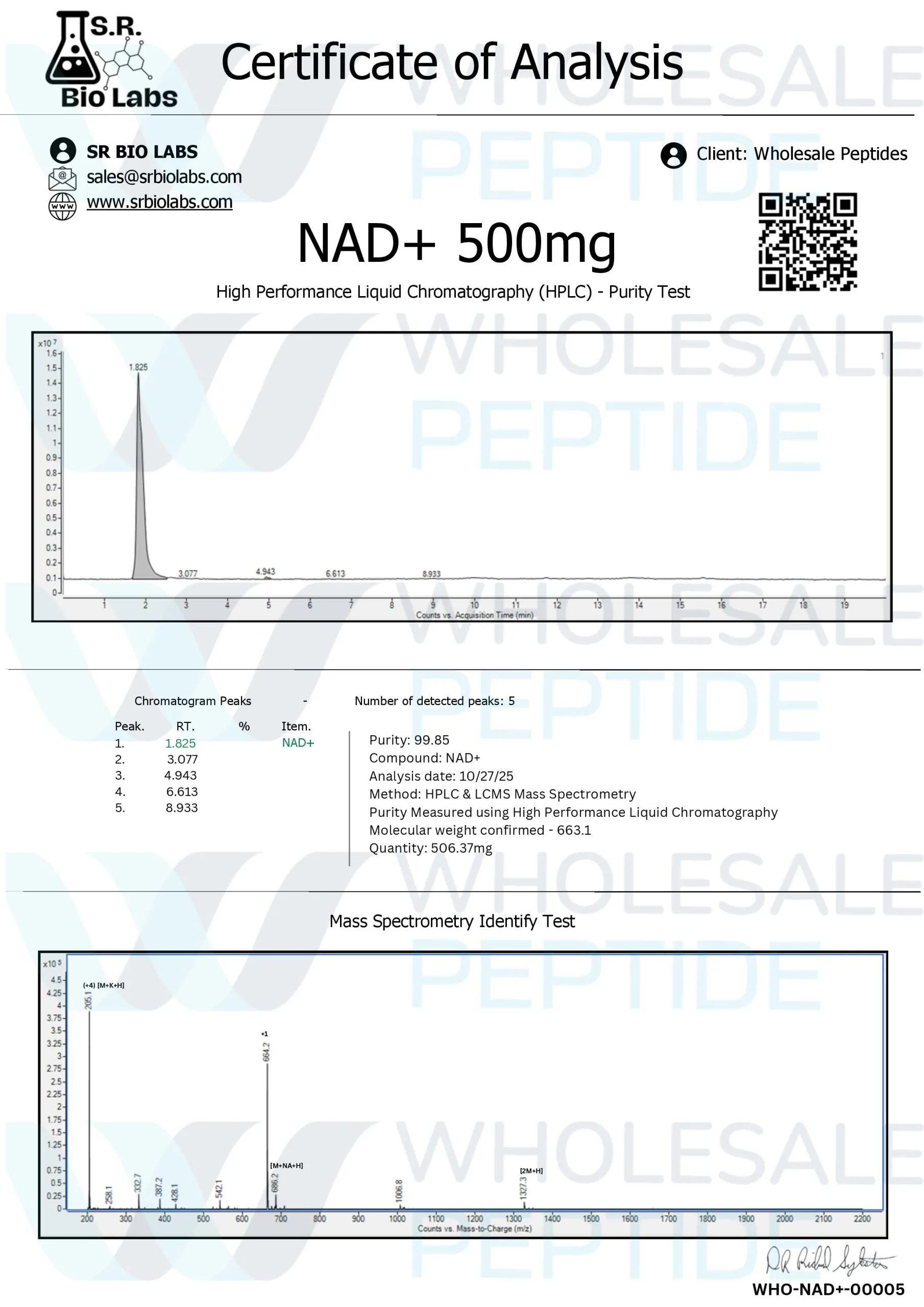
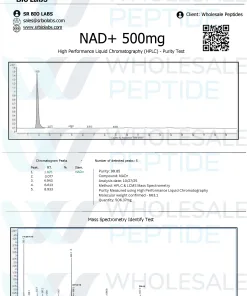
Every batch of products is tested by third party using HPLC (high-performance liquid chromatography) to ensure product purity and accuracy. This analytical technique provides precise measurement of compound composition, detects impurities and verifies concentration levels that are critical for reproducible research results.
Third party batch testing is an industry best practice that research institutions require for reliable experimental outcome. Scientists investigating cellular nad levels, energy metabolism or related pathways need consistent, well characterized compounds to ensure their findings reflect true biological response rather than variation in product quality.
Shipping Policy of Wholesale Peptide
Wholesale Peptide ships same day for orders placed before 1pm EST Monday to Friday. Orders placed after 1pm EST or weekend will be shipped the next business day. This expedited shipping policy benefits research labs that require continuous supply for ongoing experiments or time sensitive research protocols.
Satisfaction Guarantee
Wholesale Peptide offers 30 day satisfaction guarantee on all products. Simply return any unopened products to us for full refund of the purchase price of the unused products. This return policy reduces procurement risk for research institutions and shows confidence in product quality and consistency.
Products from Wholesale Peptide are for Research Use Only
All products sold by Wholesale Peptide are for research chemicals only. This designation allows the use of these compounds strictly for in-vitro laboratory testing and experimentation. Human or veterinary use is strictly forbidden. These products are not for therapeutic application, nutritional supplementation or cosmetic use and may not be misbranded, mislabeled or misused as such.This research-use-only classification ensures compliance with regulatory guidelines while allowing legitimate scientific investigation into cellular processes, energy metabolism and related biochemical pathways. Research institutions studying cellular health, aging processes or metabolic mechanisms can use these compounds in appropriate laboratory protocols and safety framework.
Scientists investigating topics such as cellular energy production, mitochondrial function, dna damage responses, or gene expression regulation need access to well characterized research compounds. The research designation protects both suppliers and research institutions from regulatory concerns while allowing continued scientific exploration of these biological processes.
When labs buy NAD+ from Wholesale Peptide, they get compounds intended for scientific investigation not commercial or therapeutic use. This distinction supports the intense research being done to understand the role of this molecule in cellular function and metabolic pathways.
Research is ongoing to understand how this cellular coenzyme participates in redox state regulation, energy levels maintenance and various cellular processes that may inform our understanding of aging processes and cellular function. Studies on salvage pathway, rate limiting enzyme activities and metabolic responses provide valuable insights into biological mechanisms.
Clinical evidence development requires high quality research compounds that meet purity standards. As scientists investigate nad supplements effects in the lab and cellular responses, reliable sourcing becomes more important to advance our understanding of these complex biological systems.
For research institutions that want to buy NAD+ for research, Wholesale Peptide offers research grade compounds with quality assurance, fast shipping and regulatory compliance that supports legitimate scientific inquiry into this area of cellular biology.
References
- Verdin, E. NAD+ in aging, metabolism, and neurodegeneration. Science 350, 1208–1213 (2015).
- Imai, S. & Guarente, L. NAD+ and sirtuins in aging and disease. Trends Cell Biol. 24, 464–471 (2014).
- Rajman, L., Chwalek, K. & Sinclair, D. A. Therapeutic potential of NAD-boosting molecules: the in vivo evidence. Cell Metab. 27, 529–547 (2018).
- Katsyuba, E., Romani, M., Hofer, D. & Auwerx, J. NAD+ homeostasis in health and disease. Nat. Metab. 2, 9–31 (2020).5. Yoshino, J., Baur, J. A. & Imai, S. I. NAD+ intermediates: the biology and therapeutic potential of NMN and NR. Cell Metab. 27, 513–528 (2018).
- Mills, K. F. et al. Long-term administration of nicotinamide mononucleotide mitigates age-associated physiological decline in mice. Cell Metab. 24, 795–806 (2016).
- Cantó, C., Menzies, K. J. & Auwerx, J. NAD+ metabolism and the control of energy homeostasis: a balancing act between mitochondria and the nucleus. Cell Metab. 22, 31–53 (2015).
- Gomes, A. P. et al. Declining NAD+ induces a pseudohypoxic state disrupting nuclear-mitochondrial communication during aging. Cell 155, 1624–1638 (2013).
- Trammell, S. A. J. et al. Nicotinamide riboside is uniquely and orally bioavailable in mice and humans. Nat. Commun. 7, 12948 (2016).
- Zhang, H. et al. NAD+ repletion improves mitochondrial and stem cell function and enhances life span in mice. Science 352, 1436–1443 (2016).
To learn more about NAD+, you can check out Wikipedia.
| Weight | .03125 lbs |
|---|
Related products