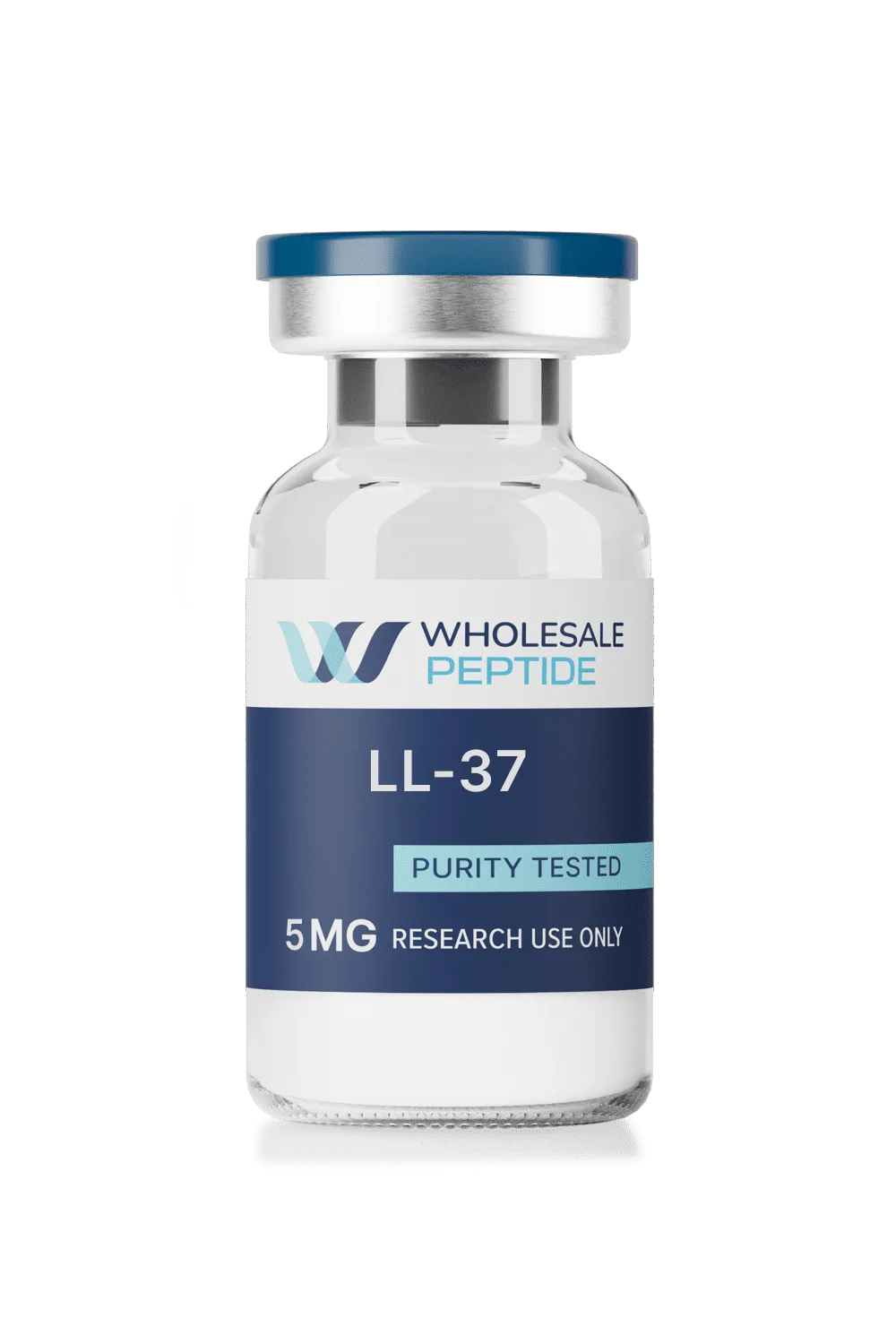
LL-37 5mg
$69.99

Buy LL-37 at Wholesale Peptide: Research-Grade Human Antimicrobial Peptide
LL-37 is a unique research opportunity as the only human cathelicidin antimicrobial peptide. This 37 amino acid peptide has been getting a lot of attention in molecular biology research for its role in innate immune system studies and its complex interactions with both bacterial and mammalian cells. Research shows that LL-37 plays a key role in host defense mechanisms so it’s a great subject for laboratory research into antimicrobial activity and immune responses.
The peptide LL-37 has broad antimicrobial activity against many pathogens and also has immunomodulatory properties that researchers are still investigating. Studies have shown that this human antimicrobial peptide works through mechanisms different from traditional antimicrobial peptides, giving researchers new insights into innate immunity. When you buy LL-37 for your research, you get a peptide that bridges antimicrobial research and immunological research.
Molecular Structure of LL-37
The molecular structure of LL-37 defines its function in research applications. This cationic, amphipathic peptide has 37 amino acids, making it the only human cathelicidin identified to date.
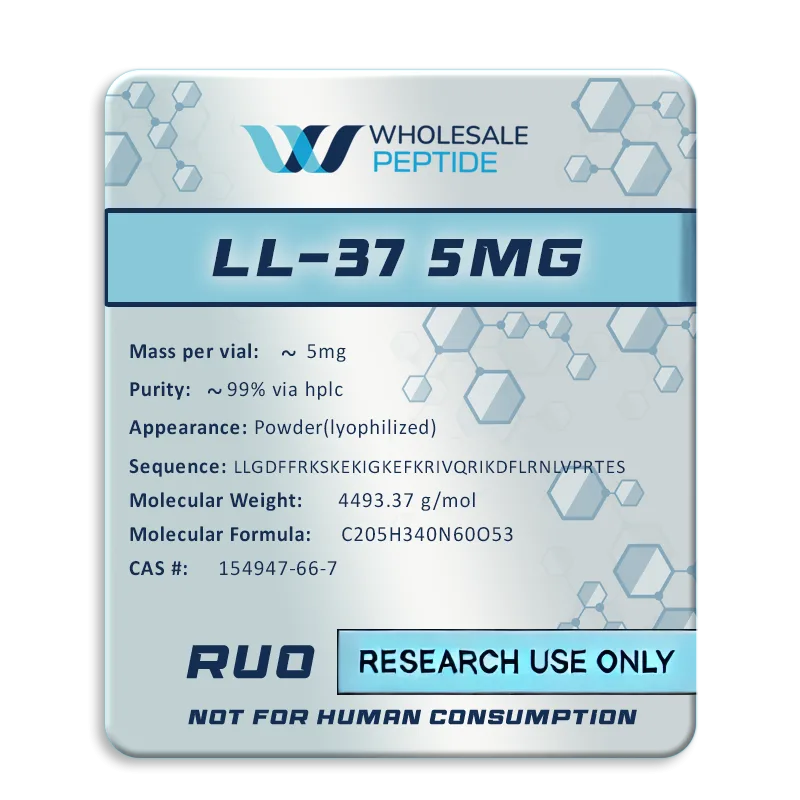
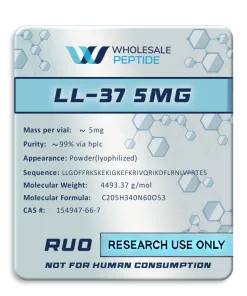
Amino Sequence: Leu-Leu-Gly-Asp-Phe-Phe-Arg-Lys-Ser-Lys-Glu-Lys-Ile-Gly-Lys-Glu-Phe-Lys-Arg-Ile-Val-Gln-Arg-Ile-Lys-Asp-Phe-Leu-Arg-Asn-Leu-Val-Pro-Arg-Thr-Glu-Ser
Molecular Formula: C205H340N60O53
Molecular Weight: 4493 g/mol
PubChem CID: 25119883
CAS #: 154947-66-7
The amino acid sequence has some notable features for researchers studying this antimicrobial peptide. The sequence has motifs like leu gly asp phe, phe arg lys ser, glu lys ile gly, and gly lys glu phe that contribute to its biological activity. Other important segments are ile val gln arg, arg ile lys asp, lys asp phe leu, and phe leu arg asn that participate in membrane interactions during research.Research has shown that LL-37 adopts an alpha-helical conformation for its biological activity in experimental systems. Unlike many antimicrobial peptides, LL-37 is in equilibrium between monomers and oligomers even at very low concentrations, a feature that researchers find interesting for understanding its mechanism of action. The sequence continues with arg asn leu val, asn leu val pro, leu val pro arg, val pro arg thr, and ends with pro arg thr glu and arg thr glu ser, completing the 37 amino acid sequence.
Mechanism of Action
Research has shown that LL-37 has a complex mechanism of action different from classical antimicrobial peptides. Studies suggest that this human antimicrobial peptide disrupts microbial membranes through a carpet-like mechanism rather than the barrel-stave or toroidal pore models seen with other antimicrobial peptides.
In research, LL-37 aligns parallel to phospholipid membranes rather than inserting perpendicularly. Once a threshold concentration is reached in experimental systems, the peptide destabilizes membranes in a detergent-like manner, causing loss of integrity and eventual cellular lysis. This is non cell selective, affecting both prokaryotic and eukaryotic cell membranes at higher concentrations in research.
LL-37 can oligomerize on or within membranes, forming fibril-like supramolecular structures that facilitate further membrane disruption. These oligomers may allow the extraction of lipids from target cell membranes, a process researchers are still investigating through various experimental approaches. Spectroscopic studies show that the peptide remains parallel to membrane surfaces, contradicting the idea of consistent channel formation in epithelial cells.
The antimicrobial peptide LL-37 also interacts with bacterial cell wall components in research. In laboratory studies, it can bind to lipopolysaccharide (LPS) in Gram-negative bacteria and lipoteichoic acid (LTA) in Gram-positive bacteria, potentially neutralizing these molecules during the initial phases of its antimicrobial activity.
Beyond direct antimicrobial mechanisms, research has shown that LL-37 modulates wound healing processes and immune responses in experimental systems. It can affect immune cell recruitment and regulate inflammatory pathways, making it relevant for researchers studying infection, tissue repair mechanisms, and chronic inflammation models. The peptide interacts with the formyl peptide receptor in research, contributing to its immunomodulatory effects.
Research
Significant research has been conducted on the broad antimicrobial activity of antimicrobial peptide LL-37 across multiple experimental systems. Laboratory studies have shown its efficacy against various microbial targets and provided important insights into its cellular interactions and biological mechanisms.
Antimicrobial Efficacy
Research has established minimum inhibitory concentrations (MICs) of 1-10 µM for LL-37 against different Gram-positive and Gram-negative bacteria in vitro. Published in j biol chem and infect immun, these studies demonstrate the peptide’s activity against multiple bacterial species. Studies have shown the broad antimicrobial activity extends to select viral and fungal pathogens in experimental systems.
Research in j exp med and proc natl acad sci has shown LL-37’s antiviral activity, particularly against respiratory syncytial virus (RSV) in vitro. These studies suggest the peptide can neutralize viral double stranded rnas and interfere with viral replication. Further research has shown activity against certain fungal pathogens, expanding its applications in antimicrobial research.
Cellular and Molecular
Laboratory studies have shown LL-37 is cytotoxic to mammalian cells at 13-25 µM in vitro, providing important parameters for researchers designing experimental protocols. These studies, published in antimicrob agents and j immunol, help researchers understand the compound’s selectivity and limitations in cellular research.
LL-37 has been shown to increase epithelial stiffness and reduce permeability in vitro, suggesting a protective effect against bacterial invasion. Studies using human gingival fibroblasts and other epithelial cells have demonstrated the peptide modulates wound healing through multiple pathways. Published in natl acad sci u and exp med, it has shown angiogenic activity in vitro.
Immunomodulatory
Extensive research has investigated LL-37’s role in innate immunity beyond its antimicrobial activity. Studies have shown it promotes chemotaxis and influences immune cell migration in vitro. Research in innate immun and inflammation journals has demonstrated its ability to modulate cytokine responses and regulate inflammatory pathways.
Studies in rhesus monkeys and other animal models have provided insights into LL-37’s behavior in complex biological systems. Studies of tracheal aspirates and human lungs have shown its expression patterns and potential roles in respiratory immunity. Research has also examined its presence and function in newborn infants, contributing to understanding of innate immune system development.### Proteolytic and Stability Studies
Research has shown LL-37 is proteolytically degraded and processed in biological systems, factors researchers must consider when designing experiments. Studies have investigated ways to enhance stability and reduce degradation in laboratory applications. Published in biol chem, this research has informed best practices for handling and storing the peptide in research settings.
Meta analysis and systematic review articles have synthesized findings across multiple studies, providing researchers with a comprehensive overview of LL-37’s properties and applications. These reviews, often written by the corresponding authors, guide future research directions and experimental design.
Specialized Research Applications
Recent research has explored LL-37’s applications in various specialized areas. Studies have looked at its effects in periodontal disease models, examining bone loss and inflammatory processes. Research has also examined its interactions with breast carcinomas and other cell types, showing pro apoptotic effects in certain conditions.
The molecular mechanism of LL-37 is still an active area of research, with researchers like scott mg contributing to the field. Studies of its pro inflammatory and anti-inflammatory properties help researchers understand its complex role in immune regulation and tissue homeostasis.
Storage and Safety
Proper storage is crucial for LL-37 in research applications. As a research peptide with biological activity, this antimicrobial peptide needs to be handled and stored carefully to preserve its molecular structure and experimental reliability.
Storage Requirements
Lyophilized LL-37 should be stored at -20°C or below for research use. Researchers should avoid repeated freeze-thaw cycles which can compromise the peptide’s structure and experimental performance. Upon initial reconstitution, aliquot the solution into smaller volumes to avoid multiple freeze-thaw cycles during the research project.
The peptide should be stored in a dry environment protected from light and moisture. Research labs should maintain consistent storage temperatures and monitor storage conditions to ensure peptide stability. Label and document storage dates to track peptide viability for experimental planning.
Safety Protocols
LL-37 is cytotoxic at high concentrations, so proper laboratory safety protocols should be followed when handling. Researchers should wear standard laboratory protective equipment including gloves, safety glasses and laboratory coats when working with this antimicrobial peptide. Proper ventilation and containment procedures should be in place to prevent accidental exposure during experiments.Proper disposal procedures are necessary as the peptide has biological activity. Research labs should follow institutional guidelines for disposing of biological active compounds and contaminated materials. Training of research personnel in proper handling procedures ensures safe and effective use of LL-37 in experimental applications.
Regulatory Compliance
All research use of LL-37 must comply with institutional and regulatory guidelines for research chemicals. The peptide is a research-use-only compound and can only be used in controlled laboratory environments under supervision. Researchers must ensure their experimental protocols meet the safety and regulatory requirements.
Documentation of handling procedures, storage conditions and experimental applications supports regulatory compliance and research integrity. Proper record keeping helps research institutions to comply with the regulations governing the use of biologically active research compounds.
Why Buy from Wholesale Peptide
When researchers buy LL-37 for their research, choosing a reliable supplier means access to high quality research materials that meet scientific standards. Wholesale Peptide stands out through its comprehensive quality control measures and customer focused services to support research excellence.
Quality Control and Testing
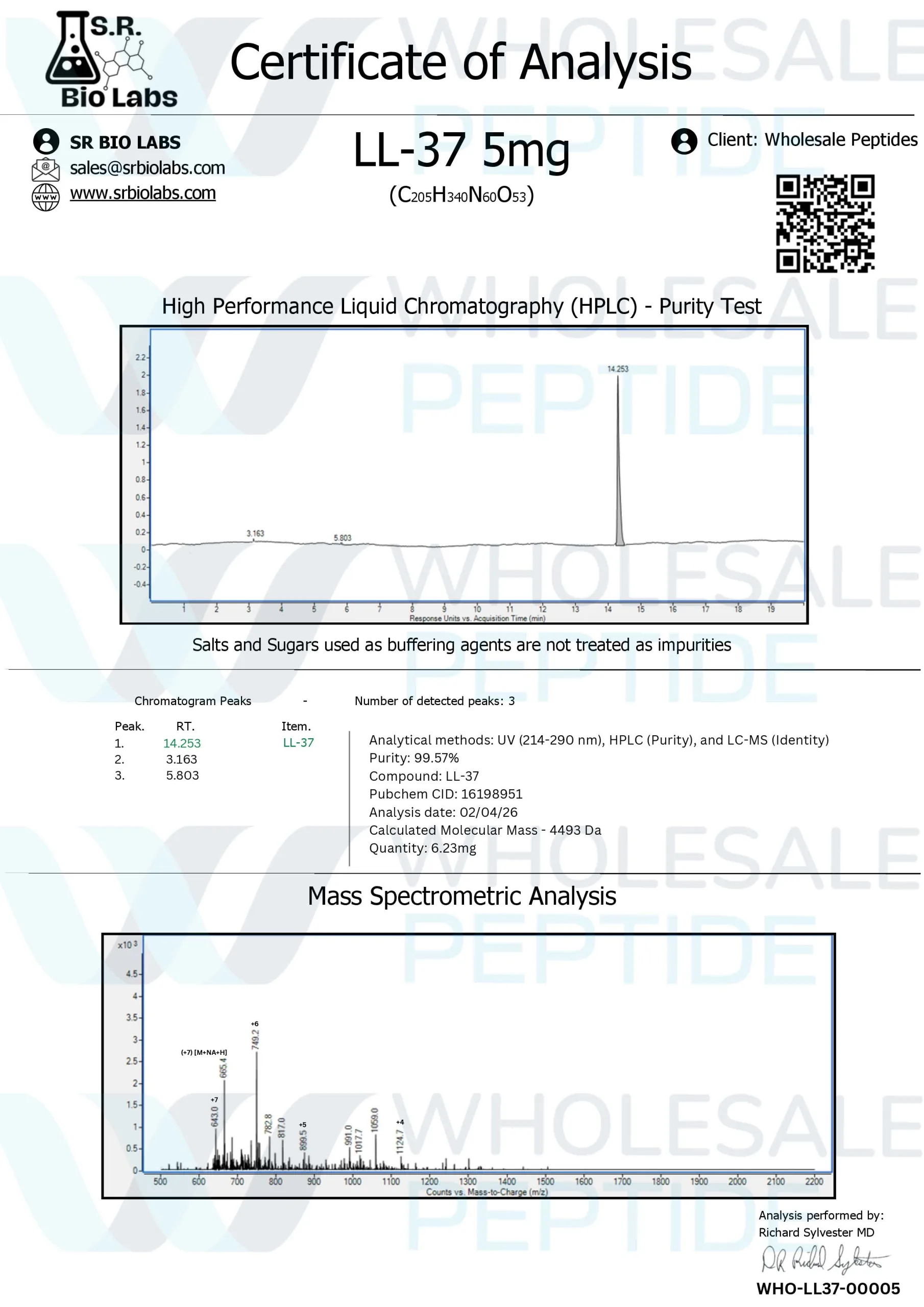
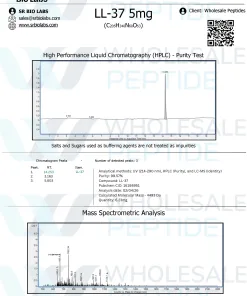
Every batch of LL-37 is tested by third party using High-Performance Liquid Chromatography (HPLC) to ensure product purity and accuracy. This independent laboratory analysis verifies molecular weight and sequence integrity so researchers can trust their experimental materials. The systematic approach to quality control ensures consistent results across all research applications.
Third party batch testing is the gold standard for peptide analysis in research applications. This independent verification process eliminates any conflict of interest and provides an objective assessment of product quality. Researchers will receive a certificate of analysis documenting purity and molecular identity for their records and regulatory compliance.
Shipping and Delivery
Wholesale Peptide ships same day for orders placed before 1pm EST Monday to Friday, to get your research materials to you as quickly as possible. This expedited shipping policy helps researchers to meet their experimental timelines and reduces delays in their research. Orders placed after the cut off time or on weekends will ship the next business day so all research orders are processed promptly.
The company’s shipping protocol includes proper packaging and temperature control to maintain peptide integrity during transport. Tracking information is usually provided so researchers can track the delivery and plan for receipt of their research materials. This systematic approach to shipping ensures LL-37 arrives in perfect condition for laboratory use.
Customer Support
30 day money back guarantee allows researchers to return unopened products for full refund of the purchase price. This policy shows confidence in the product and gives researchers peace of mind in their research materials. The guarantee reduces the purchasing risk and helps with budget planning for research projects.
Customer support services help researchers with product selection and ordering. Technical information and documentation supports experimental planning and protocol development. This customer focused approach ensures researchers get the right materials for their specific research applications and requirements.
Regulatory Compliance and Documentation
Wholesale Peptide complies strictly with research-use-only designation and regulatory requirements. All products are labeled and documented for research use only. This compliance framework helps research institutions to comply with the regulations while getting high quality research materials.
Proper documentation and labeling helps researchers to keep accurate records of experimental materials and sources. Certificate of analysis and batch records provides traceability and quality control in research applications. This systematic approach to documentation ensures research integrity and regulatory compliance.
Products from Wholesale Peptide are for Research Use Only
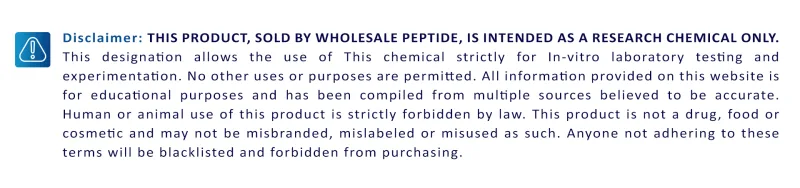
All products sold by Wholesale Peptide including antimicrobial peptide LL-37 are research chemicals only. This means the use of this chemical is strictly for in-vitro laboratory testing and experimentation. Human or veterinary use is strictly forbidden. This product is not a drug, food or cosmetic and may not be misbranded, mislabeled or misused as such.
The research-use-only designation reflects the current regulatory status of LL-37 and similar research compounds. While extensive research has been done on the peptide’s biological activities and mechanisms, these findings are within the scope of laboratory investigation and not clinical application. Researchers must ensure their experimental protocols comply with this designation and institutional guidelines.
This research-use-only designation protects both researchers and institutions by setting clear boundaries for the use of biologically active research compounds. The research-use-only designation supports scientific research while complying with the regulations governing peptide research and development.
Shipping Policy of Wholesale Peptide
Wholesale Peptide ships same day for orders placed before 1pm EST Monday to Friday. Orders placed after 1pm EST or on weekends will ship the next business day. This fast shipping schedule helps to meet research timelines and get research materials to you as soon as possible.
The company’s shipping protocol includes proper packaging to maintain product integrity during transport. Temperature sensitive materials are handled accordingly to preserve their stability and effectiveness for research applications. Tracking information is provided so researchers can track the shipment and plan for material receipt.
Guarantee
Wholesale Peptide has a 30 day satisfaction guarantee on all products. Simply return any unopened products to us for full refund of the purchase price of the unused products. This guarantee shows confidence in the product and gives researchers peace of mind in their research investments.
The guarantee policy helps with budget planning and risk management for research projects. Researchers can buy with confidence knowing that unopened products can be returned if experimental plans change or if materials don’t meet research requirements. This customer focused approach helps to support successful research outcomes.
Third Party Testing of Every Batch
Every batch of products sold by Wholesale Peptide is tested by third party using HPLC to ensure product purity and accuracy. This independent analysis provides objective verification of molecular identity and purity levels, research integrity and experimental reliability.
The third party testing protocol is industry best practice for peptide quality control. Independent laboratory analysis eliminates any conflict of interest and gives researchers confidence in their experimental materials. Certificate of analysis documents the testing results and supports research documentation requirements.
LL-37 is still a valuable research tool for scientists studying antimicrobial mechanisms, innate immunity and cellular interactions. As the only human cathelicidin antimicrobial peptide, it is particularly relevant for researchers studying host defense mechanisms and immune system function. When researchers buy LL-37 from a reputable supplier like Wholesale Peptide, they get research grade materials that supports rigorous scientific research while complying with regulatory requirements.
The comprehensive quality control, fast shipping and customer support services from Wholesale Peptide ensures researchers get the right materials for their research needs. As research into antimicrobial peptides continues to grow, LL-37 is an important compound to advance our understanding of innate immunity and antimicrobial mechanisms in controlled laboratory setting.
References
- Durr UH, Sudheendra US, Ramamoorthy A. LL-37, the only human member of the cathelicidin family of antimicrobial peptides. Biochim Biophys Acta. 2006;1758(9):1408-25.
- Scott MG, Davidson DJ, Gold MR, Bowdish DM, Hancock RE. The human antimicrobial peptide LL-37 is a multifunctional modulator of innate immune responses. J Immunol. 2002;169(7):3883-91.
- Wang G. Human antimicrobial peptides and proteins. Pharmaceuticals (Basel). 2014;7(5):545-94.4. Nizet V. Bacterial antimicrobial peptide resistance. Curr Issues Mol Biol. 2006;8(1):11-26.
- Mookherjee N, Hancock RE. Cationic host defence peptides: a novel approach for the treatment of infections. Cell Mol Life Sci. 2007;64(7-8):922-33.
- Gallo RL, Nizet V. Endogenous antimicrobial peptides. Curr Allergy Asthma Rep. 2008;8(1):13-9.
- Gudmundsson GH, Agerberth B, Odeberg J, et al. The human gene FALL39 and processing of the cathelin precursor to LL-37 in granulocytes. Eur J Biochem. 1996;238(2):325-32.
- Bals R, Wang X, Zasloff M, Wilson JM. The peptide antibiotic LL-37/hCAP-18 is expressed in human lung and is a multifunctional peptide with antimicrobial activity. Proc Natl Acad Sci U S A. 1998;95(16):9541-6.
- Mookherjee N, Rehaume LM, Hancock RE. Cathelicidins and analogues as antisepsis agents. Expert Opin Ther Targets. 2007;11(8):993-1004.
- Niyonsaba F, Ogawa H, Nagaoka I, et al. LL-37 induces human mast cell chemotaxis. Immunology. 2002;106(1):20-6.
- Heilborn JD, Nilsson MF, Kratz G, et al. LL-37 is involved in re-epithelialization of human skin wounds and is absent in chronic ulcer epithelium. J Invest Dermatol. 2003;120(3):379-89.
- Zasloff M. Multicellular antimicrobial peptides. Nature. 2002;415(6870):389-95.13. Nijnik A, Hancock RE. Cathelicidin LL-37: immune defences and clinical applications. Curr Opin Hematol. 2009;16(1):41-7.
- Mookherjee N, Lippert DN, Hamill P, et al. LL-37 receptor in human monocytes. J Immunol. 2009;183(4):2688-96.
- Bowdish DM, Davidson DJ, Scott MG, Hancock RE. Immunomodulatory activities of small cationic host defence peptides. Antimicrob Agents Chemother. 2005;49(2):1727-32.
- Nijnik A, Hancock RE. Host defence peptides: antimicrobial and immunomodulatory activity and applications for antibiotic resistance. Emerg Health Threats J. 2009;2:e1.
- Zanetti M. Cathelicidins: multifunctional peptides of the innate immunity. J Leukoc Biol. 2004;75(1):39-48.
- Mookherjee N, Hancock RE. Cationic host defence peptides: innate immune regulatory peptides for treating infections. Cell Mol Life Sci. 2007;64(7-8):922-33.
- Durr UH, Sudheendra US, Ramamoorthy A. LL-37, the only human cathelicidin antimicrobial peptide. Biochim Biophys Acta. 2006;1758(9):1408-25.
- Gallo RL. Human antimicrobial peptides. Pharmaceuticals (Basel). 2014;7(5):545-94.
- Bowdish DM, Davidson DJ, Scott MG, Hancock RE. Immunomodulatory activities of small host defence peptides. Antimicrob Agents Chemother. 2005;49(2):1727-32.
- Heilborn JD, Nilsson MF, Kratz G, et al. LL-37 is involved in re-epithelialization of human skin wounds and is absent in chronic ulcer epithelium. J Invest Dermatol. 2003;120(3):379-89.23. Bals R, Wang X, Zasloff M, Wilson JM. LL-37/hCAP-18, the only human peptide antibiotic, is expressed in human lung epithelia. Proc Natl Acad Sci U S A. 1998;95(16):9541-6.
- Niyonsaba F, Ogawa H, Nagaoka I, et al. LL-37 induces human mast cell chemotaxis. Immunology. 2002;106(1):20-6.
- Mookherjee N, Rehaume LM, Hancock RE. Cathelicidins and analogues as antisepsis agents. Expert Opin Ther Targets. 2007;11(8):993-1004.
- Gudmundsson GH, Agerberth B, Odeberg J, et al. FALL39, the human gene for the antibacterial peptide LL-37. Eur J Biochem. 1996;238(2):325-32.
- Scott MG, Davidson DJ, Gold MR, Bowdish DM, Hancock RE. LL-37 is a multifunctional modulator of innate immune responses. J Immunol. 2002;169(7):3883-91.
- Durr UH, Sudheendra US, Ramamoorthy A. LL-37, the only human cathelicidin antimicrobial peptide. Biochim Biophys Acta. 2006;1758(9):1408-25.
- Mookherjee N, Hancock RE. Cationic host defence peptides: innate immune regulatory peptides for treating infections. Cell Mol Life Sci. 2007;64(7-8):922-33.
- Gallo RL, Nizet V. Endogenous antimicrobial peptides in innate immunity and human disease. Curr Allergy Asthma Rep. 2008;8(1):13-9.31. Heilborn JD, Nilsson MF, Kratz G, et al. LL-37 is involved in re-epithelialization of human skin wounds and is absent in chronic ulcer epithelium. J Invest Dermatol. 2003;120(3):379-89.
- Zanetti M. Cathelicidins. J Leukoc Biol. 2004;75(1):39-48.
- Bowdish DM, Davidson DJ, Scott MG, Hancock RE. Small host defense peptides. Antimicrob Agents Chemother. 2005;49(2):1727-32.
To learn more about LL-37, you can check out Wikipedia.
| Weight | .03125 lbs |
|---|
Related products