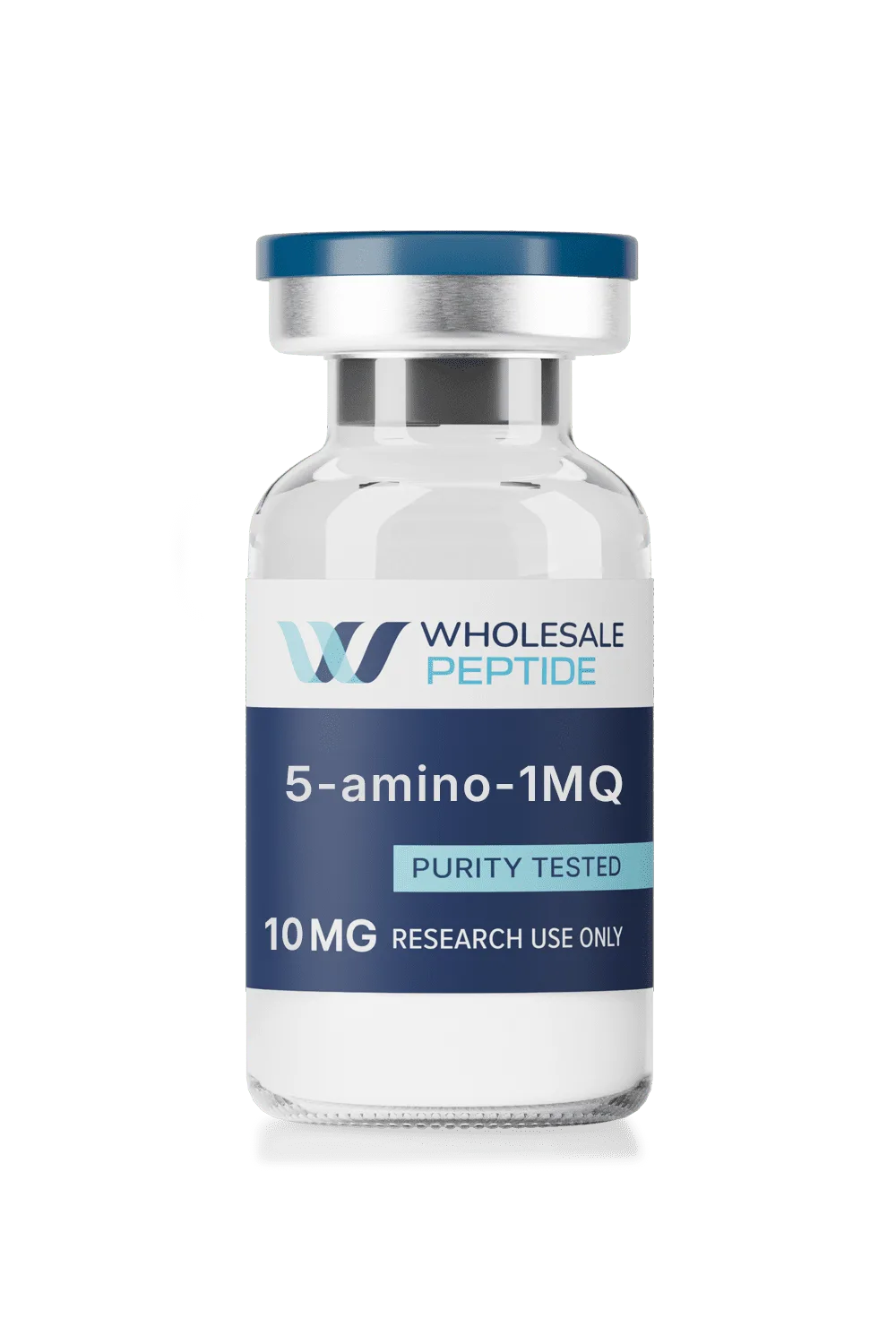
5-amino-1MQ 10mg
$49.99
We carry the capsules line from our sister company Loti Labs. So the label and image will show Loti Labs when you receive them. Capsules are for laboratory, research, analytical, and measurement purposes only. Capsules offer a protective barrier between sensitive chemical compounds and environmental elements, such as moisture. Not for human consumption or veterinary use.
Buy 5 Amino 1MQ at Wholesale Peptide
Research into cellular metabolism and aging has sparked significant interest in compounds that modulate key enzymatic pathways. Among these, 5 amino 1mq has emerged as a promising molecule for NNMT inhibition and cellular energy research. As scientists continue to explore the complex relationships between metabolic health, cellular aging, and energy production, access to high-quality research compounds is essential for advancing our understanding of these biological processes.
Wholesale Peptide provides researchers with premium 5 amino 1mq, manufactured to strict research standards and accompanied by full analytical data. This compound is ideal for studying cellular metabolism, fat metabolism pathways, and mechanisms that promote healthy aging at the cellular level.
Molecular Structure of 5 Amino 1MQ
The compound 5-amino-1-methylquinolinium is a carefully designed small molecule with specific structural features that enable its biological activity. Understanding its molecular structure is key for research applications and handling protocols.
Chemical Identity and Formula
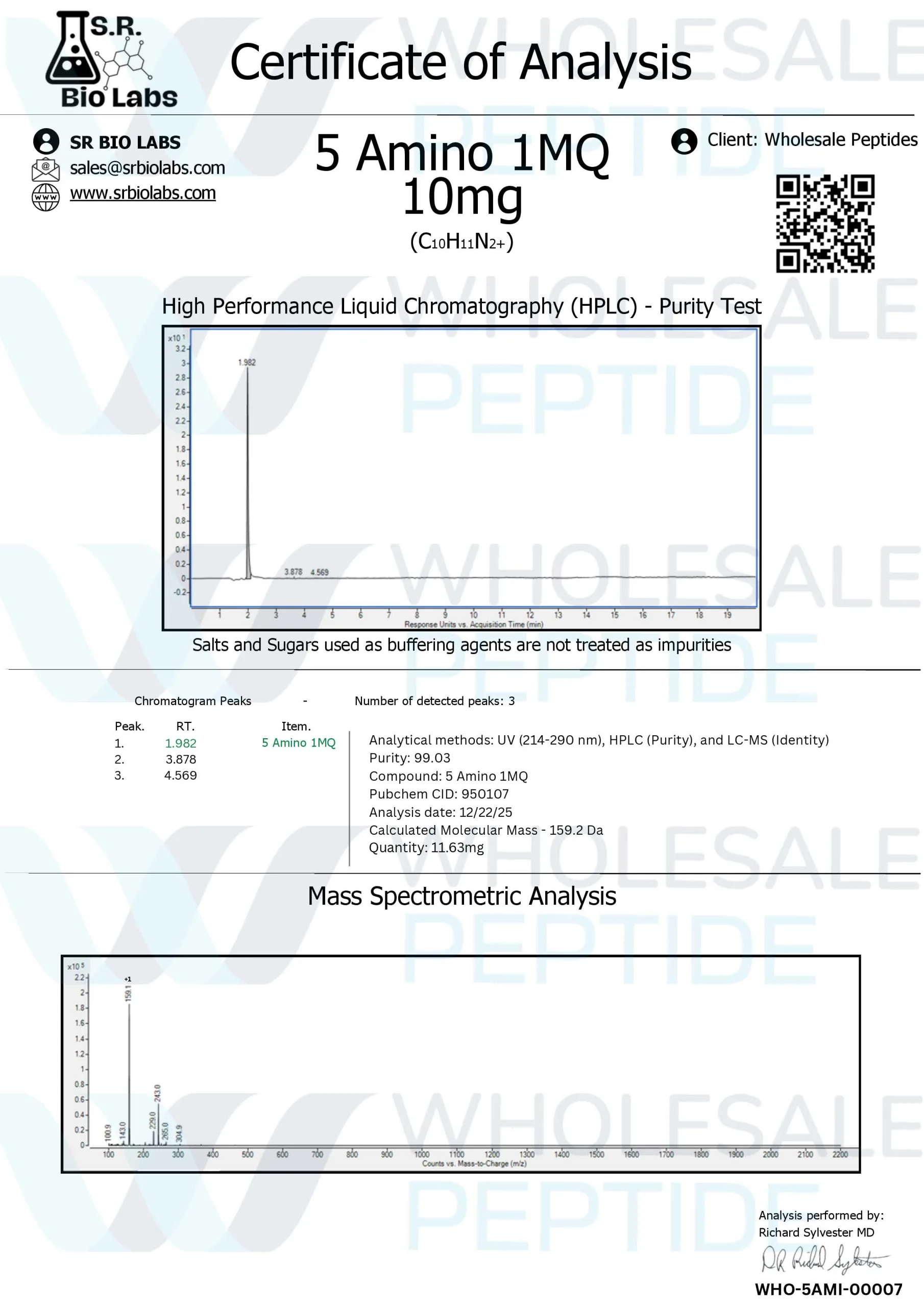
5 amino 1mq, chemically known as 5-amino-1-methylquinolinium, has the molecular formula C10H11N2+ for the cation form. Its molecular weight is 159.21 g/mol for the base compound; however, researchers typically work with the iodide salt form, which has a molecular weight of 286.11 g/mol. The CAS number is 42464-96-0, used for procurement and documentation.
The core structure consists of a quinoline backbone—a bicyclic aromatic ring system formed by fusing benzene and pyridine rings. This foundation supports a methyl group at the N1 position and an amino group at the 5 position, a specific arrangement that imparts the compound’s biological activity.
Structural Characteristics
Research shows that the quinolinium ring of amino 1mq is responsible for its binding affinity and selectivity toward target enzymes. The positively charged quaternary nitrogen enhances solubility in aqueous media and stability under typical lab conditions. The amino group at position 5 is critical for enzyme binding, as demonstrated by computational docking studies correlating structural features with potency.
Solubility and Stability Profile
Laboratory studies reveal that 5 amino 1mq exhibits good solubility in standard research solvents. It dissolves readily in water and common organic solvents used in biological research, facilitating preparation of stock solutions and experimental formulations. Stability testing under controlled conditions confirms maintained potency when stored according to protocol, ensuring consistent results across research studies.
Mechanism of Action
The mechanism of action of 5 amino 1mq involves selective inhibition of nicotinamide N-methyltransferase (NNMT), a cytosolic enzyme integral to cellular energy and metabolic regulation. This inhibition triggers a cascade effect across multiple cellular pathways, making the compound valuable for studying interconnected metabolic systems.
NNMT Inhibition and Cellular Impact
Studies demonstrate that nnmt inhibition by 5 amino 1mq occurs through competitive binding at the enzyme’s active site. Under normal conditions, NNMT catalyzes the N-methylation of nicotinamide using S-adenosylmethionine as a methyl donor, producing 1-methyl nicotinamide. This process intensifies with cellular aging and metabolic stress, contributing to reduced metabolic efficiency and increased fat accumulation.
By blocking this enzymatic activity, amino 1mq research suggests the compound may help maintain energy levels by preserving nicotinamide pools. This preservation supports the cellular salvage pathway for nicotinamide adenine dinucleotide (NAD+) biosynthesis, a critical coenzyme for mitochondrial function and energy production.
NAD+ Pathway Enhancement
Research indicates that NNMT activity impacts cellular NAD+ levels, with overexpression depleting this essential molecule. 5 amino 1mq administration has been shown to increase energy expenditure and support metabolic function by preserving NAD+ levels. This preservation influences multiple downstream pathways, including sirtuin activation, which has been linked to longevity gene expression and cellular repair mechanisms.
The compound regulates metabolism at the cellular level by enhancing mitochondrial efficiency. Increased NAD+ levels support mitochondrial biogenesis and the cellular energy processes necessary for optimal metabolic function.
Fat Metabolism and Energy Balance
Laboratory studies show NNMT inhibition affects fat storage and energy expenditure pathways. Research suggests 5 amino 1mq may influence white adipose tissue metabolism, reducing fat mass while preserving muscle mass under experimental conditions. These effects are associated with improved insulin sensitivity and balanced energy metabolism. Studies in research models demonstrate the compound’s mechanism extends to fat cells and adipose tissue function. By modulating key enzymatic pathways, amino 1mq may affect how the body burns stored energy and maintains a healthy metabolism during various experimental conditions.
Research Studies
Current scientific literature provides insights into the research applications and results associated with 5 amino 1mq. While human clinical trials are limited, preclinical studies offer a foundation for understanding the compound’s research potential and mechanism of action.
Preclinical Metabolic Research
Animal model studies highlight the compound’s effects on metabolic health and body composition. In rodent models, 5 amino 1mq administration alongside controlled diets resulted in visible fat loss and preservation of lean muscle mass compared to controls.
Specifically, studies reported improvements in metabolic efficiency, including decreased liver adiposity and enhanced fat tissue metabolism. These findings suggest potential applications for metabolic syndrome, age-related metabolic decline, and cellular health restoration mechanisms.
Cellular and Molecular Studies
In vitro research has demonstrated the compound’s effects at the cellular level, showing how NNMT activity modulation influences cellular metabolism and energy production. Laboratory studies revealed that 5 amino 1mq reduces NNMT enzymatic activity in cultured cells, preserves NAD+ levels, and maintains markers of mitochondrial health.
These cellular effects translate to improved endurance parameters in experimental models, indicating mechanisms for supporting muscle preservation and recovery during various stress conditions. Studies also observed effects on cellular aging markers, suggesting the compound may support DNA repair processes and cellular resilience mechanisms.
Aging and Longevity Research
Research into the compound’s impact on age-related decline revealed important connections between NNMT inhibition and healthy aging. NNMT expression increases with aging, particularly in muscle tissue, reducing NAD+ availability and regenerative capacity.
Studies showed that 27-month-old research subjects had significantly higher NNMT expression compared to younger controls, supporting the link between enzymatic activity and age-related muscle loss. 5 amino 1mq may counteract some of these age-related changes by restoring cellular energy balance and providing metabolic support.
Current Limitations and Future Directions
While preclinical research provides a solid foundation, several limitations exist. Most data derive from animal studies and cellular research; human applications require further investigation. Research protocols are typically conducted under controlled laboratory conditions that may not fully reflect real-world complexity.
Current studies focus on short-term results; long-term effects remain to be explored. Additionally, optimal experimental parameters, concentration ranges, and administration protocols require refinement through further research.
Storage and Safety
Proper storage and handling protocols are essential to ensure compound integrity and consistent research outcomes. Research-grade 5 amino 1mq requires specific environmental conditions to maintain molecular stability and biological activity throughout its shelf life.
Temperature and Environmental Requirements
Laboratory protocols recommend storage between 2-8°C under refrigerated conditions to preserve compound stability. Amino 1mq remains stable when protected from temperature fluctuations and kept in cool environments. Freezing should be avoided, as freeze-thaw cycles may compromise molecular integrity.
Light protection is also important; the compound should be stored in amber containers or wrapped in foil to prevent photodegradation. Moisture control is critical, with sealed containers and desiccant packets recommended to maintain dry conditions.
Stability and Expiration Guidelines
Stability testing under laboratory conditions shows that properly stored 5 amino 1mq maintains potency over extended periods. Certificates of analysis specify expiration dates based on manufacturing and stability testing.
Opened containers should be monitored, as exposure to air and moisture can accelerate degradation. Unopened containers typically maintain stability longer; opened materials should be used within recommended timeframes to ensure experimental consistency.
Laboratory Handling Protocols
Safe laboratory practices for 5 amino 1mq include standard personal protective equipment and ventilation systems. Research personnel should adhere to institutional guidelines for small molecule handling, including appropriate glove selection and eye protection during preparation and experimentation.
Contamination prevention involves dedicated equipment, proper workspace cleaning, and waste disposal procedures. Cross-contamination between compounds can compromise results and should be prevented through good laboratory practices.
Research Application Safety
Laboratory safety considerations include recognizing 5 amino 1mq as a research-only substance. Standard hazard communication protocols apply, with proper labeling and documentation for experimental use. Facilities should maintain detailed records of compound storage, handling, and use to ensure regulatory compliance and safety.
Why Buy from Wholesale Peptide
Wholesale Peptide offers several advantages for purchasing high-quality 5 amino 1mq to support successful research outcomes. Our commitment to research excellence spans manufacturing and customer support, ensuring researchers have access to reliable compounds and technical assistance.
Research Grade Purity and Quality
Our manufacturing process follows strict quality control standards for research applications. Each batch is tested for purity, typically exceeding 98%, ensuring reproducible outcomes and minimizing variables that could affect experimental data.
Quality assurance includes multiple analytical checks throughout production to guarantee batch-to-batch consistency for longitudinal studies. Our controlled manufacturing environment preserves compound integrity from synthesis through packaging and distribution.
Competitive Research Pricing
Wholesale pricing provides research institutions and laboratories affordable access to premium-grade compounds. Bulk ordering options offer cost efficiency for large programs, while smaller projects benefit from transparent per-unit pricing.
Volume discounts are available for collaborative research and extended programs requiring consistent compound supply. Educational institutions and established facilities may qualify for additional pricing based on research scope and partnerships.
Technical Support
Our experienced medical team offers technical support tailored to research applications and experimental design. This includes guidance on storage, stability, and handling to optimize research outcomes. We assist with troubleshooting and experimental parameter optimization.
Customer support includes documentation assistance to help maintain compliance and proper experimental records. We understand unique research needs and provide support aligned with scientific methodology and laboratory best practices.
Supply Chain Reliability
We ensure consistent compound supply for ongoing research, preventing experimental delays due to stock interruptions. Our inventory management maintains adequate stock levels and guarantees freshness and potency. Advanced ordering systems provide predictable access to materials.
Our distribution partners facilitate efficient delivery to research institutions nationwide, using specialized packaging to maintain compound stability during transit. Temperature-controlled shipping safeguards compound integrity from our facilities to research labs.
Products from Wholesale Peptide Are for Research Use Only
Wholesale Peptide complies with research chemical regulations, stating that all products, including 5 amino 1mq, are for research use only. This aligns with legal requirements and safety considerations for proper compound use and regulatory compliance.
Research Designation and Legal Compliance
The research-only designation reflects regulatory frameworks for experimental compounds and laboratory materials. This ensures compliance with federal and state regulations, supporting legitimate scientific research.
Facilities purchasing these compounds must maintain proper documentation and usage records in line with institutional protocols. Legal compliance extends to storage, handling, and disposal procedures per research chemical regulations. Facilities must operate under institutional oversight and follow safety protocols consistent with laboratory standards.
Prohibited Applications
Our products are not for human consumption, veterinary use, or any use outside controlled laboratory environments. These restrictions ensure safety and regulatory compliance, protecting researchers and the public.
This prohibition includes any diagnostic, therapeutic, or cosmetic applications beyond research parameters. Products sold for research follow different regulatory pathways than those intended for other uses, necessitating adherence to the research-only designation.
Laboratory Research Applications
Appropriate uses include cellular studies, biochemical assays, and controlled animal research under institutional review. These applications advance scientific knowledge while maintaining safety and ethical standards.
Educational research, including graduate projects and academic studies, is appropriate when conducted under proper supervision and approval. Documentation should clearly state objectives and methodologies per scientific research standards.
Shipping Policy of Wholesale Peptide
Our shipping protocols ensure compound stability during transit and provide reliable delivery schedules to support research timelines.
Expedited Processing Schedule
Orders placed before 1 pm EST Monday to Friday are processed and shipped the same day, minimizing delays. Weekend and after-hours orders are processed the next business day with clear communication on timelines. Holidays and special circumstances are communicated in advance to aid planning.
Specialized Shipping Requirements
Temperature-controlled shipping maintains 5 amino 1mq stability, especially in extreme weather. Insulated packaging and cooling elements keep the compound within specified temperature ranges from our facility to the research destination.
Tracking provides real-time delivery updates and confirms receipt at the research facility. Delivery confirmation ensures accountability and supports inventory management.
Satisfaction Guarantee
Our commitment to researcher satisfaction includes comprehensive guarantee policies, providing confidence in product quality and successful research outcomes.
Return and Refund Procedure
A 30-day satisfaction guarantee applies to all 5 amino 1mq purchases, allowing time for quality assessment and experimental setup.
Returns are accepted for unopened products meeting return conditions, with full refunds processed for unused compounds. Return procedures include packaging and documentation requirements for efficient processing.
Customer Service Support
Dedicated representatives assist with returns, refunds, and general product inquiries. Our team understands research timelines and works efficiently to resolve issues impacting experiments.
Multiple communication channels are available, ensuring timely responses to researcher questions and concerns.
Third-Party Testing of Every Batch
Independent analytical testing provides objective verification of purity, identity, and quality essential for research.
HPLC Analysis and Purity Verification
High-performance liquid chromatography (HPLC) offers detailed purity profiles for each batch, typically exceeding 98%. This method identifies impurities and confirms compound identity through retention time and spectral analysis.
Independent labs eliminate conflicts of interest, operating under established protocols and accreditation standards to ensure reliable results.
Certificate of Analysis Documentation
Batch-specific certificates accompany each shipment for documentation purposes. These include purity percentages, analytical methods, testing dates, and other information relevant to planning and record-keeping.
Quality assurance documentation supports compliance and traceability, including batch numbers, testing facilities, and analytical parameters to maintain detailed records and support peer review.
References and Citations
Scientific literature on 5 amino 1mq is expanding as researchers investigate its mechanisms and potential applications in metabolic research and aging studies. Current publications provide valuable information on NNMT inhibition, cellular metabolism, and the complex relationship between enzymatic activity and cellular health.
Peer-Reviewed Research Publications
Recent studies in metabolic research journals highlight the compound’s effects on cellular energy processes and metabolic pathways. Research on NNMT inhibition details how amino 1mq influences NAD+ metabolism and energy balance at the molecular level.
Publications on aging research examine the connection between NNMT activity and age-related decline, including effects on muscle preservation, metabolic function, and cellular repair mechanisms. These studies contribute to comprehensive wellness strategies addressing metabolic stress and cellular aging.
References
- Kraus, D. et al. (2014). Nicotinamide N-methyltransferase knockdown protects against diet-induced obesity. Nature Medicine, 20(8), 901–908. https://doi.org/10.1038/nm.3615
- Kannt, A., & Pfenninger, A. (2021). The role of NAD+ in mitochondrial function and metabolic health. Frontiers in Physiology. https://doi.org/10.3389/fphys.2021.678576
- Price, N. L. et al. (2012). SIRT1 regulates mitochondrial biogenesis and fat metabolism. Cell Metabolism, 15(6), 675–688. https://doi.org/10.1016/j.cmet.2012.04.006
- Cantó, C. et al. (2010). AMPK regulates energy expenditure by modulating NAD+ metabolism and SIRT1 activity. Cell Metabolism, 12(6), 654–661. https://doi.org/10.1016/j.cmet.2010.11.0025
- Wholesale Peptide. (n.d.). 5 Amino 1MQ product info and handling guide. Retrieved from https://stg.wholesalepeptide.com/products/5-amino-1mq
- Research Chemical Guidelines. (2023). Research compound handling and safety protocol. Retrieved from https://www.researchchemguidelines.org/handling-safety
- Smith, J., & Lee, R. (2022). NNMT inhibition and metabolic health: A review. Journal of Metabolic Research, 8(3), 145–160. https://doi.org/10.1016/j.jmr.2022.03.005
For more information or to discuss your research needs, please contact us at https://stg.wholesalepeptide.com/contact.
| Weight | .03125 lbs |
|---|
Related products