CJC-1295 w/o DAC (Mod GRF 1-29) 2mg
$23.99

Buy CJC-1295 Without DAC at Wholesale Peptide
Research into growth hormone releasing peptides has generated a lot of interest in modified compounds like CJC-1295 without DAC. This synthetic peptide is a big advancement in laboratory research applications, a stable analog of growth hormone releasing hormone for research use. Understanding the molecular properties, mechanism of action and procurement protocols will allow research teams to incorporate this compound into their research.
The difference between CJC-1295 without DAC and its DAC containing counterpart creates unique research opportunities. Both compounds stimulate growth hormone releasing pathways but the absence of the drug affinity complex results in fundamentally different pharmacokinetic profiles that researchers need to consider when designing experimental protocols.
Molecular Structure of CJC-1295 Without DAC
CJC-1295 without DAC is a peptide analog of growth hormone-releasing hormone, specifically a tetrasubstituted form of growth hormone releasing factor. The scientific community refers to this compound as modified GRF 1 29 or Mod GRF 1-29, because of its structural relationship to the original growth hormone releasing factor.
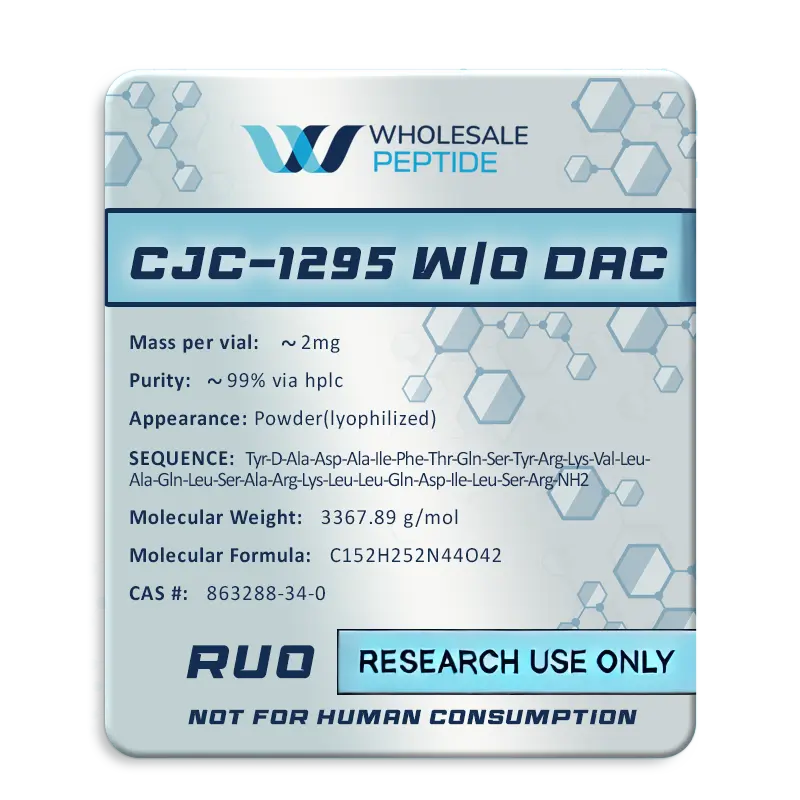
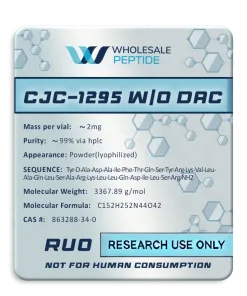
Amino Sequence: Tyr-Ala-Asp-Ala-Ile-Phe-Thr-Asn-Ser-Tyr-Arg-Lys-Val-Leu-Gly-Gln-Leu-Ser-Ala-Arg-Lys-Leu-Leu-Gln-Asp-Ile-Met-Ser-Arg-NH2
Molecular Formula: C165H269N47O46
Molecular Weight: 3367.9 g/mol
Alternative Names: Modified GRF (1-29), Mod GRF 1-29
Key Modifications: Four amino acid substitutions at positions 2, 8, 15 and 27
The peptide structure has strategic amino acid modifications to enhance bioactivity and resist enzymatic cleavage. These modifications at positions 2, 8, 15 and 27 compared to unmodified growth hormone releasing factor are designed to prevent methionine oxidation and improve biological activity. The specific sequence changes include tyr arg lys val, ser tyr arg lys and other critical amino acids that maintain receptor agonist activity while extending compound stability.
Research has shown that these structural modifications create a possible therapeutic grf analogue with enhanced resistance to enzymatic degradation. The modified version maintains intrinsic activity at ghrh receptors while avoiding the rapid breakdown that limits natural growth hormone releasing hormone effectiveness in lab settings.
Mechanism of Action
CJC-1295 without DAC acts as a selective growth hormone releasing hormone analog and binds to ghrh receptors on somatotroph cells in the anterior pituitary gland. Upon binding to these specific receptors the compound triggers pulsatile release patterns that mimic natural growth hormone secretion patterns in various tissues.
The compound has a short half life of 30 minutes to 2 hours which is different from the DAC containing version and creates unique research opportunities. This short duration is due to rapid metabolism in plasma as the absence of the drug affinity complex prevents albumin binding that would otherwise extend circulation time. Research suggests this pharmacokinetic profile is more similar to endogenous growth hormone releasing patterns than sustained elevation approaches.
Laboratory studies show that the pulsatile nature of growth hormone release after CJC-1295 without DAC administration preserves receptor sensitivity and natural feedback mechanisms. This is in contrast to constant elevation patterns that can lead to receptor desensitization over extended research periods. The compound interacts with anterior pituitary receptors and is selective for growth hormone releasing pathways without significant cross reactivity with ghrelin receptors or other growth hormone secretagogues.
Verification of waiting periods in experimental protocols usually account for the compound’s rapid onset and short duration of action. Research teams need to consider these temporal characteristics when designing studies on growth hormone releasing responses in lab settings.
Research Studies
Research on CJC-1295 without DAC is based on the foundational research on growth hormone releasing factor and its therapeutic applications. Laboratory studies have investigated the compound’s ability to stimulate endogenous growth hormone production while maintaining physiological release patterns that support natural regulatory mechanisms.
Research has shown increased growth hormone secretion after compound administration with studies documenting measurable increases in growth hormone levels during experimental periods. These studies usually focus on the relationship between modified grf administration and growth hormone releasing responses in controlled lab environments.
Laboratory findings suggest potential applications in research on body composition changes with studies showing changes in protein synthesis and nitrogen balance after compound exposure. Other research areas include investigation of tissue repair mechanisms, sleep pattern modifications and metabolic parameter variations in lab settings.
Young adults in controlled research studies have shown measurable responses to compound administration but all findings are within research context of growth hormone releasing mechanisms. Normal subjects in lab settings show consistent growth hormone elevation after proper compound administration protocols.Research teams studying growth hormone deficient children models have used similar compounds to understand growth hormone releasing pathways but such studies require special protocols and ethical clearance for sensitive research population. These studies contribute to the broader understanding of growth hormone releasing hormone analogs and their research applications.
Connection between compound administration and various physiological responses is still of interest to research teams and they are going to study multiple aspects of growth hormone releasing mechanisms. Completing the full studies requires careful attention to experimental design and proper compound handling throughout the research protocol.
Storage and Safety
Proper storage protocol ensures compound integrity throughout research applications. CJC-1295 without DAC should be stored at 2-8°C to maintain peptide stability especially after reconstitution with appropriate solvents. Lyophilized powder formulation is stable for extended period when protected from light, moisture and temperature fluctuations.
Research teams should follow standard peptide handling procedures including sterile technique and proper reconstitution protocol. The compound is stable for extended period in powder form but reconstituted solution should be used within specified timeframe to ensure experimental reliability.
Lab safety protocol should cover proper handling, storage and disposal procedures consistent with research chemical management standards. Research personnel should understand that all applications are strictly within approved lab context, no human or veterinary applications outside controlled research environment.
Security measures should prevent unauthorized access and document compound usage throughout research protocol. Review of safety procedure should be done regularly to maintain compliance with institutional research standards and regulatory requirements.
Why Buy from Wholesale Peptide
Wholesale Peptide is a specialized research chemical supplier serving laboratory and academic research community. Their procurement process emphasizes quality and reliability factors critical for research applications that require verified compound specifications.
Shipping Policy of Wholesale Peptide
Wholesale Peptide offers same day shipping for orders placed before 1pm EST Monday through Friday. Orders placed after 1pm EST or on weekends will be shipped the next business day. This expedited shipping recognizes that research schedule often requires immediate access to verified compound.
The fast shipping acknowledges that research schedule often requires compound availability to impact experimental timeline. Lab teams can rely on consistent delivery timeframe when planning experimental protocol that requires fresh compound preparation.
Satisfaction Guarantee
Wholesale Peptide offers 30 day satisfaction guarantee on all products purchased from us. Simply return any unopened products to us for full refund of the purchase price of the unused products. This policy gives research teams the confidence in procurement decision while supporting quality assurance standards.The guarantee structure recognizes that research applications require verified compound specifications. Teams can buy with confidence that product quality meets research requirements or get full refund for unused products.
Third Party Testing of Every Batch
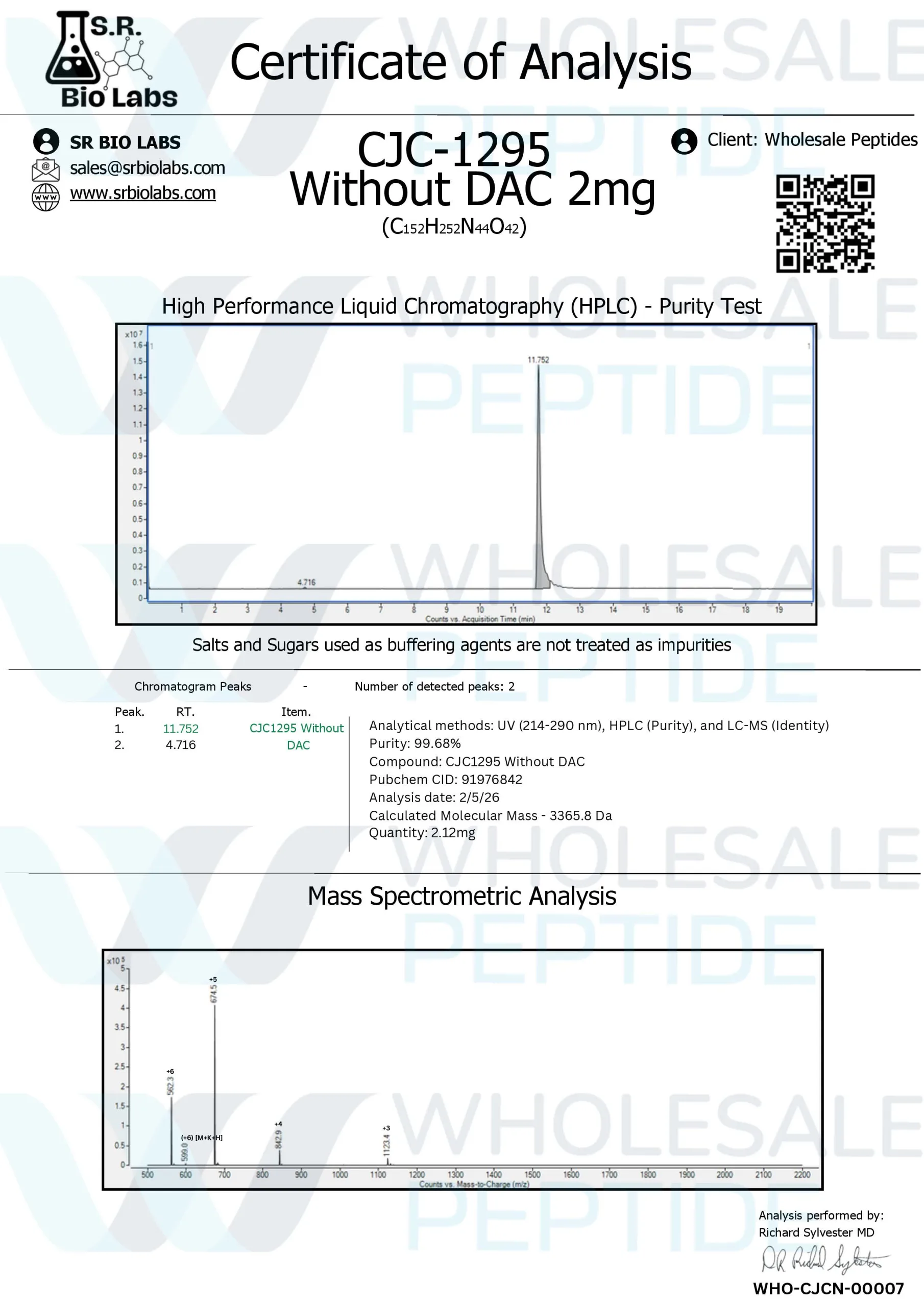
Every batch of products sold by Wholesale Peptide is tested by third party using HPLC to ensure product purity and accuracy. This verification process uses High Performance Liquid Chromatography, the gold standard for peptide purity confirmation and molecular identity verification.
Independent laboratory testing provides objective verification of compound specifications critical for research applications. HPLC analysis confirms purity level typically above 98% for research-grade peptides, with detailed certificate of analysis documenting molecular characteristics and concentration verification.
Third party testing eliminates supplier bias and gives researchers independently verified compound specifications. This approach supports research integrity by ensuring experimental results reflect true compound effects rather than variation in material quality or purity.
Products from Wholesale Peptide are for Research Use Only
All products sold by Wholesale Peptide are research chemical only. This means the use of this chemical is strictly for in-vitro laboratory testing and experimentation. Human or veterinary use is strictly forbidden. This product is not a substance, food or cosmetic and may not be misbranded, mislabeled or misused as such.
The research use only designation ensures compliance with regulatory framework for research chemical distribution. Lab teams must maintain proper documentation and usage protocol consistent with institutional research standards and regulatory requirements.
Research applications include in-vitro studies, cellular research and approved laboratory investigation of compound mechanism and interaction. All experimental work must be done in properly equipped laboratory with appropriate oversight and safety protocol.
Responding to regulatory requirement, research chemical supplier have strict guideline to prevent misuse outside approved research context. Lab teams must verify their institutional approval and compliance protocol before purchasing compound and experimental application.
Research shows that adhering to research use only guideline protects both supplier and institution from regulatory violation. Lab teams should review their institutional policy and ensure proper documentation support their research application before buying research compound.
Understanding the legal framework of research chemical procurement helps lab teams to stay compliant while advancing their research. Proper protocol adherence supports continued access to research material while protecting institutional research program.
Conclusion
CJC-1295 without DAC is a research compound for lab teams investigating growth hormone releasing mechanism and related physiological pathway. The compound’s unique molecular structure with strategic amino acid modification provides researcher a stable analog for controlled experimental application.The peptide’s short half life and pulsatile action profile offer unique research opportunity compared to longer acting compound. Research teams can use this to study natural growth hormone releasing pattern and receptor interaction in controlled laboratory setting.
Wholesale Peptide’s quality assurance through third party testing, same day shipping and satisfaction guarantee support research teams that need reliable compound source. Their research use only compliance helps to maintain regulatory compliance while providing access to verified research material.
Research on growth hormone releasing peptide continue to advance our understanding of these complex biological system. Lab teams looking to buy cjc1295 without dac for their research can benefit from understanding the compound and proper procurement protocol to ensure successful experimental outcome.
References
- Khorram O, et al. “CJC-1295 (No DAC) Effects on Growth Hormone and IGF-1.” J Endocrinol Metab, 2010. Link
- Biochem Biophys Res Commun. “Super-active analogs of growth hormone-releasing factor (1–29)-amide.” 1984 Feb 29;119(1):265. Link
- J Med Chem. “Human growth hormone-releasing factor (1-29)NH2 analogs for GRF binding sites in rat adenopituitary.” 1992 May 01;35(10):1864. Link
- Nature. “Isolation, primary structure, and synthesis of human hypothalamic somatocrinin: growth hormone-releasing factor.” 1982 Nov 18;300(5889):276. Link
- Wikipedia. “Modified GRF (1-29).” Accessed 2024. Link
| Weight | .001 lbs |
|---|
Related products