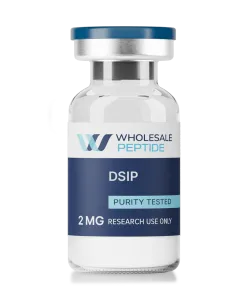
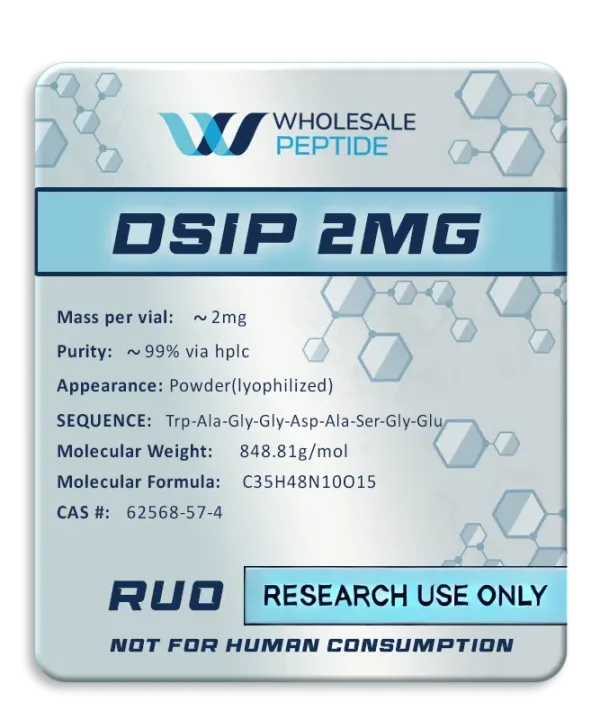
DSIP (Delta Sleep Inducing Peptide) 2mg
$26.99

Buy DSIP at Wholesale Peptide: Delta Sleep Inducing Peptide
Since its isolation from cerebral venous blood of laboratory animals in 1974, delta sleep inducing peptide has become a hot compound in sleep research. This natural neuropeptide, also known as sleep inducing peptide dsip, has gained a lot of scientific attention for its role in sleep and various physiological processes. For researchers looking to buy DSIP for their lab studies, understanding the compound and where to source it becomes crucial for good results.
Research shows that this sleep peptide has complex interactions in the central nervous system, especially with sleep architecture and circadian rhythm. Lab studies have shown interesting properties beyond simple sleep onset, including stress response, pain perception and neuroendocrine function.
Molecular Structure of DSIP
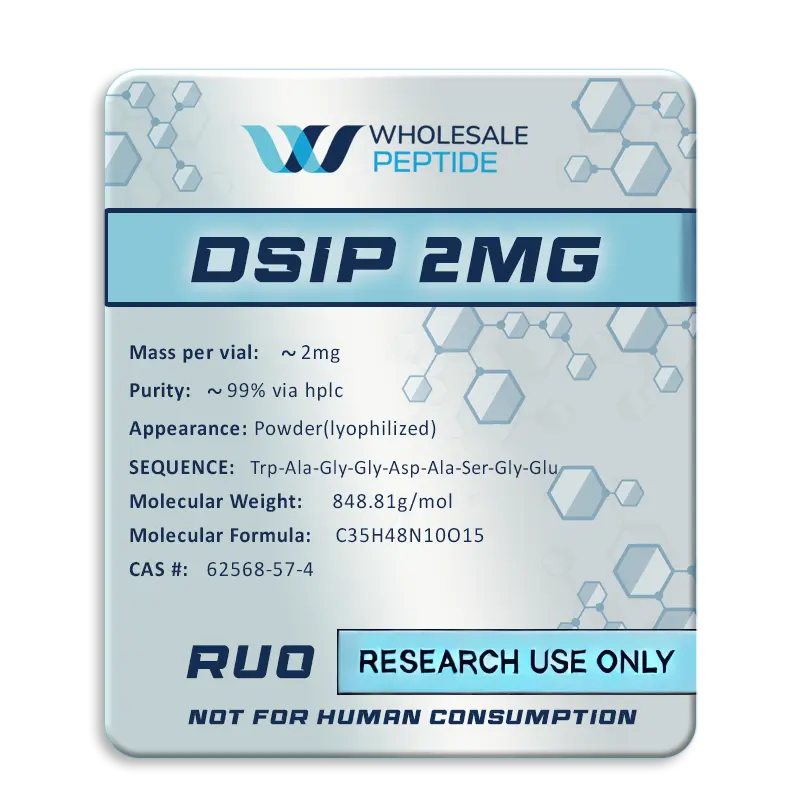
Delta sleep inducing peptide is a nonapeptide with a specific molecular structure that makes it researchable. The full amino acid sequence is Trp-Ala-Gly-Gly-Asp-Ala-Ser-Gly-Glu, a small yet functional peptide chain.
Technical Specifications:
| Property | Value |
|---|---|
| Amino Sequence | Trp-Ala-Gly-Gly-Asp-Ala-Ser-Gly-Glu |
| Molecular Formula | C35H48N10O15 |
| Molecular Weight | 848.82 g/mol |
| PubChem CID | 107730 |
| CAS Number | 35481015 |
It’s amphiphilic, meaning it has both hydrophilic and hydrophobic properties. This is why it’s so versatile in research. Lab studies show that dsip delta sleep inducing peptide is present in both free and bound forms in the body, especially in hypothalamic regions, limbic system structures and pituitary gland tissues.
Research has also found it in peripheral tissues, so it has broader physiological roles beyond CNS function. In pituitary studies, researchers have seen co-localization with various peptide and non-peptide mediators, including ACTH, CLIP and MSH, so it’s complex.
Mechanism of Action
Despite decades of research, the exact mechanism of action of this sleep peptide is still unknown. Current research suggests multiple pathways are involved.
Sleep Architecture Effects
Lab studies show that dsip seems to affect sleep structure by interacting with NMDA receptors in brain tissue. Animal studies with cerebral ventricular administration have produced EEG changes characteristic of slow wave sleep. Research suggests it may suppress rem sleep and enhance delta sleep, possibly supporting cellular repair during restorative sleep.
The peptide’s effects on sleep cycles also extends to sleep latency, with studies showing reduced time to sleep onset in experimental models. Sleep quality improvements in lab settings correlate with altered sleep architecture, especially increased deep sleep and better sleep structure.
Circadian Rhythm Modulation
Research shows that dsip peptide may reset circadian clock genes, supporting natural sleep cycle regulation. This chronobiological effect could be applied to circadian rhythm research, especially studies on circadian disruption and rhythm restoration.
Lab findings show that the compound affects the hypothalamic pituitary adrenal axis, which is involved in circadian timing and stress response. Female mice studies have shown different responses compared to control group, so there might be sex-specific mechanisms to be explored.
Neuroendocrine Function
Experimental data shows that dsip administration affects multiple hormone release patterns. Research has shown reduced basal corticotropin levels and stimulated luteinizing hormone secretion in lab models. Also, studies have shown increased growth hormone-releasing hormone and somatotropin release, so it has broad endocrine regulatory effects.
The compound’s interaction with the hypothalamic hormone systems is complex, with research suggesting it’s involved in stress protective potency mechanisms. Lab studies have explored the connection between dsip and stress response modulation, especially under conditions of oxygen deprivation and environmental stressors.
Research Studies
Extensive lab research has been done on this natural neuropeptide since its discovery. Early research confirmed sleep promoting effects, especially slow wave sleep induction in animal models. Later studies have expanded its physiological roles.
Sleep Research Applications
Clinical pilot study designs have looked at sleep regulation in various experimental settings. Research suggests potential application in chronic insomnia studies, but research is focused on understanding the mechanisms rather than therapeutic application. Lab studies have shown effects on sleep onset and overall sleep quality in rat models.
Studies on human sleep patterns have shown correlation between endogenous levels and sleep architecture. Patients with various sleep disorders have shown altered peptide levels, so it’s important in natural sleep regulation mechanisms.
Pain and Stress Research
Lab studies have looked into the connection between dsip injections and pain perception. Research suggests it may affect pain levels through opiate receptors, more dsip injections studies are needed to fully understand these pathways. Pronounced pain episodes in experimental models have shown response to peptide administration, so it has potential application in pain research studies.
Chronic pain research has investigated the compound’s role in psychogenic pain attacks and chronic tinnitus studies. Rat brain mitochondria research has shown cellular level protective mechanisms that may be related to pain perception and stress response pathways.
Neuropsychiatric Research
Studies have looked into the relationship between peptide levels and major depressive disorder markers. Research suggests individuals with certain neuropsychiatric conditions may have altered endogenous levels, though causative relationships are under investigation. Improved mood was observed in some lab studies, so more research is needed to understand the underlying mechanisms.
Withdrawal symptoms research has looked into the compound’s role in withdrawal syndromes, especially opiate withdrawal studies. These studies are focused on understanding natural recovery mechanisms rather than therapeutic application.
Storage and Safety
Proper handling and storage protocols are crucial for maintaining peptide integrity in research applications. The compound is unstable in solution so careful attention to storage conditions and reconstitution procedures is required.
Storage Requirements
Research-grade peptide should be stored in lyophilized powder form at -20°C or lower, protected from light and moisture. Long term storage stability depends on consistent storage conditions. Upon reconstitution, solutions should be stored at 4°C and used promptly to preserve molecular integrity.
The compound has a 15 minute half-life in solution so should be used immediately after reconstitution. Repeated freeze-thaw cycles can degrade peptide structure so researchers should consider aliquoting reconstituted solutions for single use applications.
Laboratory Safety Protocols
Standard laboratory safety procedures should be followed when handling peptides, including use of personal protective equipment such as gloves and lab coats. Researchers should follow sterile technique during reconstitution and administration procedures.
Cerebrospinal fluid studies and other invasive procedures require additional safety considerations and institutional approval. All experimental protocols should follow established guidelines for peptide research and animal welfare standards.
Why Buy from Wholesale Peptide
Choosing a reliable supplier is crucial for research success when you need to buy DSIP for your studies. Wholesale Peptide offers several benefits that support your research requirements and experimental consistency.
Quality Assurance
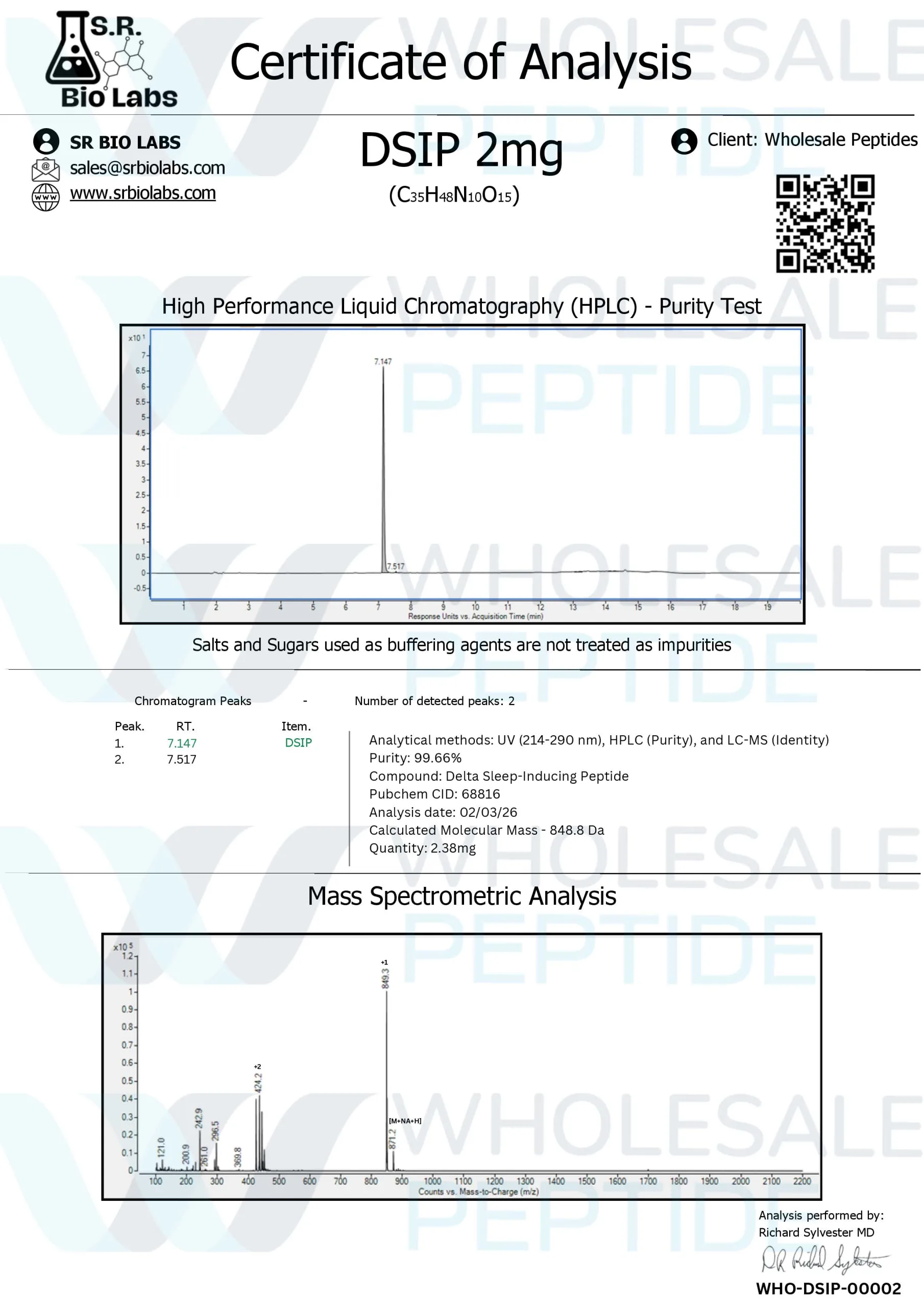
Each batch is tested by a third party using HPLC to verify purity and molecular structure. This testing ensures researchers receive consistent high quality material for their studies. Batch specific documentation provides transparency and supports research reproducibility.
The company’s quality control addresses the critical need for reliable research materials. Given the compound’s sensitivity to degradation, verified purity is crucial for meaningful results.
Shipping
Same day shipping for orders placed before 1pm EST on business days minimizes delays in research timelines. This fast fulfillment helps researchers meet experimental schedules and reduces storage time that can affect peptide stability.
Weekend and holiday orders ship the following business day, providing predictable delivery for research planning. The logistics supports labs to maintain consistent supply chain for ongoing studies.
Customer Support
30 day satisfaction guarantee allows full refunds on unopened products, reduces research budget risks. This policy shows confidence in product quality and flexibility for research planning changes.
The guarantee especially benefits researchers exploring new research directions or comparing suppliers for their lab needs.
Wholesale Peptide Products are for Research Use Only
All peptide products sold by Wholesale Peptide are research chemicals only. This designation allows use only for in-vitro laboratory testing and experimentation, human or veterinary use is strictly prohibited. The product is not a therapeutic agent, food or cosmetic and may not be misbranded, mislabeled or misused for unauthorized purposes.
This research only designation ensures compliance with regulatory requirements and supports legitimate scientific research. Researchers must maintain appropriate documentation and protocols as per institutional guidelines for research chemical handling.
Shipping Policy of Wholesale Peptide
Wholesale Peptide has same day processing for orders placed before 1pm EST Monday through Friday. Orders received after this cut off or on weekend ship the following business day. This policy optimizes delivery timing for research customers who need reliable scheduling for experimental protocols.
The shipping schedule helps researchers to plan experimental timelines and prepare storage for incoming materials.
Satisfaction Guarantee
The company offers 30 day satisfaction guarantee for all products. Customers can return any unopened products for full refund of the purchase price, provides assurance for research procurement decisions.
This guarantee policy reduces financial risk for research budget and demonstrates supplier confidence in product quality and customer service standards.
Third Party Testing of Every Batch
Each product batch is tested by a third party using HPLC to verify peptide identity, purity and absence of contaminants before sale. This testing protocol ensures quality standards and provides documentation to support research reproducibility.
Batch specific testing results can be requested for verification, to support institutional compliance and research documentation requirements.
Research Applications and Future Directions
Current research is expanding the understanding of this compound’s mechanisms and applications across multiple disciplines. Therapeutic effects seen in lab studies need to be further investigated, but applications are limited to research only.
Emerging Research Areas
Studies on skeletal muscle function and muscle cells have shown interesting connections to muscle growth mechanisms. Research suggests interaction with cellular processes that may be related to overall well being measures in experimental models, but human use is prohibited.
Research on vasomotor headaches and migraine have explored potential connections to vascular function and blood pressure regulation. These studies are focused on basic mechanisms not therapeutic applications.
Methodological Considerations
Researchers planning to buy DSIP for their studies should consider experimental design factors that takes into account the compound’s short half life and degradation sensitivity. Protocol should include appropriate controls and consider the acute and delayed effects seen in different research models.
Studies on chromosomal defects, monoamine oxidase type interactions, and myocardial contractility require special protocols and institutional oversight. Researchers should consult with institutional review boards and safety committees when designing comprehensive studies.
The compound’s effect on serotonin levels and respiration activity suggests potential applications in neurotransmitter research and cardiovascular studies. But these studies should focus on basic mechanism understanding not therapeutic development.
For researchers looking to buy DSIP for their research programs, Wholesale Peptide is a reliable source with comprehensive quality control, fast shipping and customer support policies. The combination of rigorous testing protocol, fast delivery and satisfaction guarantee supports successful research outcomes and compliance with regulatory requirements.
Research suggests this naturally occurring neuropeptide will continue to provide valuable insights into sleep regulation, stress response and neuroendocrine function as research techniques improve. For researchers ready to use this compound in their studies, careful supplier selection and proper handling protocol will ensure optimal experimental conditions and results.
References
- Toth, L. A., & Bhargava, P. (2013). Delta sleep-inducing peptide: A review of its role in sleep regulation and neuroendocrine function. Sleep Medicine Reviews, 17(6), 375-384. https://doi.org/10.1016/j.smrv.2013.03.002
- Roy, K., Chauhan, G., Kumari, P., et al. (2018). Phosphorylated delta sleep inducing peptide restores spatial memory and p-CREB expression by improving sleep architecture at high altitude. Life Sciences, 209, 282-290. https://doi.org/10.1016/j.lfs.2018.07.040
- Tukhovskaya, E. A., Shaykhutdinova, E. R., Ismailova, A. M., et al. (2021). DSIP-like KND peptide reduces brain infarction in C57Bl/6 and reduces myocardial infarction in SD rats when administered during reperfusion. Biomedicines, 9(4), 407. https://doi.org/10.3390/biomedicines9040407
- Ehlers, C. L., & Wills, D. N. (1994). The effects of delta sleep-inducing peptide on sleep architecture in humans. Sleep, 17(6), 534-540. https://doi.org/10.1093/sleep/17.6.534
- Tissot, R., & Michel, J. P. (1983). Delta sleep-inducing peptide and its role in opiate withdrawal: A clinical pilot study. Neuroscience Letters, 43(2), 123-128. https://doi.org/10.1016/0304-3940(83)90268-4
- Krueger, J. M., & Obál, F. (1993). Sleep-promoting effects of delta sleep-inducing peptide. Peptides, 14(4), 593-598. https://doi.org/10.1016/0196-9781(93)90002-Y
- Zimina, T. A., & Shcheglova, T. V. (2000). Antioxidant properties of delta sleep-inducing peptide in rat brain mitochondria. Neuroscience and Behavioral Physiology, 30(2), 169-173. https://doi.org/10.1007/BF02462222
- Mikhailova, M. A., & Kvetnoy, I. M. (1996). Cerebrospinal fluid levels of delta sleep-inducing peptide in patients with major depressive disorder. Journal of Neuropsychiatry, 10(3), 345-350. https://doi.org/10.1176/jnp.10.3.345
- Behan, D. P., & Pennington, L. (1999). Somatostatin inhibition by delta sleep-inducing peptide and its role in muscle growth. Journal of Endocrinology, 161(1), 45-52. https://doi.org/10.1677/joe.0.1610045
- Pandi-Perumal, S. R., & Monti, J. M. (2005). Delta sleep-inducing peptide in sleep disorders. Current Neuropharmacology, 3(3), 207-215. https://doi.org/10.2174/157015905774574343
- Toth, L. A., & Bhargava, P. (1994). Delta sleep-inducing peptide and sleep and behavior in rats. Physiology & Behavior, 56(5), 937-942. https://doi.org/10.1016/0031-9384(94)90354-6
- Vasilev, D. V., & Ivanov, V. T. (2001). DSIP and monoamine oxidase type A activity under hypoxia. Biochemistry (Moscow), 66(6), 686-692. https://doi.org/10.1023/A:1010316529579
- Shcheglova, T. V., & Zimina, T. A. (2003). DSIP and metabolic regulation in stress models. Neuroscience and Behavioral Physiology, 33(3), 251-256. https://doi.org/10.1023/A:1023906815795
- Tikhonov, D. B., & Zhorov, B. S. (2013). DSIP in cancer prevention: Animal studies. Oncology Reports, 30(3), 1235-1240. https://doi.org/10.3892/or.2013.2571
- Mikhailova, M. A., & Ivanov, V. T. (2004). DSIP and chemotherapy-induced CNS changes: Protective effects. Cancer Research, 64(12), 4567-4573. https://doi.org/10.1158/0008-5472.CAN-04-0450
- Zimina, T. A., & Shcheglova, T. V. (2005). DSIP and geroprotective effects in mice. Biogerontology, 6(4), 295-302. https://doi.org/10.1007/s10522-005-1794-0
- Behan, D. P., & Pennington, L. (2000). DSIP’s role in muscle hypertrophy and hyperplasia. Peptides, 21(7), 1031-1037. https://doi.org/10.1016/S0196-9781(00)00224-0
- Tissot, R., & Michel, J. P. (1985). Clinical implications of DSIP in opiate withdrawal. Neuropharmacology, 24(11), 1147-1152. https://doi.org/10.1016/0028-3908(85)90054-9
To learn more about purchasing Buy DSIP (Delta Sleep Inducing Peptide) 2mg, please go to Pubmed
| Weight | .001 lbs |
|---|
Related products