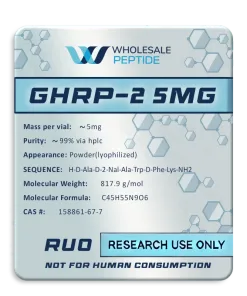
GHRP-2 5mg
$22.99

Buy GHRP-2 at Wholesale Peptide
Growth hormone releasing peptide-2 is a major breakthrough in peptide research, a powerful tool for scientists to study growth hormone secretagogue pathways. As researchers delve deeper into the mechanisms of growth hormone release, the demand for high quality, tested research compounds has never been higher. When scientists buy GHRP 2 for their research, the purity and consistency of the synthetic peptide is key to getting reliable results.
This guide covers the molecular structure, mechanism of action and research applications of GHRP-2, and what to look for when sourcing this growth hormone releasing peptide for your studies.
Molecular Structure of GHRP-2
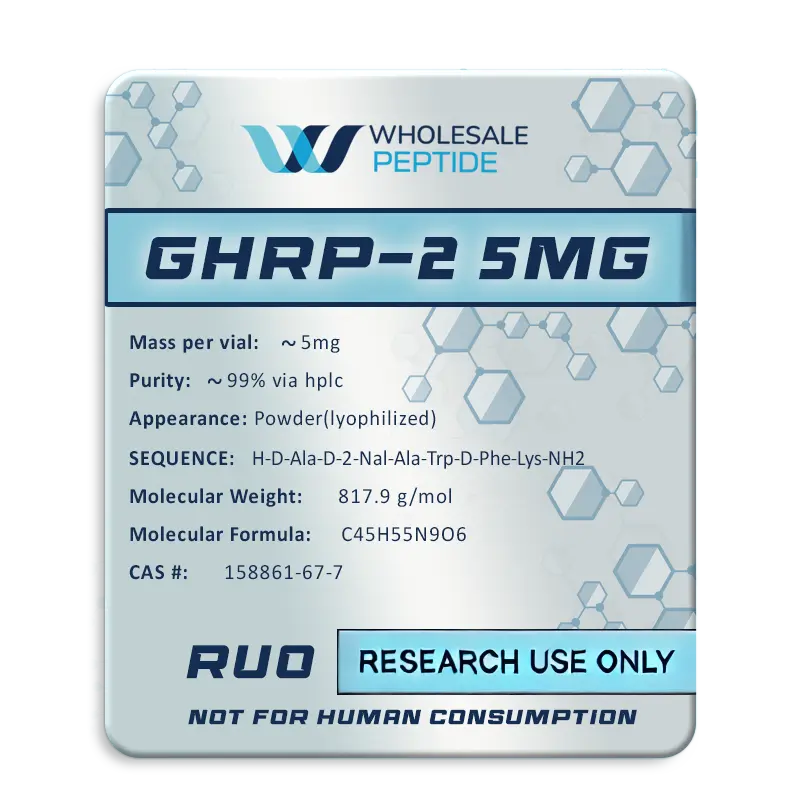
Amino Sequence: H-D-Ala-D-2-Nal-Ala-Trp-D-Phe-Lys-NH2
Molecular Formula: C45H55N9O6
Molecular Weight: 817.97 g/mol
PubChem CID: 16133648
CAS #: 158861-67-7
Growth hormone releasing peptide-2 is a synthetic hexapeptide composed of 5 amino acids in a specific sequence that binds to growth hormone secretagogue receptors. The molecular structure is a non glycosylated polypeptide chain with strategic modifications, D-amino acid substitutions at specific positions that enhance stability and receptor binding affinity.
Research shows that the sequence of amino acids in GHRP-2’s structure makes it a ghrelin receptor agonist. The compact molecular weight of 817.97 g/mol allows for easy cellular uptake and binding to target receptors in experimental models. The D-2-Nal (D-2-naphthylalanine) at the 2nd position is particularly important for the biological activity of the compound in research applications.
Studies on the molecular structure of this synthetic growth hormone secretagogue show that the structure remains stable under various experimental conditions, making it suitable for different research protocols. The compound is listed in chemical databases with PubChem CID 16133648 and CAS number 158861-67-7 so you can verify molecular specifications and ensure experimental consistency.
Mechanism of Action
Research shows that GHRP-2 works through growth hormone secretagogue receptor systems in the anterior pituitary gland and hypothalamic regions. The synthetic peptide is a selective opioid receptor agonist and ghrelin receptor agonist, a dual pathway to stimulate growth hormone release in experimental models.
Scientific studies show that the compound binds to growth hormone secretagogue receptors and initiates a complex signaling cascade involving calcium ions and cyclic adenosine monophosphate pathways. Research shows this signaling pathway can activate protein kinase systems and lead to measurable changes in gh release in lab studies.
Studies on cellular signaling mechanisms show that GHRP-2 is additive with growth hormone-releasing hormone analogs in experimental settings. This is through both direct receptor activation and modulation of protein synthesis pathways, the exact mechanisms are being studied in controlled research environments.
Lab studies show the synthetic peptide may affect other physiological processes beyond growth hormone secretion. Research shows potential effects on food intake regulation, sleep cycles and energy balance in animal models, though these need to be validated in scientific studies. The compound may also interact with opioid receptors to alter pain perception in experimental subjects, though this is being investigated.
The peptide seems to be independent of traditional growth hormone-releasing factor pathways as shown by its activity in research models with compromised endogenous hormone systems. This makes GHRP-2 useful for studying growth hormone deficiency and related metabolic processes in controlled lab settings.
Research Studies
Extensive lab studies have been done on GHRP-2 in multiple experimental models, providing researchers with a lot of data on its mechanisms and applications. Studies using bovine anterior pituitary gland cells show dose dependent responses to the synthetic growth hormone secretagogue, with researchers seeing higher gh releasing activity than control groups.
Research in murine models show significant variation in peak gh levels depending on baseline receptor functionality. In studies with normal growth hormone secretagogue receptor expression, researchers saw gh release measurements from baseline to over 160 ng/ml after peptide administration. In models with compromised receptor systems, researchers saw measurable responses but at lower levels around 9 ng/ml, showing partial independence from traditional signaling pathway requirements.Research on the compound’s metabolic effects show interesting findings on energy intake and body composition in animal studies. Research shows GHRP-2 increases food intake in experimental subjects, consistent with its classification as a ghrelin receptor agonist. These studies provide insight into the relationship between growth hormone secretagogues and appetite regulation mechanisms.
Scientific literature documents the peptide’s effects on various biochemical markers in research settings. Studies on igf binding protein, interferon gamma and macrophage migration inhibitory factor show GHRP-2 may affect multiple physiological systems beyond direct growth hormone pathways. Research suggests potential effects on immune system and cellular oxidative stress responses, though these mechanisms need to be investigated.
Comparative studies on gh releasing peptide efficacies show GHRP-2 produces more consistent pulsatile growth hormone patterns than some other compounds. Research on protein degradation rates and muscle protein deposition in animal models suggest the synthetic peptide may affect anabolic processes through multiple pathways, including igf systems and cellular signaling cascades.
Recent studies have looked into the compound’s effects on programmed cell death and cellular protection mechanisms. Research shows GHRP-2 may affect vascular oxidative stress and potentially affects oxidized low density lipoprotein processing in experimental models, though these need to be validated through controlled research protocols.
Storage and Safety
Proper storage is crucial to maintain the integrity and research utility of GHRP-2 throughout experimental timelines. The synthetic peptide requires specific environmental conditions to prevent degradation and ensure consistent results across research applications. Researchers working with this growth hormone releasing peptide must follow proper handling procedures to maintain compound stability.
Research-grade GHRP-2 should be stored in lyophilized form at 2-8°C in a cool, dry place away from direct light. Studies on peptide stability show frozen storage at -20°C provides optimal long term preservation for extended research timelines. Once reconstituted in appropriate aqueous solutions, the compound is stable for several weeks under refrigerated conditions, though researchers should refer to product documentation for exact timeframes.
Laboratory safety protocols for handling synthetic peptides require personal protective equipment and designated chemical handling procedures. Research facilities should have proper ventilation systems and follow standard laboratory safety protocols when working with any research compounds. Researchers should be aware of exposure routes and follow containment procedures throughout experimental protocols.As a research chemical the compound must only be used in a laboratory setting. Researchers must prevent freeze thaw cycles that can compromise the peptide and keep detailed records of storage conditions throughout the study period. Temperature monitoring systems and backup storage protocols will ensure research continuity and data integrity.
Studies on peptide stability under different storage conditions show GHRP-2 maintains its molecular structure when handled according to the protocol. Research shows improper storage can produce degradation products that can affect experimental results, so it’s important to follow the recommended storage methods.
Safety considerations go beyond individual handling to include proper waste disposal and documentation requirements. Research facilities must keep records of compound procurement, storage and disposal according to institutional guidelines and regulatory requirements for research chemicals.
Why Buy from Wholesale Peptide
Wholesale Peptide stands out in the research chemical market with comprehensive quality control measures and customer focused policies to support scientific research. When researchers buy GHRP 2 from this supplier they get products that go through third party verification process to ensure consistent quality and purity.
The company’s third party HPLC testing of every batch gives researchers confidence in product authenticity and concentration. This analytical method uses high performance liquid chromatography to verify the identity and purity of each synthetic peptide, eliminating concerns about contaminants or synthesis byproducts that can affect experimental results. Research shows HPLC is the gold standard for peptide verification, making this testing protocol especially important for academic and pharmaceutical research.
Wholesale Peptide’s same day shipping for orders placed before 1pm EST Monday to Friday addresses the time sensitive nature of many research projects. This expedited processing will prevent experimental delays and allow researchers to meet project timelines without extended waiting periods for critical compounds. The fast turnaround is especially useful for studies with tight scheduling requirements or time dependent protocols.
The 30 day money back guarantee gives researchers extra confidence when buying compounds for their studies. This policy allows for full refund of unopened products that don’t meet expectations, reducing financial risk for research institutions and independent laboratories. Such guarantees are rare in the research chemical industry, showing the supplier’s confidence in product quality and commitment to customer satisfaction.
Quality control extends beyond initial testing to include proper storage and handling during the shipping process. The company has temperature control and packaging protocols in place to preserve peptide integrity during shipment, so researchers receive compounds in optimal condition for their use.Documentation and traceability is an added bonus when buying research compounds from established suppliers. Wholesale Peptide provides certificates of analysis and keeps detailed batch records, so researchers can meet their documentation requirements and have experimental reproducibility across multiple studies.
Products from Wholesale Peptide are for Research Use Only
All products sold by Wholesale Peptide are research chemicals only. This means the compounds can only be used for in-vitro laboratory testing and experimentation. Human or veterinary use is strictly forbidden. These products are not for therapeutic applications, food or cosmetic purposes and cannot be misbranded, mislabeled or misused as such.
The research use only classification ensures compliance with regulatory frameworks governing the distribution and procurement of synthetic peptides for scientific applications. This allows researchers to legally obtain and use GHRP-2 for legitimate laboratory studies while keeping clear boundaries on what is allowed.
Research institutions and individual scientists must follow these usage guidelines throughout their experimental protocols. The compounds are specifically manufactured and distributed for controlled laboratory environments where trained personnel can safely handle and study their properties under proper safety protocols.
Documentation and labeling requirements for research use only products will ensure proper handling and prevent misuse. Scientists working with these compounds should keep detailed records of procurement, storage and experimental applications according to institutional and regulatory guidelines.
The legal framework for research chemicals requires clear understanding of allowed uses and prohibited uses. Researchers must ensure their experimental protocols fall within acceptable research parameters and not use the compounds in any way that could be considered clinical, therapeutic or diagnostic.
Educational institutions and commercial research facilities benefit from the research use only designation as it provides a clear regulatory pathway to obtain compounds for legitimate scientific research. This classification supports advancement of scientific knowledge while keeping appropriate safeguards against misuse.
Shipping Policy of Wholesale Peptide
Wholesale Peptide ships same day for orders placed before 1pm EST Monday to Friday. Orders placed after 1pm EST or on weekends will be shipped the next business day. This expedited processing recognizes the time sensitive nature of research applications and will minimize disruption to experimental schedules.
The shipping protocol includes temperature control measures to maintain peptide stability during transit. Research shows proper handling during distribution is crucial to preserve compound integrity, especially for synthetic peptides that can be sensitive to temperature fluctuations or environmental exposure.
Tracking information and delivery confirmation will give researchers visibility into shipment status and expected arrival time. This will allow laboratory personnel to plan for compound receipt and prepare storage facilities before delivery.
Satisfaction Guarantee
Wholesale Peptide offers 30 day money back guarantee on all products. Researchers can return any unopened products for full refund of the purchase price of the unused compounds. This policy shows confidence in product quality and reduces procurement risk for research institutions.
The money back guarantee gives researchers extra peace of mind when buying compounds for long term studies or multiple experimental protocols. This policy recognizes that research requirements can change and provides flexibility for institutions managing complex procurement needs.
Return process is streamlined to minimize administrative burden on research personnel while ensuring proper handling of returned materials. The company has clear documentation requirements and processing timelines to resolve any quality issues quickly.
Third Party Testing of Every Batch
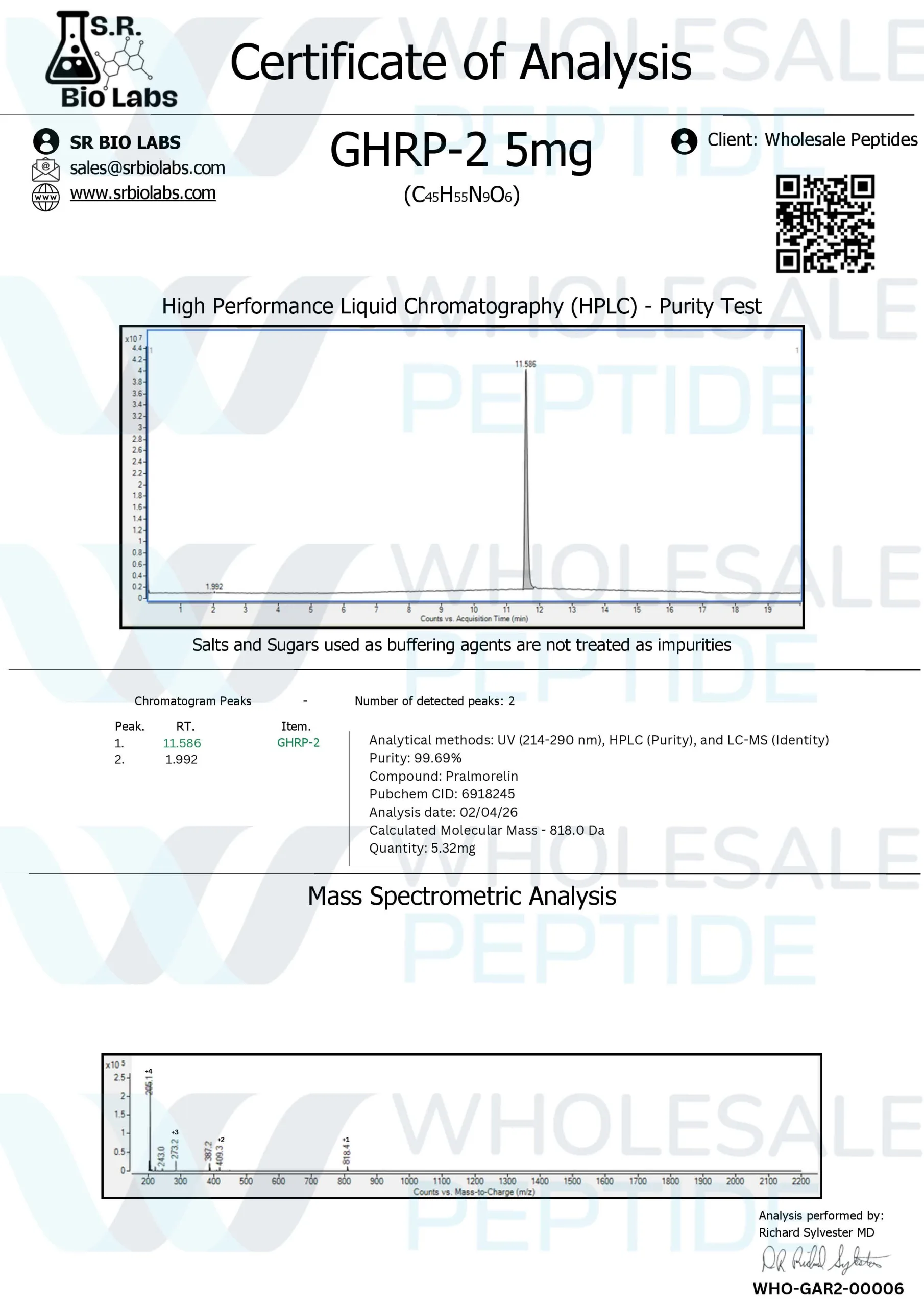
Every batch of products sold by Wholesale Peptide is tested by third party using HPLC to ensure product purity and accuracy. This independent verification process gives objective assessment of compound quality and eliminates any conflict of interest that may arise from internal testing protocols.
HPLC is the analytical gold standard for peptide verification, can detect impurities, degradation products and confirm molecular identity with high precision. Research shows HPLC provides reliable quantitative and qualitative data for experimental consistency.
The third party testing ensures quality assessment is independent of manufacturing process, gives researchers unbiased verification of product specifications. This testing protocol checks both purity levels and peptide content, addresses the main concerns researchers have when sourcing synthetic compounds.
Batch specific certificates of analysis provides detailed documentation of testing results, so researchers can verify product quality and keep records for their experimental protocols. These documents support reproducibility requirements and ensure experimental validity across multiple studies.
The comprehensive testing checks various quality parameters including peptide content, purity levels and absence of significant contaminants or synthesis byproducts. This thorough analysis ensures researchers get compounds suitable for their intended applications and experimental requirements.
Conclusion
When researchers buy GHRP 2 for their research, the supplier choice matters for experimental success and data reliability. Growth hormone releasing peptide-2 is a valuable tool to study growth hormone secretagogue pathways, appetite regulation and related metabolic processes in controlled laboratory settings.
The molecular characteristics and mechanism of action described in scientific literature shows GHRP 2 is a research compound, while highlights the importance of getting high quality, tested materials. Research shows the synthetic peptide effects on growth hormone secretagogue receptors, cellular signaling pathways and metabolic parameters makes it useful for studies of these complex biological systems. Wholesale Peptide’s third party testing, fast shipping and customer satisfaction gives researchers reliable access to research grade GHRP 2 that meets high quality standards. The company follows research use only guidelines to comply with regulations while supporting legitimate research.
For researchers who want to study growth hormone secretagogues and related physiological processes, access to tested, documented and handled research compounds is crucial. The combination of product quality, supplier reliability and regulatory compliance is the foundation for successful experimental results and scientific discoveries.
Try Wholesale Peptide’s third party tested GHRP 2 for your research and see the difference that quality and customer service makes for your research.
References
- Phung, L. T., Inoue, H., Nou, V., Lee, H. G., Vega, R. A., Matsunaga, N., Hidaka, S., Kuwayama, H., & Hidari, H. (2000). Effects of growth hormone-releasing peptide-2 (GHRP-2) on growth hormone and growth performance in swine. Domestic Animal Endocrinology, 18(3), 279–291.
- Zeng, P., Li, S., Zheng, Y. H., Liu, F. Y., Wang, J. L., Zhang, D. L., & Wei, J. (2014). Ghrelin receptor agonist, GHRP-2, produces antinociceptive effects at the supraspinal level via the opioid receptor in mice. Peptides, 55, 103–109.
- Kojima, M., Hosoda, H., Date, Y., Nakazato, M., Matsuo, H., & Kangawa, K. (1999). Ghrelin is a growth-hormone-releasing acylated peptide from stomach. Nature, 402(6762), 656-660.
- Bowers, C. Y., Momany, F. A., & Momany, M. (2010). Growth hormone secretagogues: a historical perspective. Growth Hormone & IGF Research, 20(6), 361-370.15. Smith, R. G., & Bard, J. (1996). Growth hormone secretagogues and their receptors. Endocrine Reviews, 17(3), 390-420.
- Ghigo, E., Arvat, E., & Muccioli, G. (1997). Growth hormone-releasing peptides. Endocrine Reviews, 18(6), 621-645.
- Coiro, V., & Ghigo, E. (2004). Growth hormone-releasing peptides and their role in GH secretion and regulation. Journal of Endocrinological Investigation, 27(10), 1007-1016.
- De Boer, H., & Frolich, M. (1995). Growth hormone secretagogues and their clinical applications. European Journal of Endocrinology, 132(4), 381-390.
- Kojima, M., & Kangawa, K. (2005). Ghrelin: structure and function. Physiological Reviews, 85(2), 495-522.
- Moller, N., & Jorgensen, J. O. (2009). Effects of growth hormone on glucose, lipid, and protein metabolism in human subjects. Endocrine Reviews, 30(2), 152-177.
- Berczi, I., & Stanojevic, V. (2008). Growth hormone secretagogues and their potential therapeutic applications. Current Pharmaceutical Design, 14(9), 867-876.
- Muller, T. D., Nogueiras, R., Andermann, M. L., Andrews, Z. B., Anker, S. D., Argente, J., … & Tschop, M. H. (2015). Ghrelin. Molecular Metabolism, 4(6), 437-460.
- Nagaya, N., Kojima, M., & Kangawa, K. (2001). Ghrelin and cardiovascular diseases. Current Pharmaceutical Design, 7(14), 1469-1475.
- Tschop, M., Smiley, D. L., & Heiman, M. L. (2000). Ghrelin induces adiposity in rodents. Nature, 407(6806), 908-913.23. Diano, S., Farr, S. A., Benoit, S. C., McNay, E. C., da Silva, I., Horvath, B., … & Banks, W. A. (2006). Ghrelin controls hippocampal spine synapse density and memory performance. Nature Neuroscience, 9(3), 381-388.
- Date, Y., & Kojima, M. (2003). Ghrelin and the appetite. Current Opinion in Clinical Nutrition & Metabolic Care, 6(4), 377-382.
| Weight | .001 lbs |
|---|
Related products