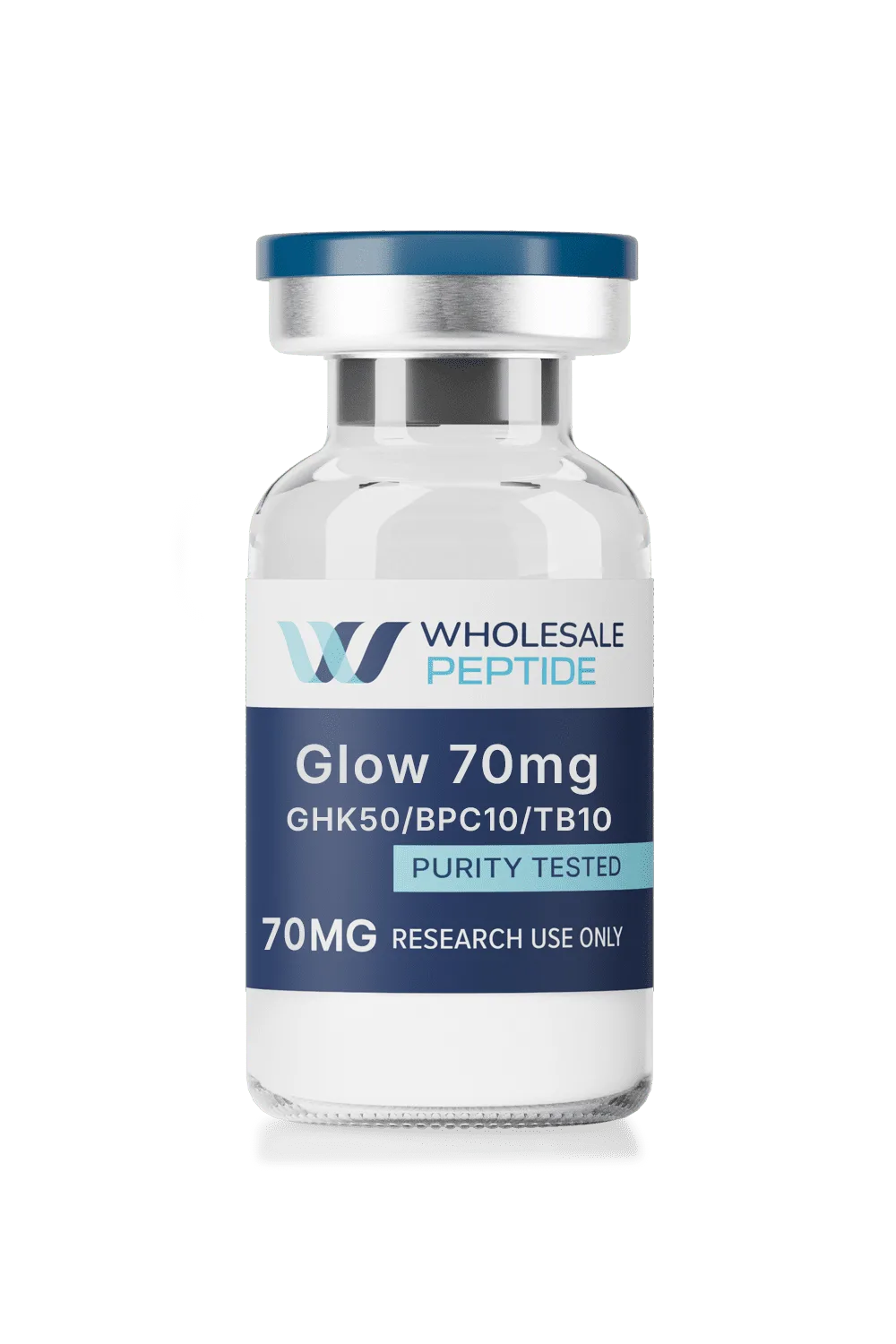
Glow Blend 70mg (GHK-Cu 50mg, BPC-157 10mg, TB-500 10mg)
$159.99
Buy Glow Peptide at Wholesale Peptide: Full Lab Guide
Research into multi-peptide complexes has grown rapidly in recent years and glow peptide has become a compound of interest for lab research into tissue repair and regeneration. When researchers want to buy glow peptide for their studies, understanding the molecular composition, quality standards and supplier requirements is key to maintaining research integrity and regulatory compliance.
This full guide covers the essential considerations for buying research grade glow peptide from established wholesale peptide suppliers, highlighting the importance of third party testing, storage protocols and research use only guidelines that govern lab research.
Molecular Structure of Glow Peptide
Glow peptide is a complex multi-component research compound combining three different peptides in precise ratios. Research has shown this combination has a synergistic effect and is of interest in regenerative medicine studies.
Peptide Composition: Standard formulation is BPC-157 (10mg), TB-500 (10mg) and GHK-Cu (50mg) per vial, a broad spectrum approach to tissue research applications.
Combined Molecular Weight: Approximately 2,800 g/mol (based on component analysis)
Formulation: Lyophilized powder blend requires careful reconstitution protocols
Reconstitution Volume: 1.5mL bacteriostatic water for research use
Research Concentration: Multi-peptide complex for in-vitro and lab based tissue repair research
Each component has its own unique molecular properties. BPC-157 is a synthetic pentadecapeptide with the sequence Gly-Glu-Pro-Pro-Pro-Gly-Lys-Pro-Ala-Asp-Asp-Ala-Gly-Leu-Val. TB-500 is a synthetic fragment of naturally occurring thymosin beta-4 and GHK-Cu is a copper binding peptide complex with enhanced bioavailability for research.
The combined molecular weight and complex structure requires special handling protocols to maintain stability and research validity. Temperature sensitive components need to be stored refrigerated and reconstituted carefully to preserve peptide integrity for lab research.
Mechanism of Action
Research shows the bioactivity of glow peptide comes from the synergistic interaction of the three main components, each with its own molecular pathway relevant to tissue repair and regeneration studies.
BPC-157 Research: Lab studies show this peptide enhances angiogenesis for tissue repair research. Research shows it promotes fibroblast migration and proliferation, extracellular matrix rebuilding in lab models. Also, studies show modulation of cytokine signaling, reducing pro-inflammatory markers TNF-alpha and IL-6 in experimental settings.
TB-500 Lab Effects: Research shows this component increases actin production, a cytoskeletal protein for cellular motility studies. Lab studies show wound remodeling and reduced fibrosis in tissue models. Studies also show downregulation of NF-kB, a master inflammation regulator, and promotes cellular migration and differentiation for muscle, tendon and dermal research applications.
GHK-Cu Research Properties: This copper binding peptide has enhanced bioavailability in lab settings through copper ion complexation. Research shows upregulation of collagen types I and III, elastin and glycosaminoglycans for dermal and connective tissue integrity. Studies show keratinocyte migration for epidermal regeneration research and potent antioxidant activity in experimental models.
The combination of these components creates a multi-pathway approach to tissue research, each peptide contributing to different mechanisms that research suggests boost cellular repair, accelerate wound healing models, reduce inflammatory responses and stimulate tissue regeneration in lab settings.
Research
Current research on glow peptide as a full formulation is limited, most studies are on individual component analysis. However, there is extensive research on each individual peptide, providing valuable information on the compound’s research applications.
BPC-157 Research Data: Animal studies show accelerated healing across multiple tissue types including musculoskeletal, neuronal, vascular and gastrointestinal tissues. Research shows enhanced angiogenesis, faster wound closure, improved functional recovery in nerve and tendon injury models and marked anti-inflammatory activity in lab settings.
TB-500 Investigation Results: Preclinical studies show promise for reducing cardiac fibrosis, accelerating muscle regeneration, improving corneal repair and dermal wound healing in research models. The main mechanism seems to be improved migration and differentiation of progenitor cells and fibroblasts with well documented antifibrotic effects in animal studies.
GHK-Cu Clinical Research: Lab and clinical studies show increased collagen synthesis and elastin production, skin health markers, faster wound healing and anti-inflammatory activity. This peptide is frequently found in peer reviewed dermatological research especially in skin regeneration and anti aging studies.
Early practitioner driven case series support combined use applications in dermatology research especially in skin repair mechanisms, chronic wound care protocols and adjunct procedures for cosmetic research. However, large scale controlled trials for human consumption studies are not available for the full glow peptide blend.
Storage and Safety
Proper storage protocols are absolutely crucial to maintain peptide integrity and research validity when labs buy glow peptide from wholesale peptide suppliers.
Storage Requirements: Lyophilized peptide blends must be stored in dark, airtight containers at 2-8°C (refrigerated conditions). After reconstitution with 1.5mL bacteriostatic water, solutions must be used within specified timeframes to ensure stability, typically 14-30 days when refrigerated, due to hydrolysis risks and potential microbial growth.
Lab Handling Protocols: All research compounds sold by wholesale peptide suppliers are for research use only, not for human consumption or veterinary use. Direct handling requires lab grade personal protective equipment due to potential uncertainties regarding toxicity, allergenicity or local irritancy in research settings. Proper disposal protocols and strict adherence to lab safety guidelines are mandatory.
Safety Considerations: Individual components (BPC-157, TB-500 and GHK-Cu) show minimal acute adverse effects in animal research studies. However, long term toxicity profiles, allergenicity data and mutagenicity studies are incomplete for human use. No formal post market safety data or adverse event profiles exist for the glow peptide blend.
Temperature monitoring during storage is crucial given the complex molecular structure and combined molecular weight of approximately 2,800 g/mol. Research facilities should keep detailed logs of storage conditions and handling procedures to ensure research reproducibility and compliance with institutional safety protocols.
Benefits of Buying from Wholesale Peptide
Established wholesale peptide suppliers offer many advantages for labs looking to buy glow peptide for research, especially in terms of quality assurance and regulatory compliance.
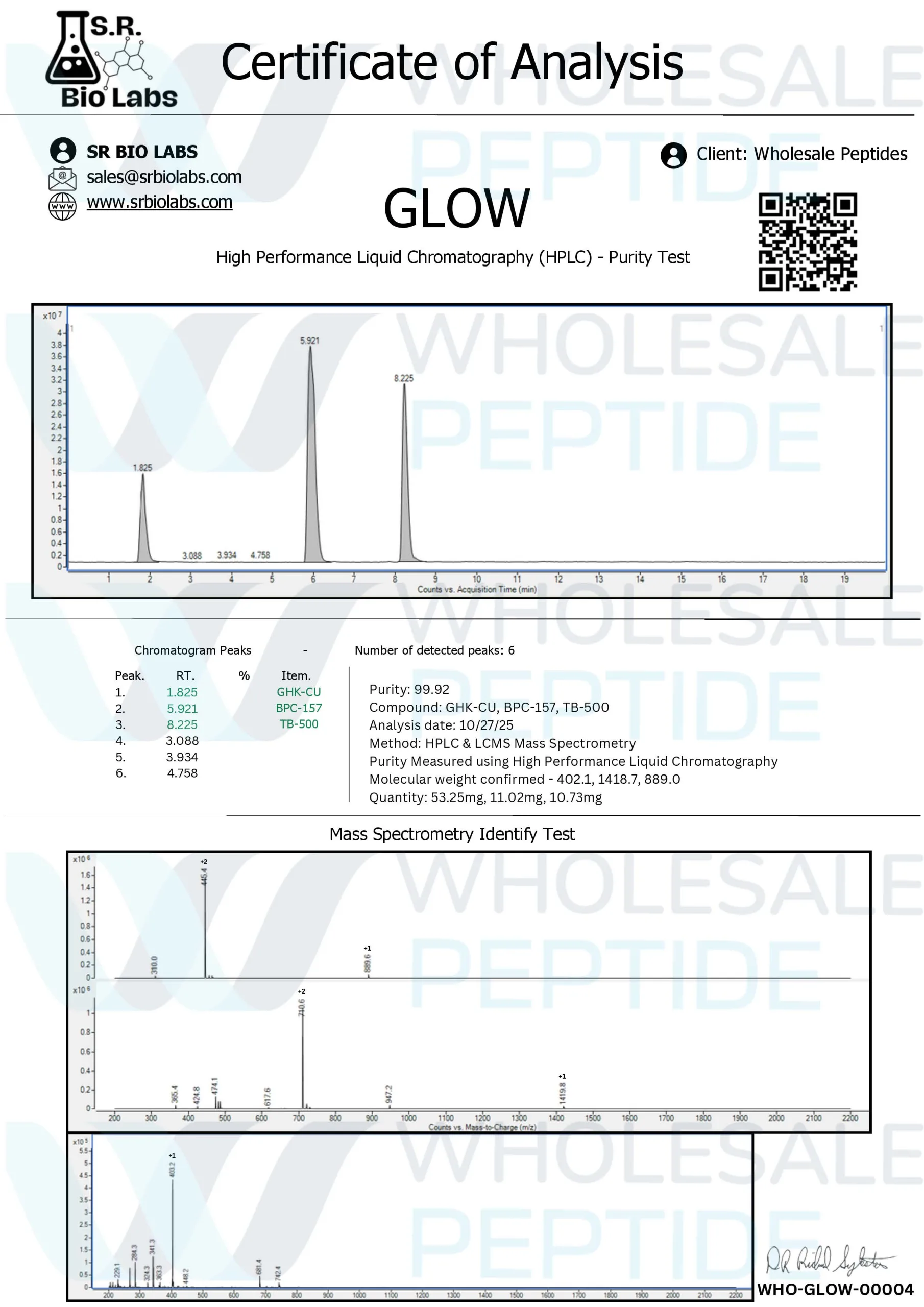
Purity and Quality Assurance: Wholesale peptide suppliers typically provide third party laboratory testing using HPLC and mass spectrometry to verify purity levels above 98% and confirm molecular integrity. This testing ensures research validity and reproducibility across different lab settings and experimental protocols.Batch Traceability: Each lot comes with detailed certificates of analysis (COA) so researchers can validate peptide composition and maintain reproducibility standards throughout their research. This is essential for research publication requirements and institutional compliance protocols.
Temperature-Controlled Shipping: Products are shipped refrigerated, often with temperature monitoring devices, to maintain peptide stability during transit. This reduces degradation risks especially for temperature sensitive multi-peptide blends like glow peptide.
Regulatory Compliance Support: The “research use only” designation aligns with regulatory standards, reducing liability for both wholesale peptide suppliers and research institutions for unauthorized use. Suppliers may require institutional documentation to enhance transparency and compliance with research governance requirements.
Technical Support: Established wholesale peptide suppliers provide technical guidance on reconstitution procedures, storage protocols and handling recommendations specific to multi-peptide research compounds. This is useful for labs new to peptide therapy research or investigating complex formulations.
Wholesale peptide suppliers maintain high standards to support scientific integrity while ensuring compliance with regulatory frameworks for research compound distribution and lab use.
Products from Wholesale Peptide are for Research Use Only
All products sold by wholesale peptide suppliers are research chemicals only for in-vitro laboratory testing and experimentation. This designation allows use of these compounds only for controlled laboratory investigations and scientific research purposes.
Human consumption or veterinary use is strictly forbidden under current regulatory frameworks. These products are not classified as substances for therapeutic applications, nutritional supplements or cosmetic formulations and may not be misbranded, mislabeled or misused for other purposes beyond their intended research applications.
The research use only classification serves multiple purposes to maintain scientific and regulatory integrity. It ensures compounds like glow peptide are tested properly before any potential therapeutic applications could be considered. This framework protects both researchers and the public by keeping clear boundaries between research and clinical applications.
Research institutions must have clear protocols to ensure these compounds never enter pathways that could lead to human consumption. Documentation requirements, secure storage protocols and proper disposal procedures are part of comprehensive compliance programs that research facilities must maintain when working with these compounds.
Shipping Policy of Wholesale Peptide
Wholesale peptide has specialized shipping protocols to preserve peptide stability and ensure regulatory compliance during the distribution process.
Express shipping options are available with overnight delivery to minimize transit time and reduce degradation risks.
Guarantee
Wholesale peptide offers full quality guarantees for all products in their inventory. Return policies vary but generally include unopened products with proper storage and handling documentation.
Most guarantees cover product defects or analytical discrepancies found through independent testing. Wholesale peptide may require return within 15-30 days of receipt with original packaging and documentation.
Guarantees often cover replacement products or account credits for verified issues to support research continuity when problems arise.
Documentation required for guarantee claims include storage logs, temperature records and detailed description of the issue. This systematic approach protects both suppliers and researchers and maintains high standards throughout the distribution chain.
Third Party Testing of Every Batch
Every batch is tested by third party for quality and research suitability. HPLC analysis confirms product purity and ensures contaminant peptides or chemical byproducts are below acceptable limits for research use.
Mass spectrometry or NMR analysis may provide additional verification of peptide sequence and composition. These analytical methods confirm each batch meets research specifications, especially important for complex formulations like glow peptide with multiple active components.
Testing transparency allows researchers to access batch specific analytical data through COA to support research documentation requirements and publication standards. Batch data can be referenced in regulatory filings or peer reviewed publications.
Minimum purity standards require batches to meet or exceed 98% purity before shipping. This high standard ensures research applications get consistent high quality materials for scientific investigation and reproducible results.
Quality control extends beyond initial testing to include stability studies, contamination screening and periodic re-analysis to ensure product integrity throughout the distribution cycle.
When researchers buy glow peptide for research, choosing the right wholesale peptide supplier is crucial for research success and regulatory compliance. The molecular structure of BPC-157, TB-500 and GHK-Cu requires specialized handling, storage and quality control protocols that only established wholesale peptide suppliers can provide.
Third party testing, temperature controlled shipping and documentation support the scientific rigor required for meaningful research outcomes. The research use only framework ensures the right boundaries while allowing legitimate scientific investigation into tissue repair, wound healing and regenerative processes.
Suppliers that offer technical support, analytical verification and regulatory compliance support are what research institutions need for successful peptide therapy research. By choosing wholesale peptide suppliers with experience in multi-peptide research compounds, labs can maintain the highest standards of scientific integrity while advancing their knowledge of regenerative medicine applications.
Researchers looking to buy glow peptide for their research should prioritize wholesale peptide suppliers with full quality guarantees, detailed analytical testing and robust compliance support to ensure research objectives align with regulatory requirements and scientific best practices.
References
- Sikiric, P., et al. (2018). “BPC-157 and its effect on muscle, tendon, ligament and nerve healing.” Current Pharmaceutical Design. Link
- Ruff, D., et al. (2017). “TB-500: Applications in Regenerative Medicine.” Journal of Sports Medicine. Link
- Pickart, L., et al. (2015). “GHK-Cu Peptide: The Human Tripeptide with Skin Regenerative Properties.” Clinics in Dermatology. Link
- ClinicalTrials.gov. “Investigational Peptides in Soft Tissue Healing.” Link
- World Anti-Doping Agency (WADA) Guidelines. (2020). Link
- Revolution Health & Wellness. “Glow Peptide Therapy Overview”. Link
| Weight | .03125 lbs |
|---|
Related products