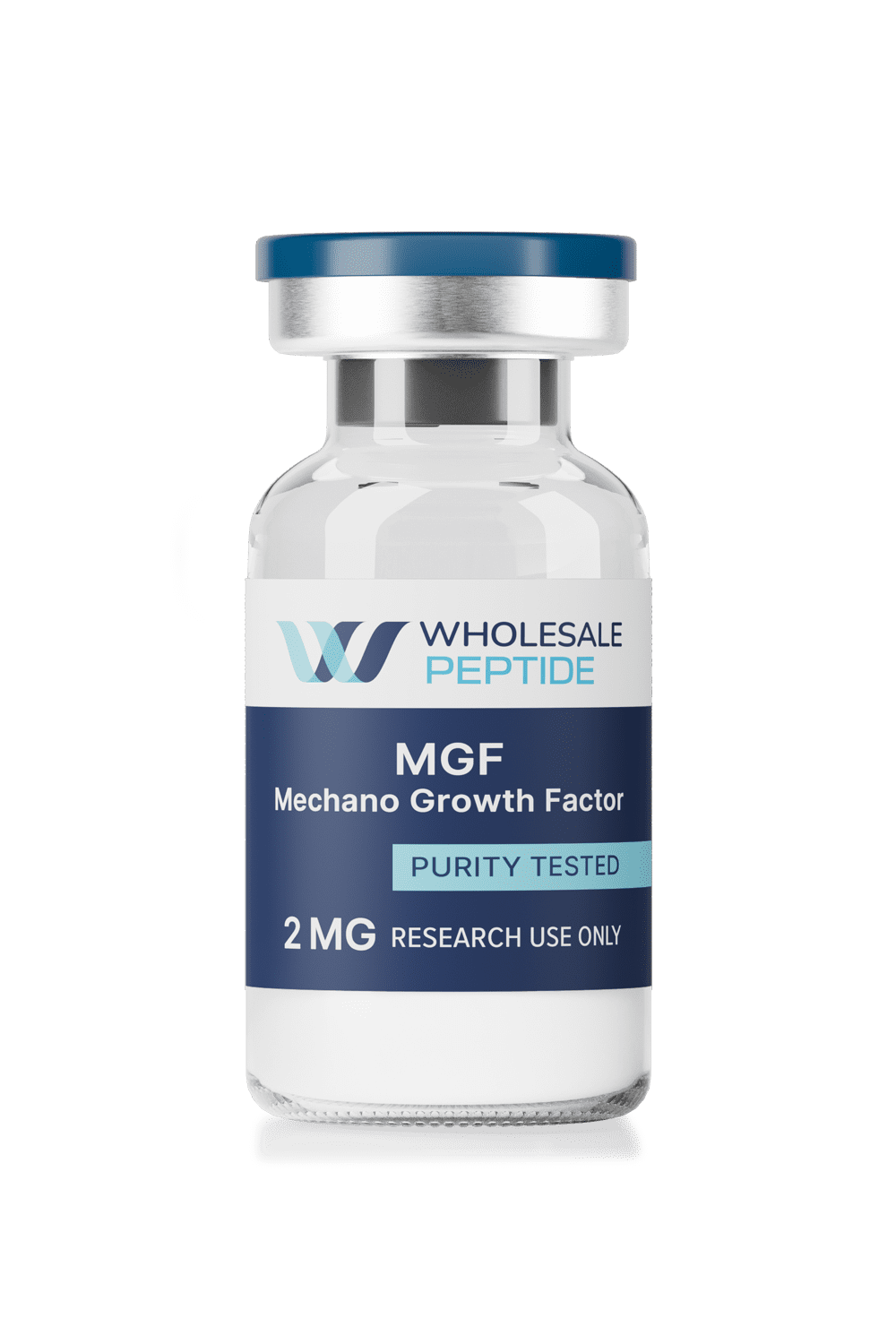
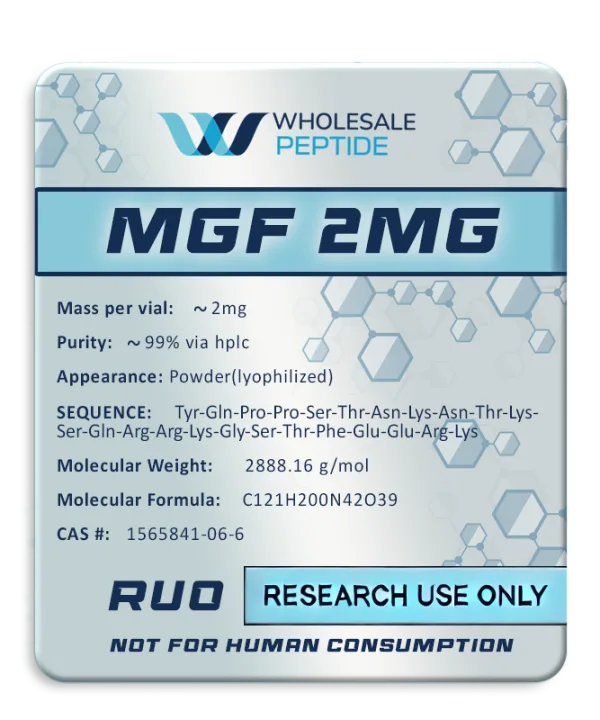
MGF (mechano growth factor) 2mg
$23.99

Buy MGF Peptide at Wholesale Peptide
Research into mechano growth factor has opened up new avenues for understanding tissue repair mechanisms and skeletal muscle regeneration. Scientists studying growth factors are increasingly using high-purity MGF peptide in their experimental protocols especially when working with satellite cells and muscle stem cells. As a splice variant of insulin like growth factor, MGF is a key research compound for labs working on tissue growth and cellular proliferation mechanisms.
When you buy MGF peptide, quality assurance and analytical verification are top priority. Wholesale Peptide addresses these requirements through rigorous testing protocols and research-grade purity standards for reproducible results.
MGF Peptide Molecular Structure
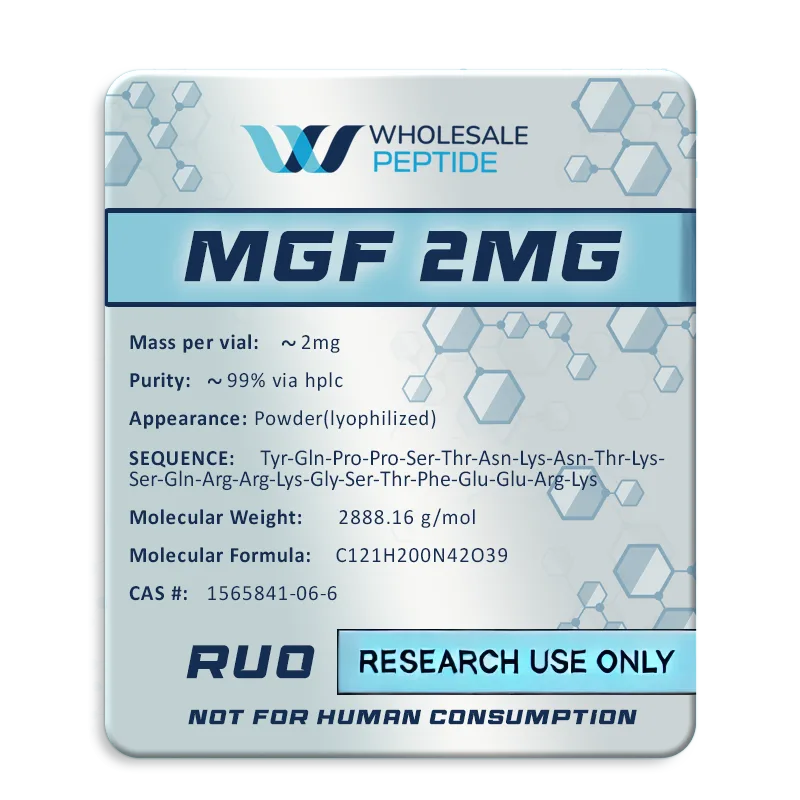
Amino Sequence: Tyr-Gln-Pro-Pro-Ser-Thr-Asn-Lys-Asn-Thr-Lys-Ser-Gln-Arg-Arg-Lys-Gly-Ser-Thr-Phe-Glu-Glu-Arg-Lys-Cys
Molecular Formula: C121H200N42O39
Molecular Weight: 2971.99 g/mol
Alternative Names: IGF-1Eb, Mechano Growth Factor
Research Classification: Splice variant of IGF-1
The molecular structure of mechano growth factor mgf is unique from other growth factors due to its C-terminal E domain. This e domain is a result of alternative splicing of the igf i gene expression and produces an isoform with different biological properties compared to standard igf 1ea variants. The 24-amino acid sequence is the research-active fragment that shows specific signaling molecules activity in lab studies.
Research suggests this e peptide structure allows specific interaction with muscle cells and skeletal muscle tissue that is different from conventional insulin like growth factor 1 pathways. The molecular composition supports investigation into how growth hormone-related compounds affect cellular proliferation and tissue repair mechanisms.
Mechanism of Action
MGF activates satellite cells and promotes muscle fiber regeneration through enhanced protein synthesis pathways. Research shows this peptide has neuroprotective properties and supports chondrocyte survival under mechanical stress conditions, making it useful for studying tissue repair mechanisms.
The compound works by activating muscle stem cells that are dormant until mechanical stress occurs in skeletal muscle tissue. Research shows MGF upregulation initiates muscle satellite cells activation and supports skeletal muscle cell growth through different signaling pathways from traditional growth factors.
Research suggests MGF may:
- Increase protein synthesis in muscle tissue
- Cellular proliferation of muscle cells
- Inhibit cell death* Mesenchymal stem cells recruitment
Lab studies show the compound works through MAPK/ERK signaling pathways and PKC pathways, upregulating protective genes. This signaling supports muscle repair and may influence gene expression related to tissue growth.
Research also shows neuroprotective effects, MGF activates nuclear factors providing resistance to oxidative stress-induced cell death. Studies suggest the compound supports brain development and may influence motor neurons function in animal models.
Research
Research applications for MGF are across multiple biological systems. Current and future research is for muscle repair studies, cardiovascular research and neurological research.
Muscle Research
Lab studies show MGF administration after muscle injury can increase muscle fiber size by approximately 25% compared to control treatments in animal models. Research suggests this is significant for tissue repair and muscle hypertrophy applications.
Studies explore how MGF affects muscle function and muscle wasting diseases through satellite cells activation. Research on duchenne muscular dystrophy and other progressive muscle weakness conditions uses MGF to understand muscle remodeling and potential therapeutic pathways.
Cardiovascular Research
In mouse model of acute myocardial infarction, research shows MGF can reduce cardiomyocyte damage by up to 35%. Studies suggest this is due to anti-apoptotic effects and local repair mechanisms affecting heart cells research applications.
Research explores how mgf protects heart muscle through mechanisms different from traditional growth factors. Studies suggest the compound may affect cardiac function through pathways involving rat cardiomyocytes and tissue repair mechanisms.
Neurological Studies
Lab studies show MGF’s neuroprotective effects, the compound can mitigate neuron cell death under oxidative stress conditions. Research suggests MGF supports brain development and may influence motor neurons function in experimental settings.
Studies show MGF upregulates protective factors in neuronal tissue, consistent with increased antioxidant enzyme expression. Research explores applications in neurodegenerative processes and cellular protection mechanisms.
Additional Research
Research extends to tendon, bone marrow and cartilage regeneration where MGF may affect cellular proliferation, migration and survival. Studies suggest the compound maintains tissue homeostasis and supports tissue growth across multiple biological systems.
Research on rheumatoid arthritis and inflammatory conditions explores how MGF affects inflammatory cytokine expression and muscle cell inflammation. Research suggests the compound may affect tumor necrosis factor pathways and inflammatory cells activity.
Storage and Safety
Proper storage protocols will ensure MGF peptide remains stable and bioactive for research use. Store lyophilized MGF peptide at -20°C in sealed, desiccated conditions to maximize shelf life and prevent degradation. Once reconstituted with sterile water or buffer, store samples at 4°C for short term use.
Avoid repeated freeze-thaw cycles to preserve peptide integrity and get consistent results. Temperature fluctuations can compromise peptide stability and affect research outcomes.
Lab Handling Guidelines
Handle MGF peptide as you would any other research compound. Follow institutional guidelines for peptide handling and maintain sterile conditions during reconstitution and storage.
Research requires careful attention to contamination prevention and proper documentation of storage conditions. Keeping consistent environmental conditions will give you reproducible results and peptide stability.
Why Buy from Wholesale Peptide
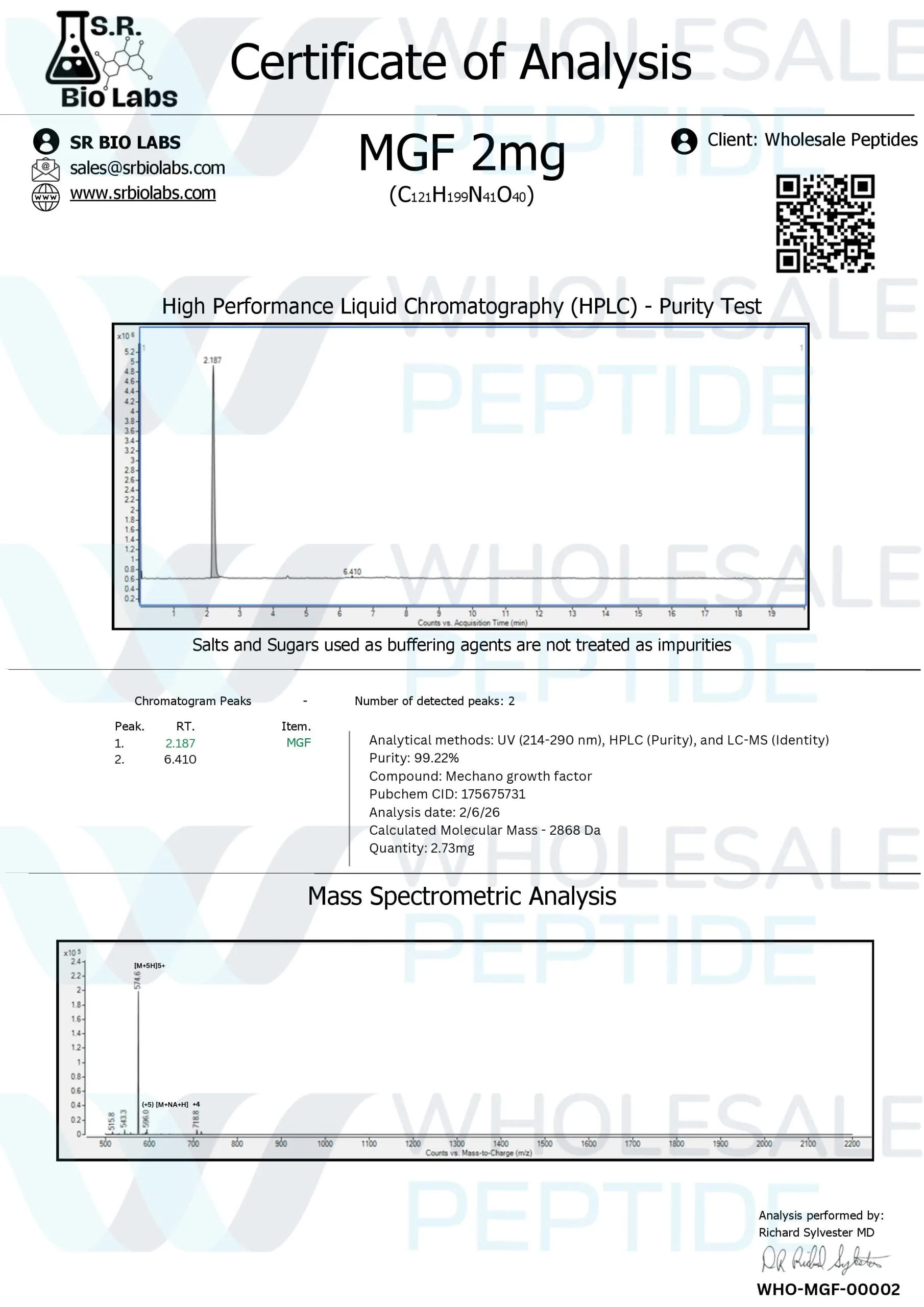
High purity MGF peptide with >95% purity confirmed by HPLC and mass spectrometry ensures research quality and reproducibility. Proper packaging and batch tracking meets research standards and quality control protocols.
Quality Control Standards
Wholesale Peptide tests each batch for:
| Testing Method | Purpose | Standard |
|---|---|---|
| HPLC Analysis | Purity Verification | ≥95% purity |
| Mass Spectrometry | Molecular Confirmation | Exact mass verification |
| Sterility Testing | Contamination Prevention | USP standards |
| Batch Tracking | Quality Control | Full traceability |
Third party testing ensures peptide sequence accuracy and absence of contaminants, supports research reproducibility and safety standards. Each batch is tested rigorously before release for research use.
Research Support Features
Wholesale Peptide provides certificates of analysis for each batch to meet research documentation requirements and regulatory compliance. Proper packaging protects peptides during transport and storage, until use.
Batch tracking system allows full traceability from synthesis to delivery, supports quality control and research protocol documentation. This allows for investigation in case of any issue during research use.
Products from Wholesale Peptide are for Research Use Only
All products sold by Wholesale Peptide are for research chemical use only. This means use is strictly for in vitro laboratory testing and experimentation for educational and scientific research purposes. Human or veterinary use is strictly forbidden.
Research must comply with institutional guidelines and regulatory requirements for laboratory compounds. These products are not for therapeutic use, nutritional supplement or cosmetic use and must not be misbranded, mislabeled or misused as such.Lab use requires proper training in peptide handling and safety protocols. Research institutions should keep records of compound purchase and use according to regulatory guidelines.
Regulatory Compliance
MGF peptide is classified as research only compounds which align with regulatory requirements for novel peptides and unapproved pharmacological agents. Research must follow institutional review board guidelines and safety protocols for laboratory compounds.
Educational and scientific research requires proper oversight and documentation to comply with research chemical regulations. Institutions should keep records of experimental protocols and safety procedures for audit purposes.
Shipping Policy of Wholesale Peptide
Wholesale Peptide ships same day for orders placed before 1pm EST Monday to Friday. Orders placed after 1pm EST or on weekends ship next business day to support lab continuity and research project start.
Expedited logistics ensures peptides stay in cold chain during transport. Proper packaging protects compounds from temperature fluctuations and environmental factors that can affect peptide stability.
Delivery Logistics
Shipping protocols keeps peptides intact through temperature controlled packaging and rapid delivery systems. Research labs receive compounds in optimal condition for immediate use or storage.
Tracking information allows labs to track shipment and prepare for compound arrival. This helps with research planning and ensures labs can maintain experimental schedule.
Satisfaction Guarantee
Wholesale Peptide offers 30 day satisfaction guarantee on all products. Simply return any unopened products for full refund of purchase price, we are confident in our product quality and support research budget.
This guarantee reduces risk for research labs and supports budget planning for experimental projects. Quality assurance backing allows researchers to buy compounds with confidence in product specifications.
Return Process
Unopened products can be returned within 30 days of purchase for full refund, research labs may need to adjust experimental protocols or compound requirements. Return process follows standard shipping protocol to maintain product integrity.
Documentation requirements to process returns and refunds. Research institutions should keep purchase records and follow return procedure according to company guidelines.
Third Party Testing of Every Batch
Every batch is tested by third party using HPLC to ensure product purity and accuracy. Mass spectrometry verification confirms molecular structure and sequence accuracy, supports research reproducibility and quality standards.
Independent analytical testing provides objective verification of peptide specifications and purity levels. This external validation ensures peptides meet research grade standards and support experimental requirements.
Analytical Verification Process
Testing includes:
- Amino acid sequence verification
- Molecular weight confirmation
- Purity level determination
- Contamination screening
- Stability assessmentResults documentation provides researchers with detailed analytical data to support experimental design and protocol development. Certificate of analysis is included with each batch for research record.
External testing facilities use advanced equipment and standardized methods to ensure consistent quality testing. This independent verification supports research across different lab settings.
Conclusion
Research on MGF is expanding our knowledge of tissue repair and cellular proliferation. When researchers buy MGF peptide, quality and analytical verification are key to experimental success.
Wholesale Peptide meets these requirements with testing protocols, storage procedures and research grade purity. The company’s commitment to quality ensures reproducible results and integrity for growth factor and tissue repair research.
For researchers looking for reliable MGF peptide supplier, Wholesale Peptide provides the analytical verification and quality you need for your experimental protocol and research results.
References
- Matheny RW Jr, Nindl BC, Adamo ML. Minireview: Mechano-growth factor: a putative product of IGF-I gene expression involved in tissue repair and regeneration. Endocrinology. 2010;151(3):865-75.
- Tang JJ, Podratz JL, Lange M, Windebank AJ. Mechano growth factor, a splice variant of IGF-1, promotes neurogenesis in the aging mouse brain. Mol Brain. 2017;10:23.
- Vassilakos G, Philippou A, Koutsilieris M. Biological activity of the E domain of the IGF-1Ec as addressed by synthetic peptides. Hormones (Athens). 2014;13(2):182-96.
- Barton ER. Viral expression of insulin-like growth factor-I isoforms promotes different responses in skeletal muscle. J Appl Physiol (1985). 2006;100(6):1778-84.
- Tidball JG, Wehling-Henricks M. Macrophages promote muscle inflammation and regeneration. J Clin Invest. 2007;117(2): 353-64.6. Schlegel W, Raimann A, Halbauer D, et al. Insulin-like growth factor I (IGF-1) Ec/mechano growth factor–a splice variant of IGF-1 within the growth plate. PLoS One. 2013;8(8):e76133.
- Hameed M, Orrell RW, Cobbold M, Goldspink G, Harridge SD. Expression of IGF-I splice variants in young and old human skeletal muscle after high resistance exercise. J Physiol. 2003;547(Pt 1):247-54.
- Tonkin J, Temmerman L, Sampson RD, et al. Monocyte/macrophage-derived IGF-1 orchestrates murine skeletal muscle regeneration and modulates autocrine polarization. Mol Ther. 2015;23(6):1189-200.
- Zabłocka B, Goldspink PH, Goldspink G, Górecki DC. Mechano-growth factor: an important cog or a loose screw in the repair machinery? Front Endocrinol (Lausanne). 2012;3:131.
- Tang J, Podratz J, Lange M, Windebank A. Mechano growth factor, a splice variant of IGF-1, promotes neurogenesis in the aging mouse brain. Mol Brain. 2017;10:23
To learn more about Mechano Growth Factor, please check out Pubmed
| Weight | .001 lbs |
|---|
Related products