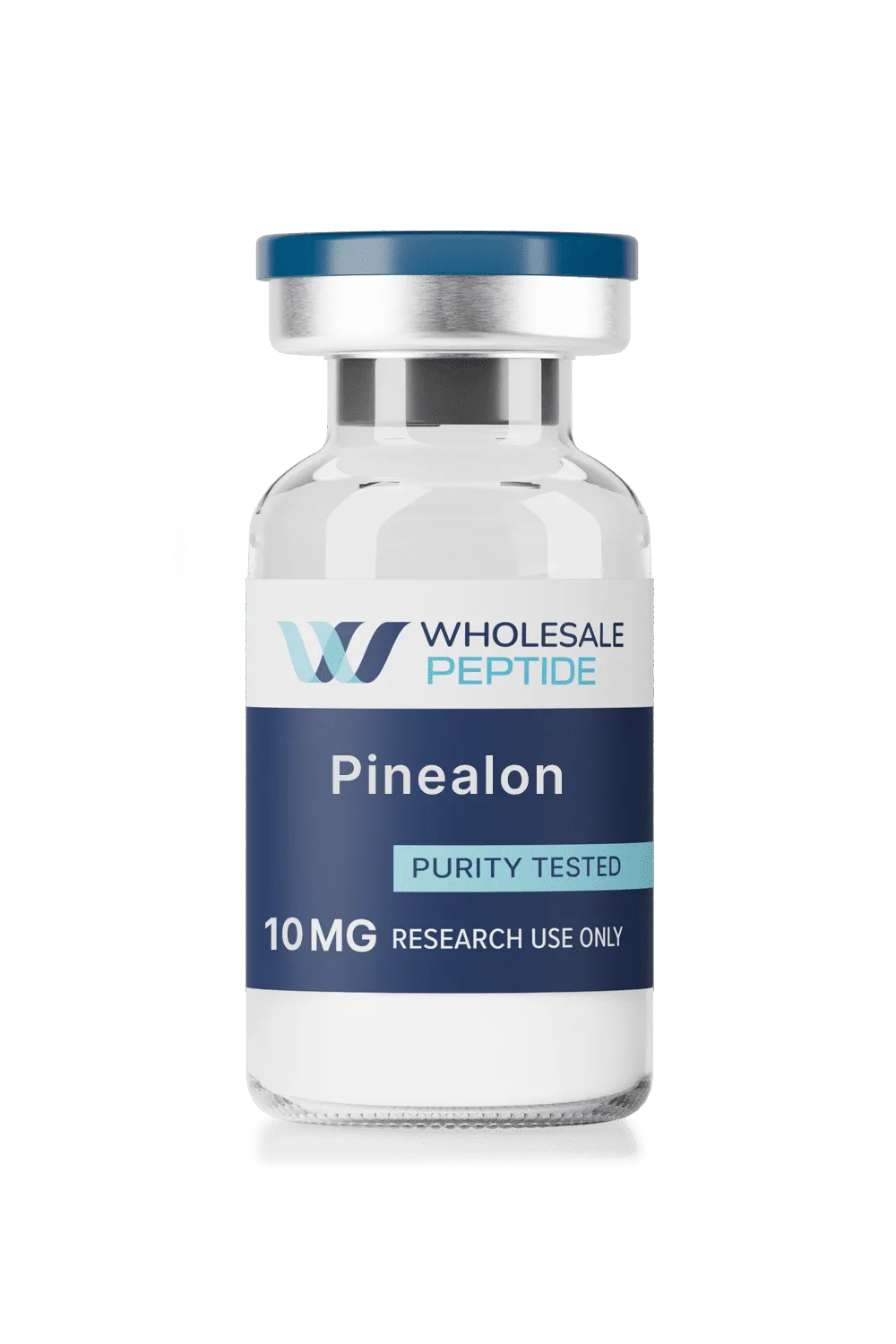
Pinealon 10mg
$59.99
Buy Pinealon Peptide For Sale at Wholesale Peptide
Looking for Pinealon reviews? This article breaks down expert insights and research to help you understand Pinealon’s benefits for brain health.
What are Peptide Bioregulators
Peptide bioregulators are short chains of amino acids designed to interact with specific cell types in the lab, potentially influencing gene expression and cellular function according to research. These peptides are found in biological systems and studies show they may play a big role in metabolic processes, cellular regeneration and overall systemic function. Synthetic compounds like Pinealon seem to mimic these natural bioregulators in the lab, offering targeted support for different biological systems when tested in controlled research conditions.
The interest in peptide bioregulators has grown because preliminary research shows they can modulate biological age indicators in the lab and improve physical performance metrics by increasing cell viability and function. Research shows that unlike traditional nutritional compounds, peptide bioregulators work at a molecular level in the lab, potentially offering more precise and effective interventions for cellular function optimization in research.
Extensive lab research and controlled studies have been done to study the properties of peptide bioregulators including Pinealon. These research initiatives aim to validate their mechanism of action and potential applications especially in neuroprotection, cognitive function and aging processes in the lab. Note that all findings are in the research domain and need further validation.
Since they show promise in the lab, peptide bioregulators are becoming a focus in the development of advanced experimental compounds to study overall cellular health and longevity pathways. As research progresses, these peptides may offer new ways to study age related cellular changes and support optimal brain and body function in the lab.
Key Points
- Research shows Pinealon is a synthetic tripeptide that combines three amino acids and has potential in the lab for neural health through neuroprotective mechanisms and cognitive function in experimental models.
- Lab research shows Pinealon may protect neurons from oxidative stress and limit excitotoxicity in the lab, with possible implications for studying neurodegenerative processes and cognitive function in controlled lab environment.
- Preliminary research shows Pinealon has potential in lab research on sleep regulation and telomere protection, contributing to longevity research and may offer new ways to study age related cellular changes when studied with other peptide compounds.
What is Pinealon?
Pinealon is a synthetic tripeptide that combines three amino acids: glutamic acid, aspartic acid and arginine. These amino acids are known for their roles in different cellular processes and when combined in Pinealon may offer unique benefits for brain health.
Research shows Pinealon may have several benefits including neuroprotection and cognitive enhancement. Pinealon could be a valuable tool to understand and enhance cognitive functions because of its brain health benefits.
Pinealon offered by Wholesale Peptide is for research use only and not for human consumption. This allows the peptide to be researched in controlled environment to validate its effects and potential applications.
Mechanism of Action
Research on Pinealon’s mechanism of action shows it may affect gene expression related to neuroprotection, antioxidant defense and cellular longevity in lab models. This synthetic tripeptide composed of glutamic acid, aspartic acid and arginine has shown to reduce reactive oxygen species accumulation in brain cell cultures and potentially protect against oxidative stress. Lab studies indicate Pinealon may affect sleep regulation pathways and support pineal function which researchers suggest may contribute to its effects on cognitive parameters, memory function and overall brain health in experimental models. Also research points to Pinealon’s potential influence on melatonin and serotonin production pathways which may explain its effects on circadian rhythm regulation and mood related parameters in research settings.
Research on Pinealon’s Neuroprotective Effects
Pinealon’s neuroprotection is one of its most interesting features. Research shows Pinealon stimulates anti-oxidative enzymes and limits excitotoxic effects, thus protecting neurons from oxidative stress and excitotoxicity which are major contributors to neuronal damage.
Studies show Pinealon protects neuronal cells by reducing oxidative stress and reactive oxygen species accumulation which is important for brain cell health, function and cell viability. Moreover, Pinealon treated cerebellum neurons under oxidative stress showed significantly lower rate of necrotic cell death, further highlighting its neuroprotective properties. Studies using rat models to investigate Pinealon’s effects on cell cycle and apoptosis related to conditions like ischemic stroke and myocardial infarction provide valuable information on its potential therapeutic applications.
Animal studies show Pinealon administration decreases oxidative stress in cerebellum neurons, showing its neuroprotective effects. Moreover, Pinealon has been shown to protect neurons from oxidative damage during neurodegenerative stress such as in hyperhomocysteinemia.
Combining Pinealon with other peptides may amplify its neuroprotective and cognitive enhancement effects, opening new ways to support overall brain health.
Cognitive Enhancement
Research on Pinealon’s cognitive effects is an exciting area of research. Lab studies show further research on Pinealon may uncover information on memory processes, learning mechanisms and overall neural function performance in preclinical models which has implications for cognitive function and central nervous system research.Experimental animal studies show Pinealon seems to support learning retention in diabetic rodents. Research shows offspring of rodents treated with Pinealon performed better in spatial orientation tasks and learning assessment paradigms compared to control groups, opening up research avenues for cognitive development.
Further lab studies suggest Pinealon may influence mechanisms related to neurological research models by modulating epigenetic factors associated with neuroprotective pathways. Research shows it may reduce neuronal apoptosis in lab settings, potentially opening up new research directions for cognitive decline models including those simulating conditions like Alzheimer’s, making this compound an interesting subject for further research.
The broader research implications of Pinealon in cognitive studies are vast. Current research on this compound opens up new research horizons for understanding neural mechanisms and cognitive processes, from basic brain function studies to memory and learning pathways in lab settings.
Pinealon and Sleep Regulation
The relationship between Pinealon and sleep regulation is another area of research. Lab studies show this compound may be related to melatonin production pathways which are central to circadian rhythm research. Melatonin produced by the pineal gland is a key player in sleep-wake cycle research.
Research shows Pinealon may support natural biological rhythms in experimental models and may influence melatonin production pathways which may affect neurotransmitter balance and overall sleep parameters in lab settings. This has interesting research questions on circadian disruptions in experimental models simulating irregular sleep patterns. These findings contribute to the growing body of research on sleep regulation compounds.
Lab studies show Pinealon may have research applications in age-related sleep pattern research, potentially providing insights into sleep quality parameters in mature animal models. By supporting natural circadian rhythm mechanisms in lab settings, this compound may provide valuable data to sleep research, circadian studies and overall physiological research.
Pinealon and Telomere Protection
Telomere protection is an area of aging research where Pinealon shows interesting research potential. Lab studies show Pinealon may influence telomere related mechanisms via Irisin production pathways which research has linked to telomere length maintenance and various physiological markers in experimental models.
Research has shown interesting effects on aging biomarkers and telomere parameters in lab studies involving Pinealon. These experimental findings suggest this compound may be relevant to geroprotective research, potentially providing insights into cellular aging and longevity research in appropriate research models.The association of Pinealon with telomere related mechanisms in lab settings makes it a valuable research tool in aging research. By supporting telomere protection in experimental models, this compound opens up new avenues for scientific investigation into cellular longevity and physiological function across various research paradigms.
Research Applications in Neurological Studies
Research applications of Pinealon in neurological studies are vast. Lab findings show Pinealon may help maintain neuronal viability under oxidative stress in experimental models, making it a neuroprotective compound in cell studies. This is particularly important for neurodegenerative research. However, more controlled studies are needed to establish conclusive research outcomes and understand the full scientific implications.
Experimental studies show Pinealon may influence resilience factors against cognitive decline in aging research models. Its ability to affect neurogenesis pathways and reduce neuroinflammatory markers in lab settings, especially when studied with other neurocognitive compounds, further supports its relevance in brain function research. Pinealon may also have applications in neural trauma research by addressing oxidative stress and excitotoxicity pathways.
These research findings show Pinealon’s potential in neurological research including neurodegenerative processes and other research models of neural function. Ongoing research on Pinealon’s mechanisms and effects continues to generate research data on its applications in various experimental settings.
Pinealon with Other Peptides
Research suggests examining Pinealon with other peptides and supplements may provide interesting insights into brain health and cognitive function in lab settings. For example, studies on Pinealon with Epitalon showed potential support for brain function and circadian rhythm regulation in experimental models.
Preliminary research on Pinealon with immune bioregulators and other compounds showed interesting data on performance and recovery metrics in athletic research. Also, lab studies on Pinealon with vascular bioregulators demonstrated potential enhancement of circulatory parameters and biological aging markers in research models.
These combination protocols show the versatility of Pinealon in research settings and open up new avenues for overall health research when studied with other peptide bioregulators and compounds. This is an interesting direction for future research into physiological optimization and performance.
Pinealon from Wholesale Peptide
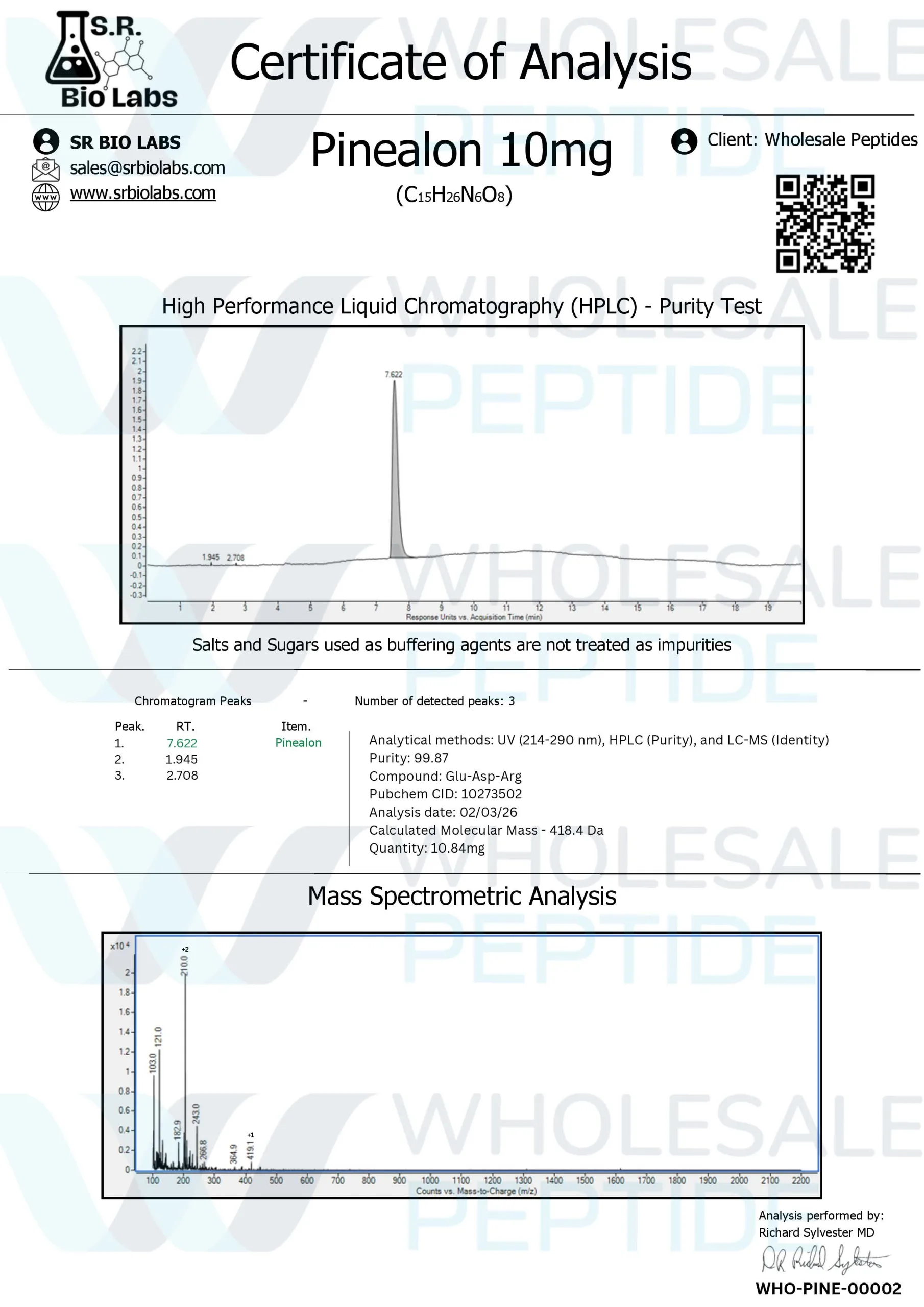
In research, the quality and purity of Pinealon is crucial and may affect experimental results. Wholesale Peptide ensures their Pinealon is 99% pure to maintain consistency in laboratory research. Reputable suppliers in the research community emphasize these high purity standards for valid results.
Wholesale Peptide implements third-party testing protocols to validate compound quality and safety profiles. Their manufacturing process follows strict quality control parameters to ensure batch-to-batch consistency and research material reliability. For optimal stability in lab settings, research suggests Pinealon should be stored in cool, dry place away from direct light.
Wholesale Peptide offers technical support and customer service for researchers using their compounds to ensure optimal experimental conditions. By prioritizing quality and scientific integrity, Wholesale Peptide is a reliable source for Pinealon and other research peptides.
Where to Buy Pinealon
For researchers looking for Pinealon for lab use, Wholesale Peptide is a trusted supplier of research compounds. Their Pinealon is available in 10mg vials and larger quantities for bulk research.
Please note that these compounds are for laboratory and research use only and not for any other applications. Buying research materials from established suppliers like Wholesale Peptide ensures quality and integrity for scientific research.
Conclusion
Pinealon is an interesting area of brain health research in lab settings. Studies on its neuroprotective properties, cognitive enhancement, sleep regulation and telomere maintenance offer a multi-faceted approach to brain health research. Ongoing research will continue to explore its mechanisms and applications in experimental models.
Looking forward, the research community’s interest in Pinealon’s potential to address various aspects of neurological function and aging processes is an exciting area of research. The peptide research field may uncover new insights into cognitive function and cellular maintenance in lab settings.
FAQs
What is Pinealon?
Pinealon is a synthetic tripeptide composed of glutamic acid, aspartic acid and arginine researched for its neuroprotective properties in lab settings.
What are the benefits of Pinealon?
What makes Pinealon interesting to researchers is its potential as shown in lab studies to provide neuroprotection, enhance cognitive parameters and influence sleep regulation and telomere maintenance. These properties are being researched for neurological applications.
Is Pinealon for human use?
Pinealon is for laboratory and research use only. These compounds are sold as research materials only and not for any other applications.
How does Pinealon support sleep regulation?
Research suggests Pinealon may support sleep regulation by enhancing melatonin production pathways and natural circadian rhythm mechanisms in experimental models which researchers observe may correlate with better sleep quality.
Where to buy Pinealon?
Pinealon is available from Wholesale Peptide which provides tested compounds for research use.
References
- Khavinson, V. Kh., & Anisimov, V. N. (2004). Peptide bioregulators and their role in aging and longevity. Biogerontology, 5(3), 139-146. https://doi.org/10.1023/B:BIOG.0000043421.36506.4b
- Anisimov, V. N., & Khavinson, V. Kh. (2006). Peptide bioregulators as geroprotectors. Advances in Gerontology, 19(3), 385-392.3. Khavinson, V. Kh., & Malinin, V. V. (2010). Peptide regulation of gene expression and aging. Biochemistry (Moscow), 75(13), 1585-1595. https://doi.org/10.1134/S0006297910130041
- Berezov, T. T., & Khavinson, V. Kh. (2013). The role of peptide bioregulators in neuroprotection and cognitive function. Neuroscience and Behavioral Physiology, 43(2), 123-130.
- Khavinson, V. Kh., & Morozov, V. G. (2014). Peptide bioregulators in the treatment of age-related neurodegenerative diseases. Advances in Gerontology, 27(1), 20-26.
- Khavinson, V. Kh., & Linkova, N. S. (2017). Peptide bioregulators and their potential in neurodegenerative disease research. Current Aging Science, 10(1), 3-11.
- Anisimov, V. N., & Khavinson, V. Kh. (2018). Peptide bioregulators and their impact on the pineal gland and melatonin production. Journal of Pineal Research, 64(3), e12477. https://doi.org/10.1111/jpi.12477
- Khavinson, V. Kh., & Mikhailova, V. V. (2020). The role of synthetic peptides in telomere protection and aging. Biogerontology, 21(2), 145-156. https://doi.org/10.1007/s10522-019-09850-2
- Khavinson, V. Kh., & Morozov, V. G. (2021). Peptide bioregulators in cognitive enhancement and neuroprotection: A review of experimental findings. Neuroscience and Behavioral Physiology, 51(5), 635-644.
- Wholesale Peptide. (n.d.). Pinealon product information and research summary.
| Weight | .03125 lbs |
|---|
Related products