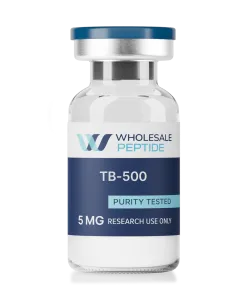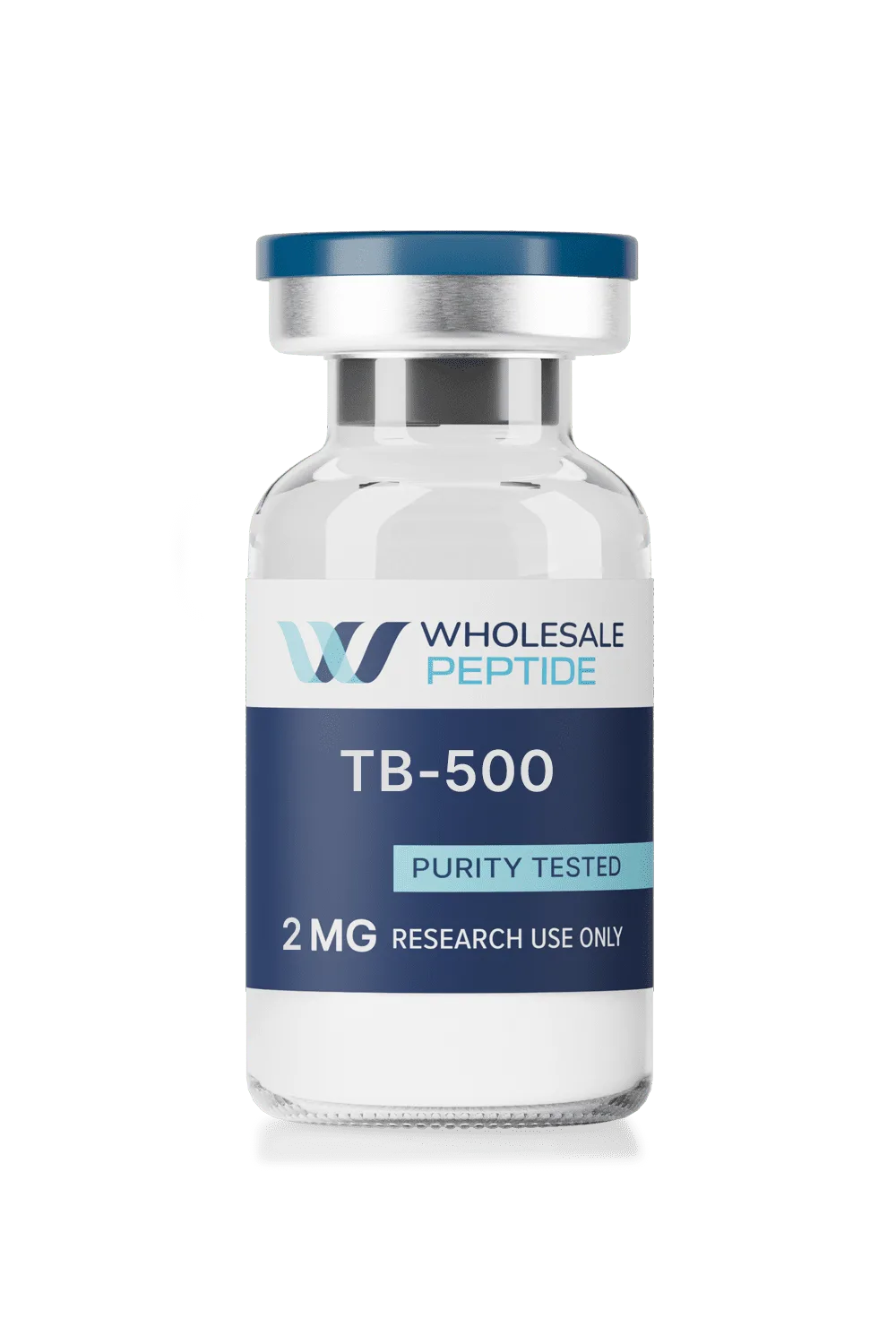
TB-500 2mg
$27.99

Buy TB 500 2mg at Wholesale Peptide
TB-500 is a big step forward in peptide research, a synthetic version of the active region of thymosin beta-4 for lab use. This synthetic peptide has become a key compound for researchers studying wound healing, tissue repair and cellular regeneration. Research shows that the unique amino acid sequence of TB-500 allows for the study of embryonic development pathways and tissue regeneration mechanisms.
For labs looking to buy TB 500 2mg, understanding the molecular structure, research applications and quality control protocols is crucial for experimental success. This guide covers the technical specifications, research findings and procurement considerations for this important research compound.
Molecular Structure of TB 500
TB-500 is a complex synthetic peptide derived from the natural thymosin beta 4 protein. The full amino acid sequence is 43 residues long:
Amino Sequence: Ac-Ser-Asp-Lys-Pro-Asp-Met-Ala-Glu-Ile-Glu-Lys-Phe-Asp-Lys-Ser-Lys-Leu-Lys-Lys-Thr-Glu-Thr-Gln-Glu-Lys-Asn-Pro-Leu-Pro-Ser-Lys-Glu-Thr-Ile-Glu-Gln-Glu-Lys-Gln-Ala-Gly-Glu-Ser
| Property | Value |
|---|---|
| Molecular Formula | C212H350N56O78S |
| Molecular Weight | 4963.4 g/mol |
| PubChem CID | 16132341 |
| CAS Number | 77591-33-4 |
This synthetic version has the active region of the parent form but is more stable for lab use. The acetylated N-terminus makes TB-500 more resistant to proteases than the full length thymosin beta 4. Research shows this modification preserves the biological activity while improving experimental reproducibility.
Mechanism of Action
TB-500 research is centered around its interaction with actin, a key cellular protein that governs cell migration and structural integrity. Animal studies show this synthetic peptide affects several key cellular processes through its actin binding domain.Research shows TB-500 modulates cell migration by moving repair cells towards the injured area. This is especially relevant for studies on healing in different tissue types. The compound’s ability to influence angiogenesis has garnered a lot of attention in medical research, with studies showing increased blood vessels formation in lab models.
The peptide’s anti-inflammatory properties come from its interaction with inflammatory pathways. Research shows TB-500 may reduce inflammation markers in experimental models but the exact mechanism needs further study. Animal studies show the compound affects stem cell differentiation contributing to tissue regeneration research.
The low molecular weight allows for easy tissue penetration, differentiating TB-500 from larger protein based research compounds. This makes it very useful for studies on drug test anal methods and doping control analysis protocols developed by the world anti doping agency.
Research Studies
The scientific literature on TB-500 and thymosin beta 4 goes back decades, providing a solid foundation for ongoing research. Earlier research in 1999 by Malinda et al. in the Journal of Investigative Dermatology was the first to document wound healing activity in lab models.
Subsequent animal studies have expanded the research scope:
Tissue Repair Research:
- Multiple studies show faster healing in tendon and ligament injuries
- Research shows improved muscle recovery in experimental models
- Skin regeneration studies show faster healing than control groups
Cardiovascular Research:
- Heart health studies show potential cardioprotective effects post-myocardial infarction
- Research shows improved angiogenesis in cardiac tissue models
- Animal studies show reduced tissue damage in experimental cardiac injury models
Ophthalmological Applications:
- Corneal wound healing studies show accelerated repair processes
- Research shows improved outcomes in corneal transplant models
- Various factors influencing eye tissue regeneration have been studied
Neurological Research:
- Studies examine neuroprotective effects in stroke models
- Research shows reduced inflammation in brain tissue injury models
- Animal studies investigate tissue damage reduction in traumatic brain injury
The national library of medicine has extensive documentation of these research findings but human clinical trials are limited due to regulatory reasons. Current research is focused on understanding the compound’s effect on growth factors and cell proliferation in lab settings.
Storage and Safety
Proper handling and storage protocols are crucial when working with TB-500 in research environments. The peptide’s stability depends on maintaining the right environmental conditions throughout the research process.
*Storage Requirements: Lyophilized powder: Store at -20°C for long term stability
- Reconstituted solutions: Store at 2-8°C and use within one week
- Protect from light to prevent degradation
- Use sterile technique to prevent contamination
Reconstitution Protocols: Research usually involves dissolving the lyophilized powder in sterile water or bacteriostatic saline. The choice of solvent depends on the experimental requirements and storage duration needs. Some researchers use bacteriostatic water for long term storage while others use sterile water for immediate use.
Laboratory Safety Considerations: Animal studies show TB-500 has a good safety profile in research settings. The most common observation in lab models is transient fatigue but this varies across different research protocols. Researchers should note that the compound has no approved use in humans and all handling must follow institutional safety guidelines.
The injection site reactions in animal studies are mild swelling that resolves without intervention. These are useful data for researchers designing experimental protocols and monitoring procedures.
Why Buy from Wholesale Peptide
Wholesale Peptide offers several benefits for research institutions looking to buy TB 500 2mg for lab use. These benefits address common challenges faced by researchers working with peptide compounds.
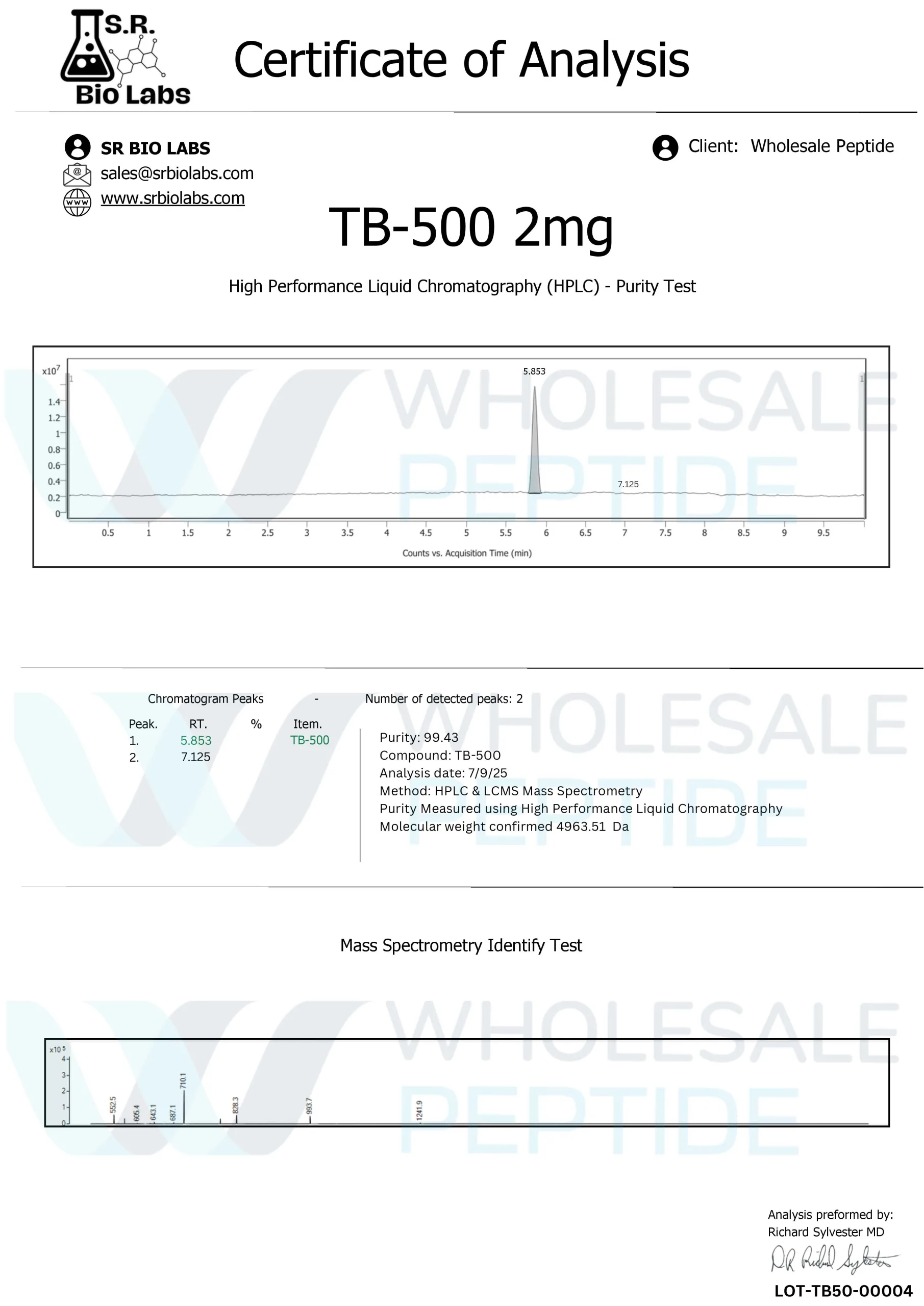
Quality Assurance: Every batch is tested by a third party using high-performance liquid chromatography (HPLC) to ensure product purity and accuracy. This liquid chromatography analysis gives researchers confidence in their results by eliminating variables related to compound quality. The testing also includes liquid chromatography mass spectrometry for full compound verification.
Research Compliance: All products are research-use-only, helping institutions comply with regulations. This designation prevents misbranding and ensures proper use in lab settings. The clear labeling supports inventory management and regulatory compliance for research facilities.
Logistical Advantages:
- Same day shipping for orders placed before 1pm EST Monday through Friday
- 30 day money back guarantee on unopened products
- Reliable supply chain for time sensitive research protocols
- Professional packaging to protect peptide during transport
These logistical benefits are especially useful for combination peptide therapy research and studies that require precise timing for optimal results.
Products from Wholesale Peptide are for Research Use Only
All TB 500 peptide and related compounds sold by Wholesale Peptide are research chemicals only. This means they are for in-vitro laboratory testing and experimentation only. Human or veterinary use is strictly forbidden. These products are not for pharmaceutical, food or cosmetic use and must not be misbranded, mislabeled or misused as such.
This research-use-only designation serves several purposes:
Regulatory Compliance: This designation helps research institutions comply with FDA, DEA and other regulatory bodies. Since these peptides are not approved for medical use, the research-use-only label provides legal clarity for lab use.
Experimental Integrity: Research shows that keeping clear distinction between research compounds and approved therapeutics supports scientific integrity. This designation prevents confusion about the compound’s regulatory status and intended use.
Safety Protocols: The research-use-only designation reinforces the importance of following institutional safety protocols and preventing unauthorized use. Healthcare providers and research personnel can maintain proper handling procedures when the compound’s status is clear.
Shipping Policy of Wholesale Peptide
Wholesale Peptide ships same day for orders placed before 1pm EST Monday through Friday. Orders placed after 1pm EST or on weekends will be shipped the next business day. This shipping schedule supports research timelines while protecting product integrity during transport.
The shipping protocols include:
- Temperature controlled packaging for peptide stability
- Tracking information for order tracking
- Professional packaging to prevent contamination
- Expedited options for urgent research needs
Satisfaction Guarantee
Wholesale Peptide offers a 30 day satisfaction guarantee on all products. Researchers can return any unopened products for a full refund of the purchase price of the unused materials. This policy reduces financial risk for research institutions and encourages quality standards.
The guarantee applies to:
- Unopened products in original packaging
- Products returned within 30 days of purchase
- Products stored properly
- Products with intact quality seals
Third Party Testing of Every Batch
Every batch of products sold by Wholesale Peptide is tested by a third party using HPLC to ensure product purity and accuracy. This testing protocol addresses critical quality control needs in peptide research.
Testing Procedures:
- HPLC for purity verification
- Chromatography b analysis for identity confirmation
- Batch specific certificates of analysis
- Documentation to support research protocolsThe testing results show high concentration of active compound with minimal other metabolites. This purity level often exceeds 99% and gives researchers confidence in their variables and results. The metabolite ac lkkte and other metabolites are quantified to ensure full quality control.
Research institutions benefit from this testing:
- Reduced variables
- Improved result reproducibility
- Increased research credibility
- Simplified regulatory documentation
Research Applications and Future Directions
Current research is expanding TB-500 applications across multiple disciplines. Studies on muscle growth mechanisms are providing valuable insights into cellular regeneration. Research is showing that the compound’s effects on embryonic processes may give new understanding of organ regeneration pathways.
The national institutes of health have documented various factors influencing peptide therapy research, including TB-500’s role in reducing inflammation studies. Animal studies are exploring the compound’s effects on chronic pain models, but human use is not in current research scope.
Emerging Research Areas:
- Hair growth studies in lab models
- Performance enhancement research in athletic performance
- Tissue damage reduction in injury recovery models
- Flexibility studies in musculoskeletal research
Research is showing that TB 500’s benefits go beyond traditional wound healing. The compound’s effect on damaged tissues provides opportunities to study complex healing processes and tissue engineering.
For researchers looking to buy TB 500 2mg, the expanding research landscape offers many experimental opportunities. The compound’s well documented safety in animal studies and its multiple research applications make it a valuable tool to study tissue repair mechanisms and cellular regeneration.
As research protocols and analytical methods are developed, TB-500 will remain an important compound for labs studying regenerative processes, tissue engineering and cellular biology. Quality suppliers like Wholesale Peptide provide the reliability and compliance standards to advance this research field.
References
- Malinda, K. M., Sidhu, G. S., Mani, H., Banaudha, K. K., Maheshwari, R. K. (1999). Thymosin beta 4 accelerates wound healing. Journal of Investigative Dermatology, 113(3), 364-368. 2. Ho, E. N., Kwok, W., Lau, M., Wong, A. S., Wan, T. S., Lam, K. K., Schiff, P. J., Stewart, B. D. (2012). Doping control analysis of TB-500, a synthetic version of an active region of thymosin β4, in equine urine and plasma by liquid chromatography–mass spectrometry. Journal of Chromatography A, 1265, 57-69.
- Rahaman, K. A., Muresan, A. R., Min, H., Son, J., Han, H., Kang, M., & Kwon, O. (2024). Simultaneous quantification of TB-500 and its metabolites in in-vitro experiments and rats by UHPLC-Q-Exactive orbitrap MS/MS and their screening by wound healing activities in-vitro. Journal of Chromatography B, 1235, 124033.
- Maar, K., Hetenyi, R., Maar, S., Faskerti, G., Hanna, D., Lippai, B., Takatsy, A., & Bock-Marquette, I. (2021). Utilizing Developmentally Essential Secreted Peptides Such as Thymosin Beta-4 to Remind the Adult Organs of Their Embryonic State—New Directions in Anti-Aging Regenerative Therapies. Cells, 10(6), 1343.
- Innerbody Research. (2024). What to Know About TB4 and TB-500 Peptide Therapy. Retrieved from https://www.innerbody.com/thymosin-beta-4-and-tb-500
- Ortho and Wellness. (2024). TB-500 Exposed: The Risks Outweigh the Benefits. Retrieved from https://www.orthoandwellness.com/blog/tb-500-exposed-the-risks-outweigh-the-benefits
- HubMedEd. (2024). TB 500 Peptide: How It Supports Tissue Repair and Flexibility. Retrieved from https://www.hubmeded.com/blog/tb-500-peptide-for-tissue-repair-and-flexibility8. National Institutes of Health. (2024). Thymosin beta 4 and TB-500 research articles. Retrieved from https://www.ncbi.nlm.nih.gov
- World Anti-Doping Agency. (2024). 2025 World Anti-Doping Code International Standard Prohibited List. Retrieved from https://www.wada-ama.org
- Cleveland Clinic. (2023). Thymus and T Cells. Retrieved from https://www.clevelandclinic.org
Note: All references are for research purposes only and the compounds mentioned are not for human or veterinary use outside of clinical trials.
For more information on Thymosin Beta-4 (TB-500), visit Wikipedia.
| Weight | .03125 lbs |
|---|
Related products